Is The United States Running Scared?

Nobody is as aware of US brutality in world affairs across the last century and beyond as are the American leaders themselves. They have hurt so many people in so many countries, and so gratuitously, that they are entitled to fear the logical reprisals.

If Not, Why Do They Spend So Much of the Nation’s Vital Wealth on National Defense?

What possible motivation can the American defense establishment have for squandering their country’s very life’s blood in order to upgrade annually their already formidable military capabilities? Is it due to their fascination with deadly new toys or to their need to impress their adversaries and allies? There may be some of that, but it is likely that there’s another factor that doesn’t get mentioned: fear. Nobody is as aware of US brutality in world affairs across the last century and beyond as are the American leaders themselves. They have hurt so many people in so many countries, and so gratuitously, that they are entitled to fear the logical reprisals. Their offenses range from eavesdropping on German chancellor, Angela Merkel’s phone calls–a grave and stupid breach of confidence with an important ally–to mass murder and regime change which they either carried out or sponsored in Latin America, Greece, Vietnam, Afghanistan Iraq, to name just a few. Now they need go to extreme lengths to ward off the world’s revenge.

These extreme lengths inevitably include sophisticated weaponry that comes at astronomical costs paid for by US taxpayers (and their unborn generations), not by the members of America’s high-rolling military-industrial-congressional elite. Far from paying for the expensive war materiel, they extract massive profits. There is a parallel to this faith in high-tech weaponry in Germany’s illusory resort to exotic weapons, wunderwaffen, in a last-ditch effort to elude defeat in World War II. Their V2 rockets were first launched against England in late September, 1944. Over the next few months, nearly 1,400 struck London. Some 2,700 Londoners were killed but the V2s did not alter the outcome of the war. 
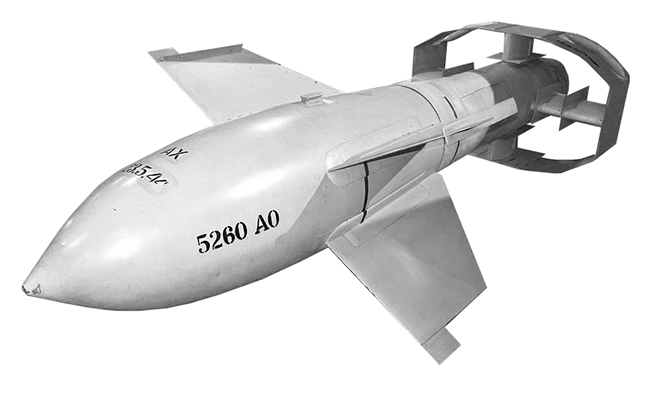
Fritz X – This guided anti-ship glide torpedo (above) was one of Hitler’s most secret bombs. Not only was it the first precision-guided bomb to ever be deployed in combat, but on 9 September 1943 it also became the first such bomb to sink a ship – the Italian battleship Roma. Again, it arrived too late to deter the victory of the Allies. (Source: http://www.nationalarchives.gov.uk)

Goliath – This remote-controlled mine carrier had caterpillar tracks and resembled a mini tank. It was designed to carry up to 100 kilograms of high explosives and was first deployed in early 1942. Though it looked like a radio-controlled toy, it was capable of everything from destroying tanks to demolishing buildings and bridges.

The Horten Ho 229 “flying wing” bomber (above) was considered “Hitler’s secret weapon.” It was designed to carry 2,000 pounds of armaments while flying at 49,000 feet at speeds of more than 600 mph. In the end, none of these wunderwaffen made any significant difference in the outcome of the war. (Source: https://www.historyhit.com/secret-weapons-of-the-nazis/)

What Is the Cost of “National Defense” in Real Terms?

The cost of America’s defense spending evaluated by the usual yardsticks hits middle and lower-class citizens hard. They lack most of the services and protections provided by other first-world countries. The data that follow come from reliable international sources, many of them from the United States. Let’s start with overall health. According to the 2019 edition of the Bloomberg Healthiest Country Index, Spain is the healthiest country in the world, followed by Iceland, Japan, and Switzerland. The US is number 35 in the ranking. Life expectancy is also indicative of overall wellbeing. According to Worldography.info, who average the age for both sexes, the United States clocks in at number 46, with 78.11 years of life expectancy, just below Cuba and 44 other countries. At the top is Hong Kong with 89.29 years. 

How does the US do in literacy? Andorra, Greenland, North Korea, and Uzbekistan enjoy 100% literacy rates as of 2015-16, according to the German site, citypopulation.de.  One wonders if the Americans will ever catch up with Uzbekistan in literacy. The Washington Post (Mar. 8, 2016) says under the headline Most literate nation in the world? Not the US, that the US has advanced from 11th to seventh place. That is a remarkably positive result for a country whose president refuses to read and is incapable of speaking or writing a proper sentence.

What about infant mortality? According to CIA.gov, the US ranks 36th (estimated data 2017) with 5.7 deaths per 1000 live births. These numbers are significantly bettered by countries such as Hungary (4.90), Poland (4.40), Portugal (4.30), Slovenia  (3.90), Spain (3.30) along with a couple of dozen more. Neither do the American results for electoral integrity fare very well in the world. “U.S. Elections Ran Last Among All Western Democracies,” reads the January 7, 2017, headline on the ElectoralIintegrityProject.com site (an electoral monitoring project run by Harvard and Sydney Universities). The only ones, among western democracies, who held freer and fairer elections than the United States were everyone else.

See more on this subject on my June 1, 2020 post.

Luckily the Americans Can Count on Their Allies

Despite their interwoven networks of supposed allies, the Americans are increasingly alone. Leaders of countries around the world have eyes to see and are understandably reluctant to throw in their lot with an increasingly erratic United States. The allies they do retain are largely products of expert promising, bribing and arm twisting. American John Perkins has written a few books on the subject, the most revealing of which was the first one, published in 2004, Confessions of an Economic Hitman. In it Perkins, the whistleblower, describes his work as an American agent charged with changing the minds of foreign decision makers. His toolkit consisted of a rising scale of ideological arguments, bribes and threats. If none of those worked he passed the problem to his higher-ups.

Old arguments –anti-communism, the domino theory, 9/11 reprisals–are wearing thin for the populations of other countries, many of them American targets. They have felt the brunt of US realpolitik and that makes them less susceptible to propaganda. As time goes by more and more people around the world are capable of googling “US military bases map.” That alone offers a revealing picture of American imperial intentions. As for the citizens of the unfortunate countries the US has humiliated, alienated, smothered with economic sanctions, or simply obliterated, American foreign-policy makers are hoping they have forgotten. They haven’t. Nor have their friends. We need look no further than Chinese trade deals with Venezuela and Iran. China doesn’t need foreign bases to exercise their power. Simple economic clout is enough for now. As for the future, they’re working on it.

Underlying all of these questions is an important issue. Can Uncle Sam be trusted? The American’s Kurdish allies who, attacked in northern Syria by Islamic State forces in 2013, heroically went on to turn the tables on ISIL, virtually eliminating them as a fighting force, at a cost more than 800 Kurdish dead. This neutralizing of ISIL was recognized as a valuable contribution to the American cause in the Middle East. Nevertheless, when the time came to throw Turkish president Erdogan a bone, President Trump dropped them like a nicked golfball, leaving them at the mercy of the largest army in NATO. In an article in October 15, 2019, The Atlantic entitled Trump Betrayed the Kurds. Who’s Next? The author, Peter Wehner, points out:

Kurdish forces played a central role in aiding the United States in fighting the Islamic State. But in a phone call a week ago Sunday, Trump gave the green light to Turkish President Recep Tayyip Erdoğan to invade northern Syria—and, in the process, to engage in what even one of Trump’s most loyal supporters, Senator Lindsey Graham, describes as the “ethnic cleansing” of the Kurds.

The Atlantic, Oct. 15, 2019
<p value="<amp-fit-text layout="fixed-height" min-font-size="6" max-font-size="72" height="80">Now that the Brexit is consummated (thanks in large part to American big-data technology provided by <a href="https://www.bbc.com/news/av/uk-40423629">Cambridge Analytica</a>) the Brits are on their own, they are going to experience American solidarity–known in popular American and British mythology as "The Special Relationship." We shall see.Now that the Brexit is consummated (thanks in large part to American big-data technology provided by Cambridge Analytica) the Brits are on their own, they are going to experience American solidarity–known in popular American and British mythology as “The Special Relationship.” We shall see.

While the American Emperor looks and acts more like a sinister carnival barker, and is wearing fewer and fewer clothes each day, people around the world are asking themselves what he will be up to next. Has he set the world up for the Endgame? What are the implications of his curious US-Saudi-Israeli-Moroccan axis in the Middle East and the Magreb? What is the role of the President’s son-in-law, who seems to have a hand in the deal as his father-in-law’s “peace envoy?”

Where do the American Evangelical, Pentecostal and Fundamentalist Christians fit into the puzzle? Most of the members of these Christian sects support Netanyahu’s right-wing Likud regime in Israel, many with personal visits and cash donations. Allegedly their objective is to see Israel enter into a war with the Muslims, thus precipitating the Apocalypse which, according to holy scripture, will launch the born-again true believers straight into heaven. The rest of humanity, including their good friends, the Israelis, according to this lugubrious narrative, will be left behind, supposedly to burn in hell with the rest of us.

The Trump foreign policy has been based on insults and broken promises, boutades, tariffs and economic sanctions, and naval blocades, these latter considered an act of war under international law. Mike Pompeo, Trump’s thuggish, rapture-struck Secretary of State, more of an enforcer than a diplomat, was the ideal pick for the job from President Trump’s point of view. But the outside world percieves Pompeo as a warning beacon, illuminating unpleasant things to come.

This article from The Nation, “What America Really Spends on Making War,” should be required reading for every American taxpayer. It explains in exquisite detail the difference between what the Defense Department says it spends on making war, and what the US government really spends on war, in all of its intricate aspects. Authors William D. Hartung and Mandy Smithberger take a didactic approach, explaining how the Trump administration asked Congress in 2019 for $750 billion for the Pentagton and related defense activities. But that sum is only part of the actual cost of all proposed national defense-related spending, according to Hartung and Smithberger. They maintain:

In its latest budget request, the Trump administration is asking for a near-record $750 billion for the Pentagon and related defense activities—an astonishing figure by any measure. If passed by Congress, it will be one of the largest military budgets in American history, topping peak levels reached during the Korean and Vietnam wars. That three-quarters of a trillion dollars represents only part of the actual annual cost of our national-security state.

There are at least 10 separate pots of money dedicated to fighting wars, preparing for yet more wars, and dealing with the consequences of wars already fought. So the next time a president, a general, a secretary of defense, or a hawkish member of Congress insists that the US military is woefully underfunded, think twice. A careful look at US defense expenditures offers a healthy corrective to such wildly inaccurate claims.

The Nation

According to these authors’ itemized estimate, the total sum of American “defense” spending is closer to more than $1.25 trillion, almost double the Pentagon’s base budget. Meanwhile, there has been an important change in the United States, a new President. Over the course of the next four years we’ll see how important that change will have been. An excellent barometer of the fear level in the American power elite over that period will be the amount the defense-budget increases each year.

A Reminder: Budget Isn’t Everything

The Americans think money wins wars, and they’re right, but only partially. They seem to forget their enemies whose victories were achieved with little money but lots of courage, conviction and sacrifice. Look at Vietnam, and Afghanistan, and Iraq–yes, Iraq, where the Americans are still casting about for a way out. There were still about 5,000 US troops in Iraq, as of Sept. 9, 2020. Will the Americans ever learn not to underestimate their adversaries? They should have learned that lesson from the Lakota, the Northern Cheyenne, and the Arapaho tribes at the Little Big Horn River in June of 1876 .

Thanks for following, commenting and sharing.

Theory and Practice of Failed US Democracy

Two hundred thirty one years of radical, sometimes violent, events at home and abroad have taken their toll on the US Constitution.

American Democracy Becomes a Reality

On September 2, 1945, Ho Chi Minh proclaimed the independent Democratic Republic of Vietnam in Hanoi’s Ba Dinh square. These are the first lines of his speech: “All men are created equal. They are endowed by their Creator with certain inalienable rights, among them are Life, Liberty, and the pursuit of Happiness.” If these words sound familiar it is because they are the much-quoted second lines of the United States’ Declaration of Independence. Ho Chi Minh was a profound admirer of the United States and their democracy. He had repeatedly beseeched President Franklin D. Roosevelt to support Vietnam’s struggle for independence from France but his pleas fell on deaf ears. Vietnam did not become free and independent until the Vietnamese people, under Ho Chi Minh’s leadership, defeated the United States and ended the American military occupation of their country in 1975. Thus, the promise of American democracy became a reality, but not in America.

The Durable, Long-Lasting Republic

American democracy was born in hopeful times. The country had just won its independence from Britain and was led by brilliant team of political thinkers, the revered “Founding Fathers,” Washington, Jefferson, Madison, et al. The constitution they drafted and ratified, with its separation of powers, checks and balances, freedom of religion, and the guarantees of civil rights enunciated in the Bill of Rights, promised a durable, long-lasting republic.

It wasn’t perfect, mind you. Most of the Founding Fathers were rich and many of them were slave owners. They prudently–and anti-democratically–dialed into their constitution measures to preclude an uprising and takeover by of the underclasses. These measures limited the franchise to white male citizens over the age of 21 and included the electoral college, which negated the possibility of a one-man-one-vote democracy. Women weren’t granted the vote until 1920, with the ratification of the 19th amendment, and racial minorities had to wait till 1965 for full, effective voting rights, when the Voting Rights Act directed the US Attorney General to enforce the right to vote for African Americans. That was a 176-year wait and black voting rights are still far from perfect. The highly-contested results of the 2016 and 2020 elections suggest that elections remain an open sore on the American polity. Even so, they permit themselves the luxury a refereeing those in other people’s countries.

What Denatured American Democracy?

Two hundred thirty one years of radical, sometimes violent, events at home and abroad have taken their toll on the US Constitution. Over time the democratic republic that the founders foresaw has been battered and diluted by powerful vested interests and American “democracy” has been subverted to the point that it survives more as a useful myth than solid reality. Little by little it has been reduced to a slogan, then a lie and, lately, a scam. But we still use the same word–democracy–for a system of government that has morphed beyond recognition. That’s normal with political theories. They tend to differ in practice, and when  they evolve they don’t always do so in a good way.

The deterioration of American democracy is due to three principal factors, beginning with the growth of executive power snatching. Democratic government loses authority with each succeeding president. Sometimes power is snatched during wars or pre-war situations when it’s easier to grease the way with fear and patriotism. Sometimes it’s after national emergencies, of which 9/11 is the most glaring example. Other times it’s just because they can. President Donald Trump is the best example of that egomaniacal accumulation of personal power, like a three-year-old sticking knives into electrical sockets and surviving.

Big business control of government, thanks to the power of lobbying and grotesque changes in campaign financing law, is responsible for another series of grave attacks on democracy. The 2010 Citizens United v. FEC Supreme Court decision turned corporations into persons–Shazzam!– with virtually unlimited rights to donate to political campaigns. Later rulings by the reactionary Roberts Court, including McCutcheon v. FEC (2014), would strike down other campaign finance restrictions, to the benefit of the Republican Party in subsequent elections.

The third force degrading the American democracy is the infiltration of extravagant miracle religion at the highest levels of government. If a person wants to believe he’s about to be “raptured” up into heaven by Jesus Christ, that’s his or her business, but not if he or she is Secretary of State. This phenomenon is all the more dangerous because it’s driven by opportunistic motives for pandering to a massive religious voting base, one of President Donald Trump’s specialties. And he’s not the only one. The White House Office of Faith-Based and Community Initiatives (OFBCI) was created in 2001 by President George W. Bush.

Sticky Are the Seats of Power

The growth of business influence in government is driven by members of congress’s extreme devotion to re-election. They will resort to extravagant lengths to retain their seats. This incumbency/re-election phenomenon is more serious that it seems. How much waste of valuable time and resources has been generated in the White House over the years by presidents devoting themselves to their re-election projects? Running the country is a big job, one that should take absolute priority over political questions.

Seymour Hersh broaches this subject in his book, The Dark Side of Camelot, when he relates an informal conversation in the White House between President John F. Kennedy and an old friend from school. Kennedy confessed to his friend that he was witholding an important initiative so he could use it as an election issue. The friend told Hersh that he immediately thought it might be a good idea to limit presidencies to a single six-year term, thereby obviating the necessity of re-election campaigns. If that’s a good idea for presidents, might it not also be a good plan for legislators, whose case is even graver, as they are permitted to present themselves for re-election during their entire lives? Between them and the Supreme Court, America guarantees itself that many of it’s highest government offices are populated by zombies.

The single measure of limiting duration in office to a single term would eliminate the waste and abuse created by the massive re-election business. This might be included in the same Constitutional amendment that would eliminate the Electoral College. What are the chances of such an amendment prospering? Nil would be an optimistic guess.

Some Qualified Criticisms

Mike Lofgren worked in Washington as a political operative during most of his adult life, principally as a Republican Congressional aid. Though he retired in May, 2011, after 28 years on the inside, he hadn’t forgotten what he had learned from that privileged point of view. Quite the contrary, he was anxious to tell it. The result was his 2012 book, The Party Is Over: How Republicans Went Crazy, Democrats Became Useless, and the Middle Class Got Shafted, characterized by the Washington Post as “forceful, covincing and seductive.” In his preface to the paperback edition he gives us a clear idea of what to expect from his book. To the right reader, it is a banquet. This is just the first paragraph:

As with many religions, political parties have a tendency to start as movements, transform into businesses, and finally degenerate into rackets designed to fleece the yokels. One organization that has embraced this evolution is the Republican Party. And it has done so with a national scope and fundraising apparatus that would have made Jimmy Swaggart or Jim and Tammy Faye Bakker mute with awe.

Mike Lofgren in “The Party is Over

Lofgren then proceeds in the following 200 pages to rip through decades of the Republicans’ misdeeds and absurdities like Napoleon’s dragoons on horses forged in Hell. This was four full years before Donald J. Trump was even a candidate, making Lofgren a 21st-century Old Testament prophet. Here’s another of his Apocalyptic declarations:

From my perch on the budget committee I watched with a mixture of fascination and foreboding as my party was hijacked by a new crop of opportunists and true believers hell-bent on dragging the country into their jerry-built New Jerusalem: an upside-down utopia where corporations rule, the Constitution, like science, is faith-based, and war is the first, not the last, resort in foreign policy.

Mike Lofgren in “The Party is Over

With this rich text published in 2012 no honest Washington insider can affirm that they didn’t foresee the gotterdamerung that Trump’s presidency would bring. The only ones free from this criticism are those who do not or cannot read.

Author and academic, Emeritus Professor of Political Science at the University of Nebraska, David Forsythe is the creator of the OpenGlobalRights.org website and author, with Patrice McMahon, of American Exceptionalism Reconsidered: U.S. Foreign Policy, Human Rights, and World Order. Forsythe has this to say on failed American democracy:

In the abstract, Americans may express liberal and cosmopolitan views supportive of universal human rights. But this country that sees itself as a beacon of moral progress for all the world to see, the engine for global good, is the same country with a demonstrable history of ethnic cleansing of Native Americans, slavery and lynching, Jim Crow laws to exploit and repress African Americans, anti-Semitism, periodic isolationism and xenophobia, grinding poverty under a harsh form of capitalism, gender discrimination and intolerance for the LGBT community, and a host of other defects.

David Forsythe on OpenGlobalRights.org

America Distracted, Corrupted and Down for the Count

America has been so distracted over the past century by hedonism, consumerism, capitalism and every other ism that promises instant satisfaction that thoughtfulness, mutual respect and concern for the common good have been relegated to the dustbin of history.

Today, December 26, Boxing Day, President Donald Trump, having vetoed the Covid relief plan that should have been passed months ago, left millions of Americans destitute of food and a roof over their heads. The President spent Christmas day playing golf. To an impartial if skeptical observer from abroad this seems like a bad sign.

###

Thanks for following, commenting and sharing

Who Are You to Impose Sanctions?

Sanctions Are All the Rage

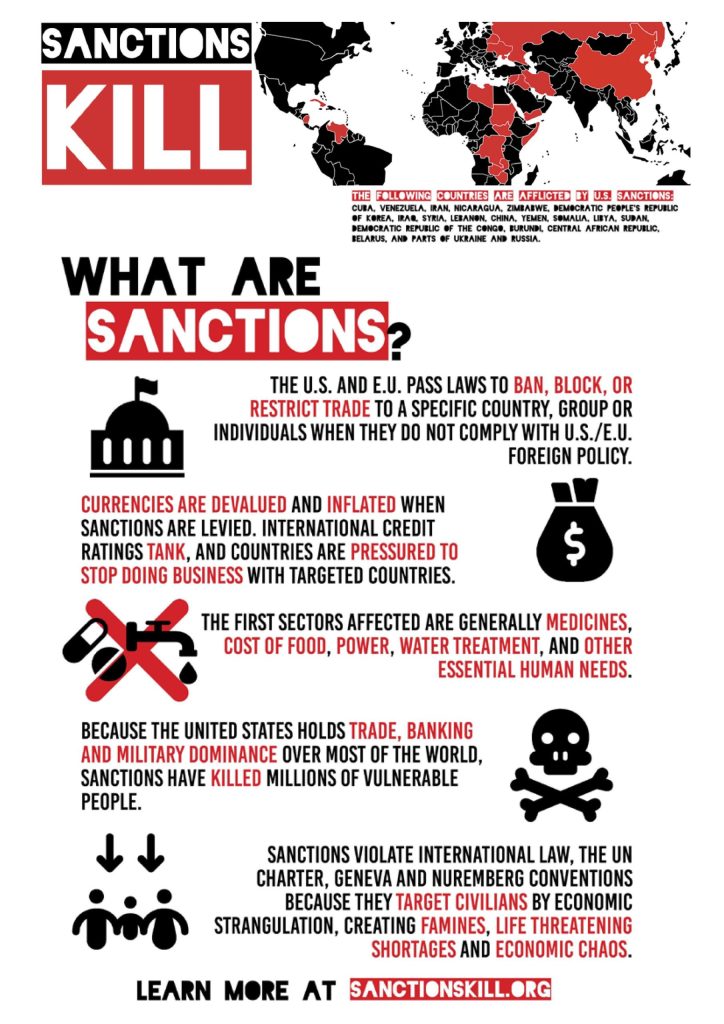
President Donald Trump has brought back the wholesale use of unilateral international sanctions as a mechanism for punishing and hampering any country that displeases him and his motley crew. Sanctions are handy resources for an aspiring world ruler because all they require to put in place is a belligerent declaration from the White House and a series of threats to enforce them. That may be why President Trump has resorted to this ploy so gaily. His gratuitous economic sanctions on oil-and-mineral-rich Venezuela prompted these observations by US economists:

In Venezuela, economic sanctions that Trump first imposed in 2017 and then vastly expanded in 2019, have resulted in increased disease and mortality and are estimated to have led to tens of thousands of excess deaths, according to a 2019 study by economists Mark Weisbrot and Jeffrey Sachs.

https://www.aljazeera.com/

A recent Cambridge University forum further delimits the playing field:

… this essay examines unilateral coercive measures… While there are no incontrovertible data on the extent of these measures, one can safely say that they target in some way a full quarter of humanity. In addition to being a major attack on the principle of self-determination, unilateral measures not only adversely affect the rights to international trade and to navigation but also the basic human rights of innocent civilians. The current deterioration of the situation, with the mutation of embargoes into blockades and impositions on third parties, is a threat to peace that needs to be upgraded in strategic concern.

Cambridge.org, 6 September, 2019

Are They Conscious of the Tragedy They Sow?

Before wading into the Okeefenokee that American foreign policy experts have made of the sanctions issue, let’s look at the most critical aspect, which is regularly overlooked. Are Americans aware of the the lethal repercussions for innocent citizens inside the countries they punish with sanctions? What was Madeleine Albright’s answer when she was asked about the 500,000 children under the age of five who died due to the Amerian-organized blockade of Iraq? “This is a very hard choice, but we think the price is worth it.”

Since that memorable declaration as US Secretary of State, Albright has been recycled in American folklore as a human-rights and peace activist, much the same as President Richard Nixon was polished up and resold as a respected elder statesman. American promoted UN Security Council sanctions against Iraq, first imposed in 1990 and later extended, were a near-total financial and trade embargo which gave the US and UK control over Iraq’s oil revenue. They were not removed until December 2010.

It took UN Secretary General Kofi Annan until 2004 to decide that the invasion of Iraq was illegal. According to The Guardian:

“Mr Annan said that the invasion was not sanctioned by the UN security council or in accordance with the UN’s founding charter. In an interview with the BBC World Service broadcast last night, he was asked outright if the war was illegal. He replied: ‘Yes, if you wish.'” He then added unequivocally: ‘I have indicated it was not in conformity with the UN charter. From our point of view and from the charter point of view it was illegal.'” (Source: The Guardian, 16 Sep 2004)

A 1996 report by International Progress Organization (IPO) criticized sanctions as “an illegitimate form of collective punishment of the weakest and poorest members of society, the infants, the children, the chronically ill, and the elderly”.

According to the IPO, the sanctions imposed around the world by the United States government include:

  • bans on arms-related exports
  • controls over dual-use technology exports
  • restrictions on economic assistance
  • financial restrictions:
    • requiring the United States to oppose loans by the World Bank and other international financial institutions
    • diplomatic immunity waived, to allow families of terrorist victims to file for civil damages in U.S. courts
    • tax credits for companies and individuals denied, for income earned in listed countries
    • duty-free goods exemption suspended for imports from those countries
    • authority to prohibit U.S. citizens from engaging in financial transactions with the government on the list, except by license from the U.S. government
    • prohibition of U.S. Defense Department contracts above $100,000 with companies controlled by countries on the list.

According to Aaron Arnold of the Belfer Center for Science and International Affairs, a research center located within the John F. Kennedy School of Government at Harvard University,

While the United States must be in a state of war for the president to regulate trade and commerce under the Trading With the Enemy Act, the President has complete discretion to declare a national emergency under the International Emergency Economic Powers Act (IEEPA). From a legal perspective, there have been few successful challenges of IEEPA. So far, conducting US foreign policy through a broad interpretation of national security powers has always been the prerogative of US presidents. But as European leaders scramble to save what is left of the Iran deal, many are left wondering whether a president that wields IEEPA like a hammer will see every problem like a nail. 

belfercenter.org

Alexander Main, Director of International Policy at the Center for Economic and Policy Research in Washington, DC, is more specific on the subject:

But one particularly brutal set of White House measures that has already caused tens of thousands of casualties abroad has been ignored by most of Trump’s critics. Since taking office, the president has unilaterally imposed a number of deadly, sweeping economic sanctions on Iran, North Korea and Venezuela. These sanctions have not, by any reasonable measure, advanced the president’s stated foreign policy goals. They have, however, wreaked havoc and destruction in the lives of countless innocent human beings. 

Are the US Sanctions Legal Under International Law?

According to the United Nations, only the UN Security Council has a mandate by the international community to apply sanctions that must be complied with by all UN member states. They serve as the international community’s most powerful peaceful means to prevent threats to international peace and security or to settle them. (Source: Chapter VII of the United Nations Charter)

That is to say, according to international law all of the the US’s exquisite legislative pussyfooting around the question of sanctions is irrelevant, and the unilateral imposition of sanctions by any country is out of order. Not that the Americans are much dissuaded by legalities. They have the unique tenet of their foreign policy: “We do exactly as we please.” That works for them, even though the rest of the world may not agree.

Trump Plays the Rogue Sanctions Card

Whenever President Donald Trump gets bettered in a deal he gets miffed. His favorite response is to play the sanctions card whether it’s aimed at one of America’s competitors in the international “free market” or a country that’s straying beyond US-imposed ideological limits. The case that immediately comes to mind is the crippling US embargo on Cuba, in place since March 14, 1958 and renewed ever since, the most-brutal, longest-lasting foreign policy coercion of the 20th century that is still festering in the 21st.

A more recent example is the Huawei ban, a classic case of castigating a superior competitor for building better mousetrap. President Trump declares a US boycott on the Chinese communications technology company and immediately extends the ban to Britain, his most reliable running ally. These stings are occurring more frequently lately as American technology lags further and further behind foreign competition.

Whether it’s Chinese G-5 communications installations or the Russian S-400 anti-aircraft missiles, Trump’s kneejerk response is sanctions. Turkey, after being turned down by the US in an effort to purchase American Patriot anti-aircraft missiles, turned to Russia and signed a multi-billion-dollar deal. Despite U.S. efforts to undo that agreement, President Erdogan proceeded to acquire the S-400 system in July 2019.The first batch of S-400s were deployed in Turkey in July of 2019. Note: The S-400 missiles are superior to the Patriots and allegedly at half the price.

Not to mention the Nord Stream 2 natural gas pipeline between Russia and Germany, currently under US sanctions…

Just over a week ago, on December 14, 2020, Washington belatedly announced their sanctions on Turkey for the S-400 operation. This is how the California-based law firm, Gibson-Dunn characterized the event:

On December 14, 2020, the United States imposed sanctionss on the Republic of Turkey’s Presidency of Defense Industries (“SSB”), the country’s defense procurement agency, and four senior officials at the agency, for knowingly engaging in a “significant transaction” with Rosoboronexport (“ROE”), Russia’s main arms export entity, in procuring the S-400 surface-to-air missile system. These measures were a long-time coming—under Section 231 of the Countering America’s Adversaries Through Sanctions Act (“CAATSA”) of 2017, the President has been required to impose sanctions on any person determined to have knowingly “engage[d] in a significant transaction with a person that is part of, or operates for or on behalf of, the defense or intelligence sectors of the Government of the Russian Federation.”

Source: gibsondunn.com

Sanctions as Acts of War

Can US unilateral sanctions be considered acts of war? The jury is still out on this question but many qualified observers think the case can be made. Briefly, when unilateral sanctions result in dead and maimed civilians, mass destruction, regime change or other interruption of the life of a country, they should naturally be considered as acts of war.

Nonetheless, economic sanctions are the foreign policy option of choice for the US. While often portrayed as a softer option than outright war, they can result in equally devastating blows to the health and well-being of vulnerable countries.

Madre.org reminds us of US use of sanctions:

On January 8, 2020, Trump announced additional “punishing” sanctions on the Iranian government, framing these as a peaceful alternative to military action. But these sanctions are far from a de-escalation of this crisis. In fact, they are simply warfare under another name.

The US has applied more economic sanctions than any other country. Sanctions have been imposed on Iraq, North Korea, Iran, Cuba, Myanmar, Sudan, Syria, and Venezuela — among others.

The Future of American Sanctions

–trapped midst a killer virus, a deteriorating technological superiority and rising stars on the horizon–

Sanctions are subject to international law, no clause of which authorizes the US to apply their belligerent realpolitic to other people’s countries. So how is it possible that the US should be circling the world with a sinister web of unilateral sanctions? American trans-world coercion is based on the same ugly reality as other cases of historical bullying. Without the US preponderance of military might it would not be possible.

But that dubious license bestowed by massive force may not last forever. In view of the United States’ critical situation, both at home and abroad–trapped midst a killer virus, a deteriorating technological superiority and rising stars on the horizon–their worldwide suzerainty may be entering its last days. If not, why would the lame-duck Secretary of State, Mike Pompeo, be bustling around the world Mafia style, fervently delivering the Trump administration’s last threats?

###

Thanks for following, commenting and sharing.

Gold Star America

“We Were the Greatest…”

How much time and energy and how many resources have been senselessly squandered by the United States over the past half century? And what has the rest of the world been up to in the meantime? The answers to these questions are determining the short, medium and long-term future of the world.

Note: Of the past 20 centuries China has dominated eighteen.

While the rest of the world has advanced on many fronts, and continues to do so, the US flails hopelessly in a fishbowl of erroneous ideology, drowning in exceptionalism and entitlement. Americans are convinced they are not like other people around the world, they’re special. And that specialness entitles them to rights and privileges that people of other countries do not enjoy. American pre-eminence since the Second World War would seemed to confirm this worldview. They live, after all, in the richest, most productive country in the world. They are blessed with an exemplar democratic government. And their dollar is the currency of world trade.

It seemed only natural to them to take the next logical step: world domination. Convinced that their system had rightly triumphed over all others it was their obligation to extend it to the rest of the world. There would, of course, be dissenters in less-enlightened foreign countries, but they could be brought to see the light.

The cornerstone of this aspiring world empire was laid in 1944 at the Mount Washington Hotel, a ski resort in Bretton Woods, in Carroll, New Hampshire. There, during 22 days of meetings, 730 delegates from 44 Allied countries hammered out the shape of the world to come. This was the meeting that determined the regulation of the international monetary and financial order after World War II. With the outcome of the war in view and American predominance clearly in evidence, the results of the conference were a foregone conclusion. After the approval of the creation of the International Monetary Fund and the International Bank for Reconstruction and Development (IBRD), the forerunner of the World Bank, the playing field was definitively tilted in favor of the US, a fact that has benefited them until today. Tomorrow is another matter.

Imperial Intelligence to the Rescue

The American “intelligence services,” whose clandestine activity in Europe was initiated during WWII under the auspices of the Office of Strategic Services (OSS) and the direction of Colonel (later Major General) William J. (Wild Bill) Donovan (1942-45), were the first piece in the imperial puzzle. Donovan united and coordinated the efforts of several US intelligence units, a project that gave rise to the Central Intelligence Agency (CIA) in 1949. In 1952 the National Security Agency was created to handle signals intelligence. The NSA is today the United States’ largest and best-funded intelligence operation.

With this information and clandestine-intervention infrastructure leading the way, the US embarked upon an industrial-scale overt and covert campaign of interference in the affairs of other peoples’ countries. The recurring theme of all of this information gathering, black ops and proxy wars, was anti-communism. This Swiss army knife of world domination apologetics arose from the existential terror that Western capitalists experienced when confronted with Soviet successes with their collective societal solutions in the early 1930s. The Soviet industrial and economic surge happened to coincide with the depths of the Great Depression in the West. It’s not clear whether the subsequent blossoming of anti-communism in the US was the cause or effect of the Cold War, but since then it has been the determining factor in American foreign policy. After the fall of the Soviet Union it only required a slight twist to morph into anti-Russianism.

In our living memory anti-communism has been the gossamer pretext that provided ideological cover for non-stop wars, regime-changes, unsavory allies and false-flag operations around the world. They included the Korean War, the Vietnam War, coups d’etat in Greece, Iran, Guatemala, Chile, the Dominican Republic, Iraq, South Yemen, and many more. They’re going on still in Afghanistan, Syria, and Venezuela, to mention just a few. William Blum in his book, Rogue State, A Guide to the World’s Only Superpower, published in 2000, provides a more complete list from the early days.

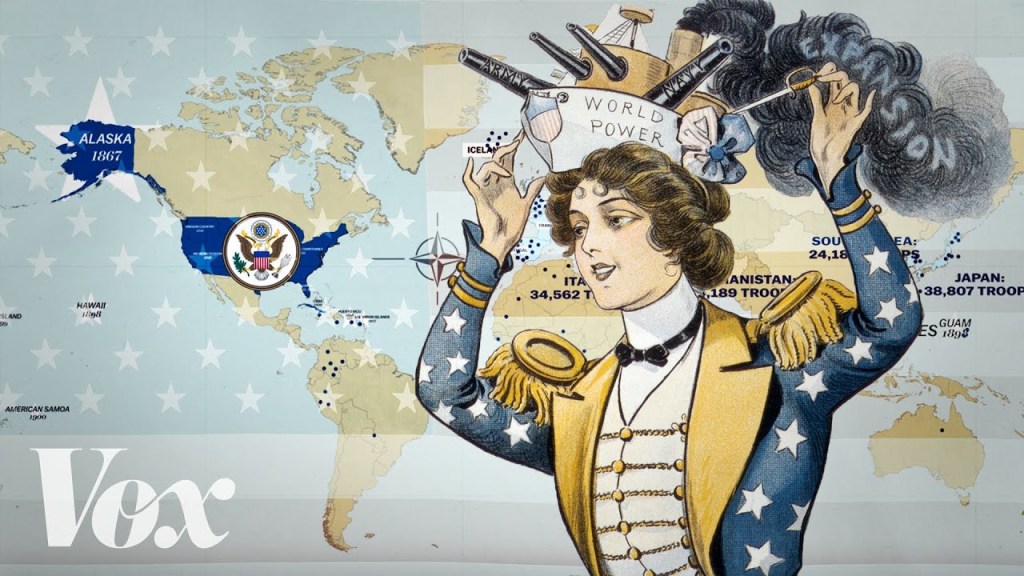
While the Americans were sowing mayhem around the world the Soviet Union–later Russia–was faced with an eventual encirclement of some 1,000 US military bases. The recent addition of NATO missile installations among the 12 Eastern European nations that have joined NATO since 1999, further complicated the Russian position. During this period of American threats they dubbed the Cold War, Russia was obliged to maintain an adequate defense. It is ironic that a country whose GDP ranks 11th in the world, should be the principal bulwark against the imperial pretensions of the United States with the world’s greatest GDP, 12 times that of the Russians (2017 data from Worldometers.org).

Pretending Nobody Is Looking

The rest of the world has not been oblivious to the last century of American imperial ascendence. Those who didn’t notice were the Americans themselves, who were blinded by a steady diet of myths and lies drilled into their minds over decades of relentless brainwashing. The mind-bending procedures were rudimentary, with the intellectual level of a Captain America comic, but they were pervasive. Americans were subjected to anti-communist rhetoric distributed by churches, schools, the media, Hollywood, the water they drank and the very air they breathed.

The progressive dumbing down of the American public was also a factor. Their country was the shining democracy on the hill, not the world’s principal predator. And, since the machinations of their country’s clandestine services were by their very nature, secret, most Americans had no idea that their government was guilty of harassing the Soviet regime in Siberia in 1918 or toppling Iran’s democratically-elected Mossadegh government in 1953, or training torturers for the Guatemalan dictatorship from the 1960s through the 1980s. And there is so much more they don’t know–and don’t want to know.

Sinecure: a position requiring little or no
work but giving the holder status or financial benefit.

An American mother loses a son in one of the country’s senseless wars and she is awarded a gold star, the same gold star we used to receive in second grade for completing our homework. “No,” you say, “this one is different. It’s for patriotism.” Ah, patriotism, the snake that bites its own tail by glorifying gratuitous deaths while attributing false value to those gold stars. The truth, Mom, is that your son died for no good reason or worse, to keep the wheels of the American war machine turning and its sinister profits rolling in. Companies like Lockheed Martin ($59.81 billion in revenues, 2019), Raytheon ($27.1 billion in revenues, 2018) and and hundreds of others are reaping obscene profits off the lives of young Americans.

That is what your gold star comemorates. At the same time it legitimizes America’s endless wars, and by extension the degradation and abandonment of the country’s own necessities, its infrastructures, health care, education, and cultural and social support systems. Coincidentally, President-elect Biden’s choice for Secretary of Defense is on the Raytheon payroll. Will he be renouncing that sinecure before he is sworn in?

Before we move on, let’s not forget the “enemy” soldiers and civilians (as in innocent infants, adolescents, parents and grandparents…) who are killed and mutilated for the same worthy imperial cause. Pentagon statistics don’t count them. Does that mean their suffering is irrelevant?

Then there’s the question of retribution. It doesn’t occur to Americans to acknowledge the human cost of their permanent wars. It’s not that they lack thinkers. They have hundreds of them penned up in hives on Think Tank Row, an area around Massachusetts Avenue NW in Washington DC populated by septic think tanks. Hasn’t it occurred to the American geniuses that these deadly manifestations of American patriotism might be creating enemies among the survivors? Don’t they realize that there is no more effective way of turning a normal Iraqi youth into a “terrorist?” Do the American thinkers need half their families fried by MQ-9 Reaper drones to awaken them to that possibility? Why are they so reluctant to admit that America requires a constant input of fresh terrorists to fuel their principal growth industry: permanent war?

The American necesssity for war is also a question of internal economics. It fulfills a macabre role in the distribution of wealth in the US, by transferring money from people who pay up to 37% in income taxes–salaried workers–to people who pay far less–big corporations. The United States imposes a tax on the profits of US resident corporations at a rate of 21 percent (reduced from 35 percent by Trump’s 2017 Tax Cuts and Jobs Act). The corporate income tax raised $230.2 billion in fiscal 2019, accounting for 6.6 percent of total federal revenue, down from 9 percent in 2017. (Source: taxpolicycenter.org)

The never-ending expenditure on war materiel, led by the F-35 Joint Strike Fighters at $100 million a pop, and the new Ford-Class nuclear aircraft carrier that cost $12.8 billion in materials and labor. Add to that the $4.7 billion spent in research and development of the new Ford-Class carrier line. There are plans for three more, despite growing opinion that, in view of new Russian and Chinese hypersonic missiles, the big carriers may be increasingly vulnerable in battle. Now add the costs of all the rest of the toys and trinkets the Pentagon purchases for the armed forces. This astronomical rate of expenditure supposes mega-profits for US arms manufacturers, and it’s the American taxpayer who pays the bills. How is such a sinister hamster-wheel justified? Blame it on the terrorists. During the final days of the Franco dictatorship in Spain left-wing demonstrators used to chant: “¡Vosotros, facistas, sois los terroristas!” “You, fascists, are the terrorists.”

Thanks for following, commenting and sharing.

Where Is H.L. Mencken When We Really Need Him?

“As democracy is perfected, the office represents, more and more closely, the inner soul of the people. We move toward a lofty ideal.”

H.L. Mencken at his desk at the Baltimore Evening Sun

Nobody Sees Through the Boobery Like the Sage of Baltimore

Mencken wasn’t always right. He was frequently wrong. But he pronounced these prophetic words on the state of American democracy in 1920, which for me exonerates him from all the rest:

The larger the mob, the harder the test. In small areas, before small electorates, a first-rate man occasionally fights his way through, carrying even the mob with him by force of his personality. But when the field is nationwide, and the fight must be waged chiefly at second and third hand, and the force of personality cannot so readily make itself felt, then all the odds are on the man who is, intrinsically, the most devious and mediocre—the man who can most easily adeptly disperse the notion that his mind is a virtual vacuum. The Presidency tends, year by year, to go to such men. On some great and glorious day the plain folks of the land will reach their heart’s desire at last, and the White House will be adorned by a downright moron.

Mencken, H. L. (July 26, 1920). “Bayard vs. Lionheart,” Baltimore Evening Sun
Thanks for following, commenting and sharing

Racism Is the Ongoing American Plague 2/2

“His entourage had checked in to the only hotel that would accept blacks…”–The Mirror

Discrimination Even in Hell

California writer and activist, Aron “Moe” Macarow, re-states the case of young black men who are discriminated against even in hell in his article “Our Prison System Is Even More Racist Than You Think” on ATTN.com (follow link to see his bullet points elaborated):

1. Race is likely to affect who receives the death penalty.
2. All states have disproportionately black prison populations, but states with the largest white majorities are also the worst.
3. Even before sentencing, people of color are at a disadvantage. They are are less likely to make bail than their white counterparts, spending more time in jail before they are even convicted of a crime.
4. Black offenders are more likely to receive harsher sentences for the same crimes as white convicts.
5. Key decision makers in death penalty cases are almost exclusively white.
6. Once in jail, black inmates are more likely to be in solitary confinement, and are less likely to receive the same mental healthcare as whites.
7. Black people are also more likely to die while in custody, and are more likely to experience violence at the hands of prison staff.
8. Even for those who are released, people of color still get the raw end of the deal.

Aron Macarow in ATTN.com

According to a recent Pew Research report, though black Americans’ imprisonment rate is at its lowest level in more than two decades, having decreased 34% since 2006, they are far more likely than their Hispanic and white counterparts to be in prison. The black imprisonment rate at the end of 2018 was nearly twice the rate among Hispanics (797 per 100,000) and more than five times the rate among whites (268 per 100,000). (PewResearch.org)

Racism Is the Ongoing American Plague 1/2

This image has an empty alt attribute; its file name is lynching-1.png
They’re proud of themselves. Not much has changed.

It’s the Underlying Plot of the American Story

If there’s a plot line that runs through the American story from its earliest history to our own day it’s inhuman, homicidal racism. That issue, which has been solved or significantly improved in most of the world, remains a tragic ballast in the progress of the United States of America. It’s there that governments and citizens have been pussyfooting around murderous racial injustice for the past 400 years and the end is not in sight. Lynching, in one form or another, remains as American as apple pie.

The origin of European race-based slavery in the New World are not to be found on the American mainland, however. It occurred on the Caribbean island of Hispaniola, site of today’s Haiti and El Salvador, and the perpetrators were Christopher Columbus (yes the same man celebrated so lavishly every year on October 12 in all but seven of the United States), his brothers and their followers. Their brutality and rapine set the benchmark from the outset for genocidal practices in the Americas. In just a few decades they eliminated 100% of the native Taino Indian population on the island, either through contagious diseases or plain murder.

A favorite mode was coursing the Indians with horses and hunting hounds, killing them and feeding their bodies to the dogs. Today not a drop of Taino blood remains in either Haiti nor El Salvador. How did the Spanish justify this enslavement, murder and mayhem in the West Indies? It was easy. Insofar as the red-skinned primitive people of the islands did not know God, did not fear him and were not even baptized, they were considered commodities, not human beings. Besides, they were needed as slaves to dig their coveted gold out of the ground for the Spaniards. (Source: A Short Account of the Destruction of the Indies, Fray Bartolomé de las Casas)

Black Slavery from Africa

The divine approval of this sort of barbarous practices arrived as early as 1455 when Pope Nicholas V issued the Romanus Pontifex, affirming Portugal’s exclusive rights along the West African coast to territories it claimed there and the trade from those areas, as well as the right to invade, plunder and “reduce their persons to perpetual slavery.” (NY Times.com) The Holy Father’s timing was uncanny, as Columbus “discovered” America less than four decades later and Queen Isabella of Spain promptly authorized the enslavement of the native people of the West Indies.

The conditions imposed in the shipping of black slaves from Africa were unthinkable, which may be why white Americans have done their best not to think about them ever since. This trans-Atlantic slave trade represented a new form of race-based slavery. Endorsed by the Europeans, it resulted in the largest forced migration in history with some 12.5 million Africans shipped to the New World like livestock until the early part of the 19th century. The conditions on the slave ships were severe and unhygienic in the extreme. The victims, who were chained to plank racks, suffered dehydration, dysentery and scurvywhich bred mortality rates as high as 30% among men, women and especially children. (Source: Wikipedia)

It is not an exaggeration to affirm that the product of black-slave labor laid the principal foundations for America’s prosperity up until the Civil War, and continued after Emancipation and Reconstruction in other, locally cooked-up guises. Seven of the eight wealthiest states in the union in 1860 were slave states. This is not to say the north didn’t benefit, as well. Southern-grown tobacco and cotton travelled north to be processed and sold, producing large profits for the Yankees.

Racial Progress or Business as Usual?

In 1808, the last year of Thomas Jefferson’s presidency, the US banned the importation of slaves from Africa and the West Indies. This sounds like a noble gesture, but it was just business as usual. At the time the increase of the black slave population in America was due to what history books call “natural increase.” What they don’t tell you is that this increase was anything but natural. It was the mass production from slave-breeding farms scattered around the south. These highly lucrative businesses were akin to livestock breeding operations. In its heyday the port of Richmond alone shipped some 10-20,000 slaves a month into the southern slave market.  Slaves delivered on ships arrived in better condition and drew better prices. This profitable local production of slaves motivated many of the proponents of the importation prohibition, including Thomas Jefferson, to back a move intended to eliminate foreign competition, thus shoring up slave prices.

Slavery was more than man’s inhumanity towards man. It was always about economics. Cheap labor that allowed America to compete with other nations. Much of America was literally built on slavery. Texas schoolbooks are now trying to make it sound not quite so bad. The breeding farms receive no mention at all.William Spivey on Medium, Mar 21, 2019, America’s Breeding Farms: What History Books Never Told You

Fast Forward Two Centuries

Let’s fast forward two centuries–skipping over a period that includes the Civil War and Emancipation, Reconstruction, the Black Codes, Separate but Equal, Jim Crow, the Civil Rights Act, and the Obama presidency; all of which brought with them varying degrees of point and counterpoint and deserve treating in detail on other occasions. Today we have the privilege of reading Ta-Nehisi Coates’ monumental 19,000-word article, The Black Family In The Age Of Mass Incarceration, published in The Atlantic in October, 2015, which sums up the present-day outcome of those centuries of inequality and oppression.

In this definitive elaboration of America’s latest catalog of racial injustice, Coates’ cites sociologist, advisor to President Lydon Johnson and later US senator, Daniel Moynihan’s book, “The Negro Family: The Case for National Action” (known as the Moynihan Report and distributed inside the government without the author’s name), which argued in 1965 that the federal government was underestimating the damage done to black families by “three centuries of sometimes unimaginable mistreatment” as well as a “racist virus in the American blood stream,” which would continue to plague blacks in his future, which is our present.

Moynihan’s proposed solution, that included provisions to rewrite the child protection laws to put fathers back into black homes (as having a man in the house exempted a family from government assistance) and to provide families with guaranteed minimum incomes, was too radical to be accepted by the legislators of mid-60s America–and today’s America, for that matter– but the report remains as a reminder of what might have been–and might still be possible someday.

Coates reminds us that America’s debt to African Americans remains unpaid:

That the Negro American has survived at all is extraordinary—a lesser people might simply have died out, as indeed others have … But it may not be supposed that the Negro American community has not paid a fearful price for the incredible mistreatment to which it has been subjected over the past three centuries.

(Ta-Nehisi Coates, The Black Family In The Age Of Mass Incarceration)

Mass Incarceration Is the New Slavery

Not only does the US boast alarming incarceration statistics–the highest in the world–but the way in which they’re racially skewed is even more absurd. Here’s the incredible prison infrastructure that permits the United States to process almost 2.3 million alleged wrongdoers–“alleged” because nearly half of them have not been convicted of the charges they’re accused of: 1,833 state prisons, 110 federal prisons, 1,772 juvenile correctional facilities, 3,134 local jails, 218 immigration detention facilities, and 80 Indian Country jails as well as in military prisons, civil commitment centers and psychiatric facilities.

More than a third of people executed under the death penalty within the last 40 years have been Black, even though African Americans represent only 13% of the general population. African Americans are pursued, convicted, and sent to death at a disproportionally higher rate than any other race.

In early 2000, the percentage of Black people on death row were as follows for the states below:

  • Maryland 72%
  • Pennsylvania 63%
  • Illinois 63%
  • Alabama 46%
  • Texas 41%
  • Virginia 39%
  • California 36%
  • Florida 36%

Thanks for following, commenting and sharing.

Go to Part 2

The Savant of Lowbrow US Politicians

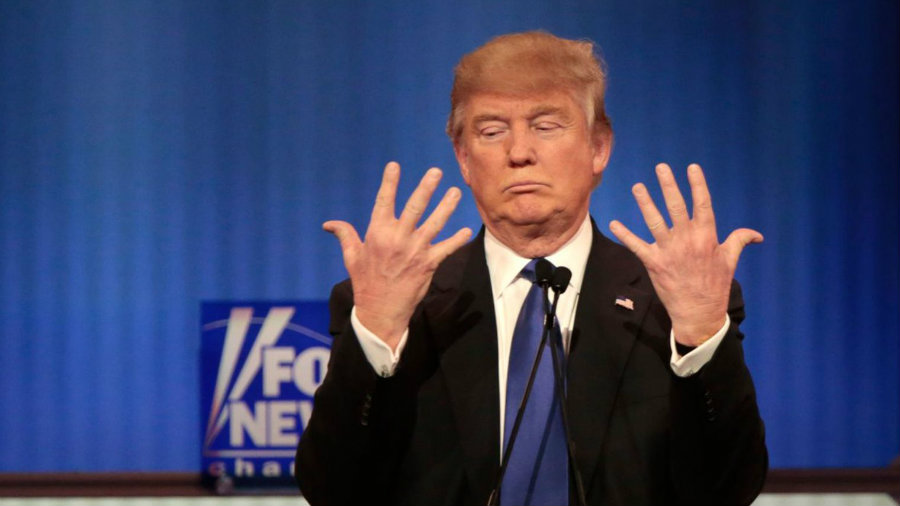
President Trump making calculations on Fox News

Donald Trump Is a Very Stable Scumbag Genius

Now that soon-to-be ex President Donald Trump no longer represents such a clear and present danger, perhaps we can look at him with some equanimity. Maybe we can try to understand what made him such an extravagantly atypical President of the United States. From the beginning of his incredible five-year run he seemed grossly unsuitable, and he still does. He lacks formation, intelligence, honesty, humility, aplomb, tact, humanity, generosity, elegance, class, social skills, diplomacy, discretion, wit, grace… Feel free to add your own terms to the description. Ironically, for one of the country’s most (self) acclaimed businessmen, he even lacks business acumen, having accumulated a long rap sheet of bankrupcies. Some well-informed White House observers have suggested that he lacks even sanity.

Is this to say that he’s good for nothing? Certainly not. He’s extremely good at what he’s good at. It took him successfully to the White House for four years and a near reelection, against very long odds. We have to give him credit for that. How did he manage it?

How Does the Kingfisher Manage It?

How does a kingfisher so effortlessly manage to drop from a branch like an arrow, enter the water and emerge with a fish in his beak? You don’t know? He doesn’t either. He was just born to fish. Can he ride a bicycle, compose a poem, command a platoon or run a meeting in the White House situation room? No, of course not. He can only do what kingfishers do: catch fish with amazing grace, build nests in cavities, impregnate queenfishers and feed the little ones. Is he intelligent? No, of course not. His brain weighs less than a microchip. He doesn’t do more because he’s incapable of conscious thought, but what little he does, he does astonishingly well, almost to perfection. In his way he’s a very limited genius, an avian savant.

Dr. A. Snyder described some tentative aspects of the savant mind in 2009:

No widely accepted cognitive theory explains savants’ combination of talent and deficit. It has been suggested that individuals with autism are biased towards detail-focused processing and that this cognitive style predisposes individuals either with or without autism to savant talents. Another hypothesis is that savants hyper-systemize, thereby giving an impression of talent… Also, the attention to detail of savants is a consequence of enhanced perception or sensory hypersensitivity in these unique individuals. 

(Source: The Economist, April 16, 2009)

I’m not going to suggest that Donald Trump is a birdbrain, but he does share some remarkable traits with the kingfisher and the savants. He has one astonishing talent. The rest is deficit. Though he lacks the intelligence and the attention span necessary for rational thought, normal social relations or running a White House, he is a genius when it comes to appealing to unlettered Americans in a presidential election campaign. For that mission he has it all: the bravado, the arrogance, the swagger, the down-home knee-slapping coarseness, the elusive adaptability of the camaleon, the je ne sais quoi of lying and boasting effortlessly, of insulting intelligence, evading the point, changing the subject and, of course, insulting his opponents.

No other president in American history has brought the presidency so low, reducing the discourse to cheeseburgers and reality shows, and converting his country into a laughing stock on the world stage, feared not for its awesome power but for the perilous ineptitude of its commander in chief. Nonetheless, he is the undisputed sociopath thought leader of almost half of American voters. He is the lowbrow savant of American politics. He can convert his fraudulent christianity into a political power base. He can lead the American lemmings to the gaping sea. Can he also memorize 600 telephone numbers?

Aside from what he’s undeniably good at, do we need to be reminded of the rest, of the unmistakable signs of ineptitude and mental deficiency? What to say of a public figure who stands behind a lectern and proclaims to the entire country: “Throughout my life my two greatest assets have been mental stability and being, like, really smart.” Is it possible that he’s, like, far from really smart?

Trump’s performances in the White House press room and lawn alone are enough to suggest that he should perhaps be institutionalized. This is the President of the United States speaking: “(Adriana Huffington) is unattractive both inside and out. I fully understand why her former husband left her for a man–he made a good decision.”

Trump’s choice of friends and allies is another indicator of his questionable judgment, starting with his bosom buddy, Vladimir Putin. The choice of this friend to cherish and protect makes at least half of the American population ask themselves, “What has Putin got on Trump?” Vladimir Putin is a former director of the KGB and a chess player. He’s not going to have the wit to bug the luxurious hotel suites where he invites Trump to stay?

President Trump with his friend, Nigel Farage

Then there’s Nigel Farage, perhaps something of a savant himself. Farage is the indifferently-educated, right-wing British politician who orchestrated–along with other UK reactionaries and the help of the American big-data firm, Cambridge Analytics–the Brexit campaign that untimely jerked the British out of the European Community, leaving them at the mercy of their American friends, led by President Donald Trump. One wonders if Farage ever bothered to check the attrition rate among Trump’s White House staff.

Let’s Be Fair

President Trump is not solely responsible for his smash-and-grab world view. He’s had a lot of help. He came from a dystopian family that sent him to military school and instilled in him crass real-estate-operator values and a bloated sense of his own worth. That alone is enough to create a ruthless, unprincipled adult, but the American social milieu wasn’t much better. His young manhood transpired during the Johnson/Nixon/Reagan era, times of consummate American opportunism, predation and mediocrity. Let’s not pretend that Trump created America. America created Trump.

Now he is on his way out, but America marches on. There will be a new president, the product of a “less bad” dynamic. Will he–will anybody–be able to clean up the monumental mess President Trump has deliberately left in his wake? It’s too late for the 240,000 Covid-19 dead (four times the American lives lost in the Vietnam war), and environmental recovery has been set back four critical years. Fundamental government agencies have been effectively dismantled and whatever good will was left in America is long gone. No, Donald Trump is not solely responsible for all this , but he assuredly did his ignominious part.

While we’re being fair, let’s pose the vital remaining question: Will President Donald J. Trump be held responsible–before a court of law–for his most egregiously damaging actions while in the White House. The court might start by looking at the ongoing series of homicidal lies that Trump employed to play down the Coronavirus pandemic in order to favor his own reelection possibilities.

Thanks for following, commenting and sharing.

The Pipeline

Nord Stream 2 Oil Pipeline: Business or Politics? Competition or Blackmail?

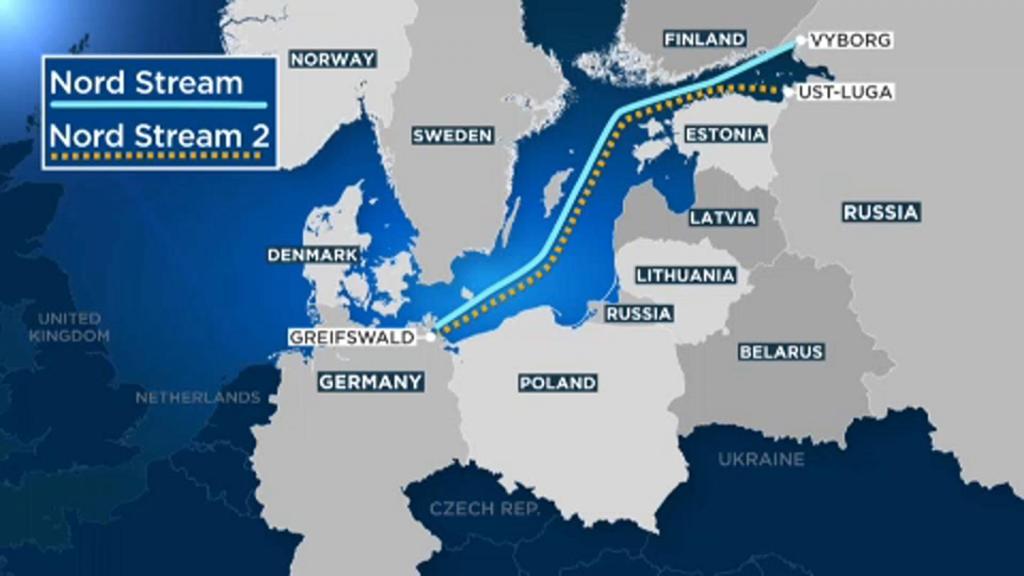
Germany is Europe’s principal industrial power. That’s their first problem. They are also the motor of the European economy. That’s a second strike against them. Angela Merkel, their prime minister, is one of a half dozen most respected world leaders. Added to all that, they’re cordial trading partners with Russia. Now they’re just months off activating an important natural-gas deal with the Russians via a new pipeline that runs beneath the Baltic sea from Ust-Luga in Russia to to Lubmin in Germany. It’s called Nord Stream 2.

President Trump has suggested that American liquified shale gas, which he calls “freedom gas,” might be a better alternative.

The Nord Stream project is a deal between two sovereign nations, beneficial to both. The Germans need a secure energy source to drive their industry long term and the Russians have massive natural gas fields within pipeline distance. The work of laying the undersea pipeline that began 10 years ago is 94% finished with just the final 144 kilometers remaining. The Germans stand to have their energy needs covered for decades and for the Russians it’s a plum sale. The Nord Stream 2 pipeline is also designed to link with ramifications that will extend to the Czech Republic, Slovakia, Austria and Italy.

“The gas pipeline is advantageous for end consumers in Germany due to a procurement advantage of around five percent,” according to Global Risk Insights.com. The economic policy spokesman for Germany’s Union parliamentary group, Joachim Pfeiffer (CDU), argued that the second Baltic Sea pipeline would provide “another transport route for gas and thus improve our energy security”.  (Source: Global Risk Insights.com)

But there’s a problem. The American government disapproves, alleging that the project would increase Russia’s influence in the region. American opposition to Nord Stream 2 may also be related to competition that Russian gas represents to their own liquified shale gas in the EU market, which they would ship to Europe aboard tanker ships. Meanwhile, American rhetoric is ratcheting up and they are rallying their allies and sympathetic media around the world to oppose the Nord Stream 2 operation.

Three Republican Senators

Three Republican senators–Ted Cruz of Texas, Tom Cotton of Arkansas and Ron Johnson of Wisconsin–have sent a belligerent letter to the municipal authorities of Murkan Port on the island of Rugen demanding that they cease their technical assistance to the Russian vessels constructing the final sections of the Nord Stream 2 gas pipeline. Ted Cruz calls the Russian-German natural gas deal “a direct assault on US national security.”

According to Deutsche Welle (DW), the German news agency, the senators are “threatening” the operators of this small German port with “crushing legal and economic sanctions.” In their letter the US senators accuse port operator, Faehrhafen Sassnitz, of “knowingly providing significant goods, services, and support” for the project and demanding that they “cease activities” supporting the construction of the pipeline or face “potentially fatal measures.” German Minister of State, Niels Annen, took umbrage at what he considered the senators’ bad manners, saying that he considered the tone and content of the senators’ letter “completely outrageous.” He added, “Threatening a close friend and ally with sanctions, and using that kind of language, will not work.” Annen told German public broadcaster ZDF, “European energy policy will be decided in Brussels, and not in Washington DC.”

Sounds Like Familiar Extraterritorial US Sanctions

According to US Secretary of State, Mike Pompeo, the Nord Stream 2 project is considered an activity related to Russian export pipelines and therefore “at risk of US sanctions.” Pompeo considers his statement as “a clear warning to companies aiding and abetting Russia’s malign-influence projects that will not be tolerated. Get out now or risk the consequences.”

This sounds more like Dodge City than Old Europe. Where does the mayor of Dodge derive the authority to ban legitimate commercial transactions on the other side of the Atlantic? Where does this American geopolitical arrogance originate? In overconfidence? Naivete? Greed? A historical self-perception of invulnerability? All of the above? Whatever the motives, with this extravagant pipeline stand the Americans are, by threatening the Germans and the Russians with sanctions, taking on two quite serious countries–and by extension the entire European Community. That prominent American politicians should proffer those threats, and in that language, serves mainly to reaffirm the world’s suspicions just how far off the rails the Americans have veered.

As for “malign -influence projects,” what is that supposed to communicate, beyond self-serving, preach-to-the-choir gibberish? Secretary Pompeo studied at the US Military Academy at West Point. Didn’t he read the history of Napoleon Bonaparte? Shouldn’t he be aware of the way imperial arrogance lubricated the slippery slope from Austerlitz to Waterloo?

The American Free-Trade Farce

The US has already imposed some sanctions on the ships laying the Nord Stream 2 pipes and has threatened to expand them if the pipeline is completed. The EU stressed that such a move would be “unacceptable” and Germany insisted the project “gives no cause” for sanctions. The German foreign affairs minister, Heiko Maas, defends the principal of free trade, insisting that the Nord Stream 2 pipeline issue is economic, not political. Russia has been the largest supplier of natural gas to the EU since 2018, according to the European Commission.

The free-trade argument is one that the fiercely-free-trading Americans should understand, but they appear not to. They go so far as to suggest that Germany would be better served by importing American liquified shale gas, transporting it thousands of miles across the Atlantic Ocean. It’s almost as if their desire to peddle their own gas influenced their thinking in a grotesque way. President Trump had his own take on American natural gas. He calls it “freedom gas.” This might be a cogent argument in Mississippi but anywhere else in the world it sounds simply inane.

What’s the End Game?

German authorities have expressed their firm intentions to finish the pipeline and start receiving Russian natural gas. Secretary of State Pompeo has countered with a Hollywood old-west-style ultimatum: “Get out now or face the consequences.” What happens now if the Germans and the Russians decide not to “get out?” Will the President give the order to bomb the Russian town of Ust-Luga, the source of the problem? Or Berlin? Or both?

May you live in interesting times.

P.S. That said, will the President still be President?

Thanks for following, commenting and sharing.

Was 9/11 America’s Reichstag Fire?

It’s Not Quite Clear Yet, But It Smells Like It

On September 11, 2001, 19 Muslim activists, ostensibly trained in Afghanistan and at naive American flight schools, hijacked four airliners and flew two of them into the twin towers of the World Trade Center, and a third into the Pentagon. The fourth crashed in a field in Pennsylvania, perhaps due to a passenger revolt aboard. The operation left behind almost 3,000 dead and a lot of unanswered questions. 

Subsequent deaths related to the 9/11 attacks are about to surpass the number who died on the day. According to Dr. Michael Crane, director of the World Trade Center Health Program Clinical Center of Excellence at the Mount Sinai Hospital, nearly 10,000 first responders and others who were in the World Trade Center area have been diagnosed with cancer. More than 2,000 deaths have been attributed to 9/11 illnesses thus far. And it will get worse.

The Reichstag Precedent

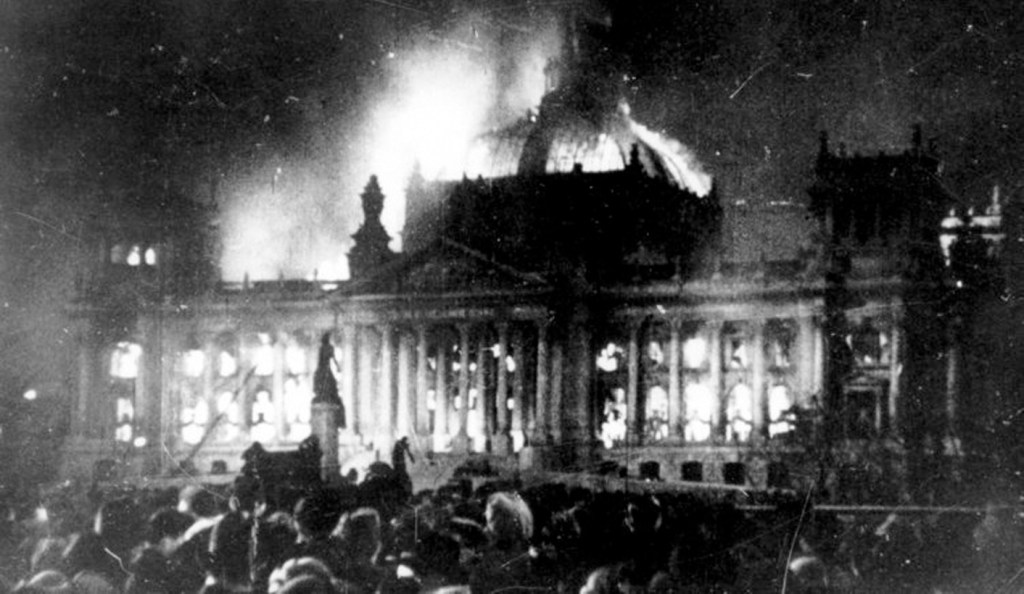
In 1933, the German Reichstag (parliament building) was torched by a supposed left-wing arsonist, just a month after Hitler was sworn in as Chancellor. This event, considered an inside job by some informed observers, set the scene for his total takeover of the German state and, over the next 12 years, the rest of Europe. His first step, immediately after the fire, was to announce the Reichstag Fire Decree, permitting the police to detain people indefinitely without a court order; and then the Enabling Act that gave him broad legal powers over all aspects of German society, powers that he never relenquished and employed to wreak historic havoc in Europe.

If this sounds reminiscent of the Patriot Acts I and II after 9/11, it’s because they have a lot in common:

  • The ongoing doubt regarding who engineered the attack and how
  • The rapid and ongoing promulgation of emergency anti-terrorist legislation that simultaneously curtailed citizens’ civil rights
  • The supposed legitimazation of military action against sovereign countries that seemed to be chosen for other reasons
  • The tolerance of armed right-wing militias and commandos on the streets of his own country
  • The affirmation of a policy of belligerence and über-nationalism in foreign relations

The American Experience

In concrete terms the American response to 9/11 manifested itself in gratuitous invasions of Afghanistan and Iraq with disastrous long-term consequences for both of those essentially innocent countries. No cogent evidence was ever produced connecting either of them to the September 11 attacks. Years later the Americans themselves confessed that the Iraqi-weapons-of-mass-destruction justification was false.

Coincidentally, the 9/11 attacks seem eerily to have been predicted by the neocon Project for the New American Century (PNAC) when their Rebuilding America’s Defenses paper, written a year before before the September 11 attacks said: “Further, the process of transformation, even if it brings revolutionary change, is likely to be a long one, absent some catastrophic and catalyzing event – like a new Pearl Harbor.” The neocons fortuitously got their “new Pearl Harbor” on September 11, 2001. Veteran Australian journalist and documentary film maker, John Pilger, points to this passage when arguing that the Bush administration used the events of September 11 as an opportunity to capitalize on long-desired plans.

Meanwhile, the motivation for the attacks was never made clear, though it seems evident that any ranking Muslim terrorist with a mínimum of geopolitical savvy would have immediately foreseen the untold disasters that would befall his people in the aftermath of a 9/11-style event. By the same token, any neocon would immediately perceive the benefits of that same attack when it came to frightening American citizens, stripping them of their constitutional rights and herding them willy-nilly down the path to perpetual war.  

We had never seen the conspiracy-theory card played so fast and loose as in the case of the September 11 attacks on the World Trade Center, Building 7 and the Pentagon, each of which poses its own set of serious anomalies. Congressional proposals in response to the 9/11 attacks were introduced less than a week after the event and President George W. Bush signed the USA Patriot Act bill into law just over a month later, on October 26, 2001. The bill passed with a single dissenter, Senator Russ Feingold of Wisconsin.

Is Your Story Leaky? Just Label Your Doubters “Conspiracy Theorists”

The lapses and inconsistencies in the oficial version of the events of 9/11, aggravated by the clumsy investigation, soon gave rise to groups of doubters from around the world, many of them highly qualified, who came to be called the 911 Truth Movement. The architects and engineers among these doubters launched elaborate technical investigations into the anomalous circumstances of the buildings’ collapse. They allege that there is no rational explanation for their straight-down near free fall , especially in the case of the 47-story Building Seven, which was not struck by any airplane yet dropped as true as a plumb bob. Further research on the case is complicated by the fact that the debri was hauled away and exported almost immediately after the attacks and very shortly nothing remainedI of the crime scenes.

The response from the American establishment and media to the questions posed by the doubters was an effective stone wall expressed in one brief phrase: “conspiracy theories.” That was enough to settle the question for the majority of the American people, terrified or ignorant enough to accept simple, flag-wrapped explanations for events that were clearly much more complicated. Who is telling the truth? Who stands to benefit? The oficial investigation forgot even to follow the money. If it had they might have noticed that the big winners were Larry Silverstein’s Silverstein Properties which enjoyed a $4.55 billion insurance settlement and, of course, the military-industrial complex that has been bloated ever since by the sale—all over the world—of ever-more-sophisticated, fabulously-expensive arms and anti-terrorist materiel.

The trouble with “emergency legislation” like Hitler’s Enabling Act and the Patriot Act in the US is the difficulty in revoking it when the emergency has passed. Due mainly to the executive branches’greed for competencies, some of the most repressive aspects of these laws survive as toxic legacies until their most pernicious parts are eventually accepted as routine.

Enter the USA Patriot Act

The USA Patriot Act, enacted on October 26, 2001, modified many major U.S. intelligence, communications, and privacy laws, including: The Electronic Communications Privacy Act,  the Foreign Intelligence Surveillance Act of 1978, and the Communications Act of 1934. (Source: it.ojp.gov) The parts of the Patriot Act that cause most concern have to do with provisions that facilitated the governments right to collect Americans’ communications records.

According to VOX.com:

The Patriot Act covered a lot of ground. Some of its provisions have since been struck down by the courts (the Supreme Court has ruled that it’s illegal to indefinitely detain immigrants who aren’t charged with crimes, for example); others have become part of the mission of the Department of Homeland Security, which didn’t exist when the law was passed. Others have stuck around and aren’t the subject of a lot of controversy: the law created a slew of new federal crimes related to terrorism, created federal funds to assist victims of terrorism, and gave the federal government a range of new powers to track and seize money being used by organizations connected to terrorism.

Though the introductory notes to the USA Patriot Act try to emphasize the protection of the civil rights of Americans, subsequent editions of the act have tightened many of those loopholes:

  • the 2001 Act,
  • the 2005 reauthorizing act,
  • the 2006 amending and reauthorizing act, and
  • the 2011 four-year extension of the “lone wolf” definition, authorization of “roving wiretaps” and “request for production business records” search authority.

The ACLU writes in 2001,

Less than two years after Congress passed the USA Patriot Act, giving new, sweeping powers to the federal government to conduct investigations and surveillance inside the United States, the Justice Department is contemplating another chilling grab of authority and further diminution of constitutional checks and balances on law enforcement. 

With the Domestic Security Enhancement Act the Administration took the Patriot Act’s antiterror powers several steps further.  Dubbed “Patriot Act 2,” the legislation granted additional sweeping powers to the government, eliminating or weakening remaining limits on government surveillance, wiretapping, detention and prosecution. 

In subsequent years the government amended the Patriot Act three more times. The government’s response to allegations of civil rights abuse, published on Justice.gov, reads like a patronizing explanation for the most rigorous provisions of the USA Patriot Act 2, almost as if they were ashamed of it:

The Patriot Act allows investigators to use the tools that were already available to investigate organized crime and drug trafficking. Many of the tools the Act provides to law enforcement to fight terrorism have been used for decades to fight organized crime and drug dealers, and have been reviewed and approved by the courts.

(Congressional Record, 10/25/01)

The Final Link

The final link in the chain of events unleashed by the Reichstag Fire was World War II. We have yet to see the ultimate results of the events of 9/11, both on the American domestic front and on foreign relations. Will the Patriot Act ultimately enable the US government to treat the Black Lives Matter demonstrators as terrorists? Will they permit Washington chicken hawks to launch unjustified attacks on sovereign countries such as Venezuela and Iran the way they did in Iraq and Afghanistan in early years of this century? Will future American agressions lead to another worldwide conflagration? The 2020 American presidential election is imminent and may be decisive in determining the final link in the series of events initiated by the attacks of September 11, 2001. Which is the candidate who will prevent the worst occurring at home and abroad? Your guess is as good as mine. And we don’t have long to wait.

###

Thanks for following, commenting and sharing.