If you’re reading this you will agree that some profound changes in the American government are urgently needed. (How can I be so sure you’ll agree? Because the people who disagree don’t read.) The questions remaining are:
What changes are required?
Who’s going to carry them out?
When and how?
The most obvious answers seem to be:
A clean sweep of the Trump government
A citizens’ initiative
ASAP, and the How is more complicated
The prevailing wisdom seems to be that President Trump needs impeaching. It’s hard to disagree with that, but it’s equally hard not to notice that it wouldn’t do a great deal of good. Besides impeaching (being brought to trial by a simple majority of the House of Representatives where Democrats outnumber Republicans 235 to 198) he also needs convicting by a two-thirds vote in the Senate, and with a Republican-controlled Senate that’s not going to happen. Let’s fantacize a little bit. If it did happen and President Trump were booted out of office, what then? There’s Vice President Pence, waiting in the wings, drooling scripture. Then comes the three-year legal process to get rid of him. Clearly, this is too clunky, and it’s not feasible.
In fact, maybe this whole scenario is based on the liberals’ denial of the real situation. Perhaps their obsession with freeing the country from Trumpism just forms part of their aversion to cell phones, killer drones and Marvel movies. Maybe they should let nature take its course. President Trump was elected, after all. The rest is history in the making.
People who disagree profoundly with President Trump feel they need not only a new President but a clean sweep of the government. To achieve that objective by legal means is virtually impossible, given the extent to which Republican elected officials and appointees control the government, with the sole exception of the Supreme Court, which has its own impediments, i.e. a conservative majority. That situation could get even worse. It’s not clear how much longer Ruth Bader, the charming little 86-year-old weight-lifting justice who has been on the Court for the past 26 years, might last. If President Trump gets to appoint her successor the Supreme Court could be monopolized by powerful reactionaries for decades.
Another–Admittedly Messy–Alternative
Another possibility is civil war. (Yes, it could happen there.) But that has serious drawbacks, too. In the first place, it would be messy, as Americans discovered in their first civil war, a century and a half ago. Then there’s the question of doubt about its outcome. Would President Trump’s well-armed-and-de-cerebrated Nazis, Klansmen (Klanspeople?) and White Supremacists prevail? Even worse, it’s not clear whether the military and the police would come down on the side of the conspirators or the armed militias. No, the civil-war option is entirely too risky.
What possible solution to America’s current political dilemma does that leave? They could try some sort of covert operation to bring about what the Americans refer to as “regime change.” The mere mention of that provokes a shudder among even the most hardened proponents of getting rid of Trumpism. “Yes, but these are trying times and this is a special case,” they will say, “and there will be time later to justify the more extreme measures.” That is if those measures work, something that is not assured.
If progressive Americans should decide to take the first step down that slippery slope, how would they go about it? It’s a massive project, like building a dam. They would need some experts, though they wouldn’t have far to look. The world regime-change capital is in Virginia, the home of Washington and Jefferson. The CIA headquarters is in McLean, just 20 minutes down the George Washington Memorial Parkway from Washington, DC. They’re not short of tried and tested experts in the business of changing regimes. As far as we know, until now their activities have been limited to other people’s countries, but it wouldn’t take a great deal of adjustment for them to adapt their methods to their home ground.
Tutti Frutti Regime Change
The CIA regime-change specialists have several flavors to choose from. There’s the straightforward invasion mode, which sounds like a good idea given the size and technological level of the American military. Though it didn’t work in Vietnam, Iraq or Syria, it was successful in smaller, less advanced countries like Panama and the Caribbean island of Grenada. But it isn’t a first-choice option for their own country. Nobody–or almost nobody–would look kindly upon the bombing of Boston.
A subtler approach is the proxy mode in which the CIA recruits, equips and trains an army of mercenaries (hereafter known as “the opposition”) with sufficient clout to bring down the existing (usually elected left-wing) government and install a strong man of their own choosing. This model has worked in Central America (since time immemorial) and East Timor (1975–1999), but not so well in Korea (1950-1953), Vietnam (1953-1975), Angola (1974–2002) or Syria (2011-2019). American proxy wars have been known to get out of hand and require American troops to intervene, as was the case in Korea and Vietnam.
A proxy operation would seem redundant in the United States, which already has a massive military, poised and ready to intervene anywhere in the world. Why not start in Washington? This would require years of careful grooming of key military officers capable of commanding a coup détat when the time comes. Does that mean this Manchurian-army ploy would take 10 or 20 years to execute? Yes, unless they already started 10 or 20 years ago…
Wait, Hasn’t the United States Already Undergone Regime Change
It can be coherently argued that the election of President Donald Trump and the government he subsequently formed was a de-facto regime change. After all, their objective was to dismount virtually the entire government by eliminating or privatizing existing programs in all areas, from environmental protection to education, health care and government regulation of the financial sector. And they are moving briskly backward with that program. So, yes, there is regime-change underway, though many thoughtful Americans would affirm that it’s changing in the wrong direction and needs to be re-directed.
That is to say, they would advocate a regime change of the regime change. It sounds almost as silly as the Brits Brexiting the Brexit, but there you have it. How simple it would have been for the Americans to head Trumpism off at the pass in the last presidential election, but for some reason they didn’t. So now they find themselves facing a bear that is potentially bigger and hairier than the Russian bear they’ve been threatening us with all these years.
BREAKING NEWS
Whatever they decide to do, they had better do it quickly, in view of President Trump’s latest declaration on his pullout from the contested border areas between Turkey and Syria, populated by the long-suffering Kurds. They were the main players in the recent American-sponsored “victory” over ISIS. Last Sunday’s American withdrawl opened the way for Turkish troops to sweep into Syria, wiping out the Kurds, now abandoned by the US, along the way. Turkey has the largest army in NATO, and according to yesterday’s papers they’re ready to roll.
It seems that some of the President’s advisors have belatedly warned him that turning the Turks loose to slaughter the Kurds and invade Syria is a singularly bad idea that would open up a whole new can of worms in the Middle East. So the President, never at a loss for words, excreted this declaration yesterday (as reported by The Guardian, October 7, 2029):
“As I have stated strongly before, and just to reiterate, if Turkey does anything that I, in my great and unmatched wisdom, consider to be off limits, I will totally destroy and obliterate the Economy of Turkey (I’ve done before!),” Mr Trump wrote on Twitter Monday morning.
He continued: “They must, with Europe and others, watch over the captured ISIS fighters and families. The US has done far more than anyone could have ever expected, including the capture of 100% of the ISIS Caliphate. It is time now for others in the region, some of great wealth, to protect their own territory. THE USA IS GREAT!”
It may be too late for regime change in the United States. Don’t you wish you’d built a bomb shelter?
If you look up definitions of “patriotism” you will find a collection of innocuous platitudes about love of country, shared values, pride, etc. It is as if the people who wrote those definitions were unaware that their loveable patriotism has metamorphosed from a cute little yellow worm to a giant venomous butterfly and that it has been instrumentalized as a tool used to justify all sorts of outrages all over the world. Those bland representations of patriotism have been largely out of date for centuries, perhaps as far back as the time when the ancient Greeks coined the word “patris,” meaning “fatherland,” in order to legitimize their own wars of conquest.
It’s patriotism in the hands of cynical politicians and dark interests that not only authorizes, but glorifies the United States’ least noble machinations both inside and outside their own country . It was a curious mousse of patriotism, anti-communism and business-as-usual that justified more than a century of American subversions, bombings, regime changes, invasions and occupations of other people’s countries around the world. It started in Massachusetts and Virginia in the 16th and 17th centuries against the native Americans and went from there to Mexico, Cuba, all of Central America and the Philippines, later to pass to Vietnam, Cambodia, Laos, Libia and Syria, among others. No country with strategic locations, sugar plantations or oil-and-gas deposits escapes American patriotism. “But that doesn’t make any sense,” you say, “no decent country can pretend to justify grave abuses worldwide on such flimsy, false thinking.”
How did such a pure and noble concept as the natural love of one’s country degenerate into murderous havoc? It didn’t happen haphazardly. It was carefully planted and nurtured throughout the history of American society, in their schools, churches, the media, the men’s clubs, the Boy Scouts, the military, the government, the think tanks, and Hollywood. John Wayne did more damage than napalm. Almost everybody was–and remains–on board.
I wonder if American school-children still recite the Pledge of Allegiance to the Flag every morning. That would be considered insidious mind bending of innocent children in any advanced country except the United States. From 1892 until December 22, 1942, the Pledge was accompanied by the “Bellamy salute,” with the hand outstretched toward the flag, palm down. It was not until the middle of World War II, that Congress noticed the uncomfortable similarity to the Nazi salute and derrogated the Bellamy salute in favor of the familiar hand-over-heart gesture.
The same goes for the American flag fetish, which I have written about earlier in this series. One of the first things that first-time visitors to the United States notice is the abundance of American flags adorning the facades of private homes. Seen from abroad, this looks like just another of the standard trappings of right-wing authoritarian regimes. And, in the eyes of the world, it is not a pretty sight.
We Can Often See the Beginning but not the End
Patriotism is one of humanity’s great concepts. It hits many buttons: idealism, emotion, empathy, inspiration, to name a few. But like virtually all of the other great concepts–think Christianity, democracy, socialism–it has been perverted, twisted over the centuries by shrewd, self-serving opportunists to hoodwink the populace and advance their own dubious and dangerous agendas. First they convert patriotism into a lie. Then they use that lie to justify their injustices.
The Americans have elevated lying to high art. Since the conception of advanced persuasion techniques in the 1920s by professional communicators like the Austrian-American pioneer in the field of public relations and propaganda, Edward Bernays (1891-1995). Bernays, who was Sigmund Freud’s nephew, was a pioneer in using communication both for business and political purposes. It was he who coined the term “psychological warfare” while working for the CIA on the overthrow of the democratically-elected Arbenz government in Guatemala in 1954. Bernays, a fascinating-if-sinister character is one of the principal figures in The Century of the Self, an award-winning four-part documentary produced for the BBC by Adam Curtis in 2002. It’s worth a look-in.
Do you remember the Boy Scouts, where we had such great times as kids? Remember their salutes and handshakes, their uniforms and their survival skills, their patriotism, and their inevitable links to magical religion? Our troop meetings were held in the basement of the Methodist church. In short, the Boy Scouts were–and are–a lightly-camouflaged paramilitary organization.
Patriotism Has Always Loomed Large in the Repertoire of Authoritarian Regimes
That’s because it’s a cheap and effective resource for promoting their sick agendas.It’s a great recourse because it cannot be combated by reasoning. It’s like old-time religion in that respect. Its effectiveness is based entirely on emotion which, unlike facts, can be easily manipulated but not so easily refuted. And a skilfull, oft-repeated call to patriotism can be powerful beyond belief. It can lure young men and women off to unjust and inhuman wars with their statistical possibilities of returning diminished or dead. And, when they are brought back home in black plastic body bags, patriotism can convince their mothers that theirs was a worthwhile sacrifice. She loses a child, with all that implies, and in return receives a “beautiful funeral,” and a ceremoniously-folded American flag.
Congressman William McHenry has another point of view:
“Patriotism inspires us. It unites us. It fills our hearts with pride and optimism. And sometimes it brings us to tears. Simple but poignant acts of American patriotism occur every day. They rarely attract headlines but these are the actions that strengthen this great nation – and teach us the true meaning of patriotism.
The families of American troops make great sacrifices for this nation. Believing in the cause for which their loved ones fight, military families bear great burdens and ask little in return. As we pray for our troops, we must not forget the hardships of their families and pray that God watches over them as well.”
Patriotism and Militarism
How neatly America’s seemingly innocent patriotism lends itself to military applications. It can be converted, virtually overnight if deemed necessary, into aggressive nationalism. From there to blood lust is but a short step. Anyone who has been through basic training in any branch of the military, or seen Stanley Kubrick’s Full Metal Jacket, knows this.
Some Americans can see through the sham, especially military veterans who have lived it in person, but unfortunately there are not enough of them. The old scam continues to bilk both young and old, year after year, war after war… What we’re looking at here is obviously brainwashing, but it’s not easy to convince Americans of that. Having drunk the Kool-Aid along with their mothers’ milk, they’re too thoroughly indoctrinated to believe anything else..
The 1918 Sedition Act, enacted during World War I, made it a crime to “willfully utter, print, write, or publish any disloyal, profane, scurrilous, or abusive language about the form of the Government of the United States” or to “willfully urge, incite, or advocate any curtailment of the production” of the things “necessary or essential to the prosecution of the war.” (Source: thirteen.org) More than 700 people were convicted under this scurrilous legislation and its validity was upheld by the courts. It is still applied today, notably in whistleblower cases. Since 2001 they have a newer law. It’s designed along the same lines but washes whiter. Officially its objective is, “Uniting and Strengthening America by Providing Appropriate Tools Required to Intercept and Obstruct Terrorism.” That mission statement leaves a lot of room for maneuver–some would say too much–to all American law enforcement and intelligence agencies. It’s aptly called the “Patriot Act.”
Patriotism Laid the Foundations for American Exceptionalism
American Exceptionalism has several faces, all stemming from the fact that the history of the United States is inherently different from those of other nations due to its being blessed with liberty, egalitarianism, individualism, republicanism, democracy and laissez-faire. Therefore, Americans have a duty to ensure Lincoln’s dream that “government of the people, by the people, for the people, shall not perish from the earth.” All of this goodness obliges the United States to assume the mantle of superiority over all other nations. You couldn’t make this up, but there it is, one of today’s rock-solid tenets of American ideology. Among other benefits this simple platitude insures that the United States enjoys immunity from international law. This whole system of patriotic values in an empty box has gotten them into some trouble and will get them into some more.
Historian Sheldon Stern, who served as the historian at the John F. Kennedy Library in Boston from 1977 to 1999, had this to say recently:
The idea of “American exceptionalism” has, in fact, become a political hot potato—reflexively embraced on the right and passionately denounced on the left. Perhaps we can gain some valuable insight into the historical merits of this concept by turning to one of the most underappreciated, but arguably the most brilliant of the Revolutionary generation, John Adams.
Adams was confident that the new United States was on the cusp of a brilliant future. But he did not believe that Americans, as a people, were exempt from the flaws and faults of other nations and peoples. “There is no special Providence for Americans … and their nature is the same with that of others. …We are not a chosen people … and we must and we shall go the way of all earth.” Americans, he warned, were not immune to the hubris, greed, and foolishness of the rest of mankind. He was convinced that negative rather than benign forces had largely shaped—and would continue to shape—human political behavior; and Americans were no exception. (Source: HistoryNewsNetwork.org)
The Future of American Patriotism
Regarded from a discreet distance with a cold eye, old-fashioned American-style patriotism doesn’t seem to have a brilliant future. Its practitioners, victims of lifetime chauvinistic training, are either in plastic garden bags or Congress, are washed-up presidential advisors to alcoholic presidents or undereducated industrial and agricultural residue, demented billionaires hell bent on buying the world, or elderly white men with dual doctorates in cynicism and opportunism. Patriotism has taken their country into permanent war and a domestic dead end. Despite their military’s highly-touted “full spectrum dominance,” the last wars they won were against Panama and the tiny Caribbean island of Grenada, and their fifth-generation allegedly-invisible “stealth fighters” can be detected by the antique radars that spotted Hitler’s luftwaffe headed across the English Channel towards London. What is the solution? “Hopes and prayers” probably won’t get the job done. It looks as if the Yanks won’t be waving their aircraft carriers for much longer unless some bright young American comes along with magical powers. Do you believe in magic?
Racism is as American as apple pie. It’s a tradition that has been ongoing on many fronts, starting even before shiploads of African slaves began landing in the New World. Its first victims were the “savage and godless” Native Americans. But their wildness and heathenism were not the worst of it. They were also the “proprietors” of two entire continents that were fabulously rich in natural resources and potential for “development.” That anomalous situation simply would not do. It was imperative that they should be relieved of those lands and riches by members of a superior godfearing white race. From the very beginning racism was linked with profit and religion was used as a blunt instrument.
What made the white race superior, after all? It was mainly horses and gunpowder and, ironically, savagery. With these advantages the white European riff-raff overwhelmed the noble American Indians, whose values were arguably superior to those of the Europeans. They inhabited a humane society based on solidarity, tolerance, and respect for their natural surroundings and everything that inhabited them. But they were destined to succumb utterly to a series of rapacious European invaders driven by predatory greed and an intolerant religious ideology. And, as we shall see, in half a millenium not much has changed.
Though the United States’ racist ideology has been tempered by legislation, both out of fairness and for reasons of political correctness, much of its effectiveness was–and is–thwarted by shrewd racist maneuvers like election tampering. So not much has changed. They celebrate fewer lynchings today but new procedures have arisen to take their place, such as white police officers killing colored men and boys with total impunity. It is, after all, more pragmatic. They don’t need a rope.
Let’s Talk About Lynching
According to the Wikipedia:
Lynching is the practice of murder by a group of people by extrajudicial action. Lynchings in the United States rose in number after the American Civil War in the late 19th century, following the emancipation of slaves; they declined in the 1920s. Most lynchings were of African-American men in the Southern United States, but women and non-blacks were also lynched, not always in the South. White lynchings of blacks also occurred in the midwestern United States and the border states, especially during the 20th-century Great Migration of blacks out of the Southern United States. The purpose was to enforce white supremacy and intimidate blacks through racial terrorism.
First You Must De-Humanize the Victims
Despite the fact that some white people were also lynched, the practice always has been a special atrocity aimed at people of color. It occurred most often in the Southern United States, where slavery had paved the way for dehumanizing black folks as sub-human or even non-human and, therefore, subject to be bought and sold as personal possessions (hence “chattel slavery”), treated like beasts of burden, having their families broken apart, and murdered with impunity. Even slaves born on American soil enjoyed no rights, no personal freedom, insofar as they were not recognized as “persons.”
It is important to note that this dehumanization process occurred mainly in the South and spread from there over the decades as proponents of the Southern way of life moved North and into positions of power in the United States government. Racism migrated north not only with the good old boys in government, but with workers seeking northern jobs, and it went hand-in-hand with the increasing adoption of Southern-style Evangelical religion and the South’s switch from the Democratic to the Republican Party. In 1948 all the states of the “solid South” voted Democratic majorities. By 1972, thanks largely to the Democrats’ embracing the cause of civil rights, the South was solidly Republican.
Obviously, most of the racism that spread around the country was not openly declared, rather of the wink-and-nod variety, such as President Trump’s declaration after the May 2017, Charlottesville Unite the Right white-supremacist rally. That was where the Nazis and the Klan played starring roles and a woman was killed by a car that was deliberately driven into a crowd of peaceful anti-fascist protesters. Afterwards, the President highlighted his comments with, “You also had people that were very fine people on both sides.”
American racism is not just attributable to bands of fanatical crazies loose on the streets. Its also woven into the fabric of American institutions from top to bottom. Here’s the National Football League’s response to San Francisco quarterback Kevin Kaepernick’s gesture of solidarity with the black victims of police shootings, by kneeling during the national anthem. On Sept. 7, 2016, NFL Commissioner Roger Goodell said this about Kaepernick’s one-man protest:
“…we believe very strongly in patriotism in the NFL. I personally believe very strongly in that. I think it’s important to have respect for our country, for our flag, for the people who make our country better; for law enforcement, and for our military who are out fighting for our freedoms and our ideals.
He concludes: “…clearly we have things that can get better in society, and we should get better. But we have to choose respectful ways of doing that so that we can achieve the outcomes we ultimately want and do it with the values and ideals that make our country great.”
Goodell’s first paragraph is a cheap shot, pulling out the patriotism card. The issue here has nothing to do with patriotism, as he well knows, but he also knows that just mentioning it will warm up an American audience. The operative word in his closing remarks is “respectful,” as if kneeling weren’t a respectful way of expressing dissent. The subtext here is thinly-disguised racism. If Kaepernick had been white, addressing a non-racial issue, might the story not have been a little different?
An Intellectual’s First-Hand Observations of Racism
James Baldwin said this in a 1962 article in The New Yorker:
But the Negro’s experience of the white world cannot possibly create in him any respect for the standards by which the white world claims to live. His own condition is overwhelming proof that white people do not live by these standards. Negro servants have been smuggling odds and ends out of white homes for generations, and white people have been delighted to have them do it, because it has assuaged a dim guilt and testified to the intrinsic superiority of white people.
He added:
In any case, white people, who had robbed black people of their liberty and who profited by this theft every hour that they lived, had no moral ground on which to stand. They had the judges, the juries, the shotguns, the law—in a word, power. But it was a criminal power, to be feared but not respected, and to be outwitted in any way whatever. And those virtues preached but not practiced by the white world were merely another means of holding Negroes in subjection.
Every Step Is Loaded
Every step of the American justice system, from the police to the prosecutors to the judges and the prison system, is loaded with explicit or implicit racism, and the proof is in the pudding. Let’s take a look at the statistics. Here’s what Republican Congressman Rand Paul has to say on on his website on March 9, 2015, regarding America’s overall prison population:
“Though only five percent of the world’s population lives in the United States, it is home to 25 percent of the world’s prison population. … Not only does the current overpopulated, underfunded system hurt those incarcerated, it also digs deeper into the pockets of taxpaying Americans.”
Even more alarming are these “incarceration trends” compiled by NAACP.org:
Incarceration Trends in America
Between 1980 and 2015, the number of people incarcerated in America increased from roughly 500,000 to over 2.2 million.
1 in every 37 adults in the United States, or 2.7% of the adult population, is under some form of correctional supervision.
Racial Disparities in Incarceration
In 2014, African Americans constituted 2.3 million, or 34%, of the total 6.8 million correctional population.
African Americans are incarcerated at more than five times the rate of whites.
The imprisonment rate for African American women is twice that of white women.
Nationwide, African American children represent 32% of children who are arrested,
42% of children who are detained, and 52% of children whose cases are judicially
waived to criminal court.
Though African Americans and Hispanics make up approximately 32% of the US
population, they comprised 56% of all incarcerated people in 2015.
If African Americans and Hispanics were incarcerated at the same rates as whites,
prison and jail populations would decline by almost 40%.
Drug Sentencing Disparities
In the 2015 National Survey on Drug Use and Health, about 17 million whites and 4 million African Americans reported having used an illicit drug within the last month.
African Americans and whites use drugs at similar rates, but the imprisonment rate of African Americans for drug charges is almost 6 times that of whites.
African Americans represent 12.5% of illicit drug users, but 29% of those arrested for drug offenses and 33% of those incarcerated in state facilities for drug offenses.
The deck is clearly stacked and the principal motor of this curious situation is not a mystery. In one form or another it is racism .
Lee Atwater on The Southern Strategy
Lee Atwater was an atypical rock ‘n rollin’ Republican strategist, and later chairman of the Republican National Committee who died at 40 of a brain tumor. Born in Georgia and raised in South Carolina he was southern through and through. He is interesting to us for an anonymous interview he gave to political scientist Alexander Lamis in 1981, while he was working for the Reagan government. This interview, which wasn’t made public until 11 years after his death, surfaced as an audio published by The Nation on November 1, 2012. Its content gives us a privileged peek into the underlying thinking behind the almost subliminal use of racism in the Southern Republican strategy:
Atwater: As to the whole Southern strategy that Harry S. Dent, Sr. and others put together in 1968, opposition to the Voting Rights Act would have been a central part of keeping the South. Now you don’t have to do that. All that you need to do to keep the South is for Reagan to run in place on the issues that he’s campaigned on since 1964, and that’s fiscal conservatism, balancing the budget, cut taxes, you know, the whole cluster.
Questioner: But the fact is, isn’t it, that Reagan does get to the Wallace voter and to the racist side of the Wallace voter by doing away with legal services, by cutting down on food stamps?
Atwater: Y’all don’t quote me on this. You start out in 1954 by saying, “Nigger, nigger, nigger”. By 1968 you can’t say “nigger”—that hurts you. Backfires. So you say stuff like forced busing, states’ rights and all that stuff. You’re getting so abstract now [that] you’re talking about cutting taxes, and all these things you’re talking about are totally economic things and a byproduct of them is [that] blacks get hurt worse than whites. And subconsciously maybe that is part of it. I’m not saying that. But I’m saying that if it is getting that abstract, and that coded, that we are doing away with the racial problem one way or the other. You follow me—because obviously sitting around saying, “We want to cut this”, is much more abstract than even the busing thing, and a hell of a lot more abstract than “Nigger, nigger”. So, any way you look at it, race is coming on the backbone.
Atwater, the Republican insider, is notable for this devastating statement he made in a Life magazine article in February of 1991, a month before he died:
My illness helped me to see that what was missing in society is what was missing in me: a little heart, a lot of brotherhood. The 1980s were about acquiring – acquiring wealth, power, prestige. I know. I acquired more wealth, power, and prestige than most. But you can acquire all you want and still feel empty. What power wouldn’t I trade for a little more time with my family? What price wouldn’t I pay for an evening with friends? It took a deadly illness to put me eye to eye with that truth, but it is a truth that the country, caught up in its ruthless ambitions and moral decay, can learn on my dime. I don’t know who will lead us through the ’90s, but they must be made to speak to this spiritual vacuum at the heart of American society, this tumor of the soul.
By Way of Homage to Martin Luther King
This is the full text of Martin Luther King’s “I’ve been to the mountaintop…” speech, given in Memphis, Tennessee, April 3, 1968, the day before he was assassinated.
Thank you very kindly, my friends. As I listened to Ralph Abernathy and his eloquent and generous introduction and then thought about myself, I wondered who he was talking about. It’s always good to have your closest friend and associate to say something good about you. And Ralph Abernathy is the best friend that I have in the world. I’m delighted to see each of you here tonight in spite of a storm warning. You reveal that you are determined to go on anyhow.
Something is happening in Memphis; something is happening in our world. And you know, if I were standing at the beginning of time, with the possibility of taking a kind of general and panoramic view of the whole of human history up to now, and the Almighty said to me, “Martin Luther King, which age would you like to live in?” I would take my mental flight by Egypt and I would watch God’s children in their magnificent trek from the dark dungeons of Egypt through, or rather across the Red Sea, through the wilderness on toward the promised land. And in spite of its magnificence, I wouldn’t stop there.
I would move on by Greece and take my mind to Mount Olympus. And I would see Plato, Aristotle, Socrates, Euripides and Aristophanes assembled around the Parthenon. And I would watch them around the Parthenon as they discussed the great and eternal issues of reality. But I wouldn’t stop there.
I would go on, even to the great heyday of the Roman Empire. And I would see developments around there, through various emperors and leaders. But I wouldn’t stop there.
I would even come up to the day of the Renaissance, and get a quick picture of all that the Renaissance did for the cultural and aesthetic life of man. But I wouldn’t stop there.
I would even go by the way that the man for whom I am named had his habitat. And I would watch Martin Luther as he tacked his ninety-five theses on the door at the church of Wittenberg. But I wouldn’t stop there. I would come on up even to 1863, and watch a vacillating President by the name of Abraham Lincoln finally come to the conclusion that he had to sign the Emancipation Proclamation. But I wouldn’t stop there.
I would even come up to the early thirties, and see a man grappling with the problems of the bankruptcy of his nation. And come with an eloquent cry that we have nothing to fear but “fear itself.” But I wouldn’t stop there. Strangely enough, I would turn to the Almighty, and say, “If you allow me to live just a few years in the second half of the 20th century, I will be happy.”
Now that’s a strange statement to make, because the world is all messed up. The nation is sick. Trouble is in the land; confusion all around. That’s a strange statement. But I know, somehow, that only when it is dark enough can you see the stars. And I see God working in this period of the twentieth century in a way that men, in some strange way, are responding. Something is happening in our world. The masses of people are rising up. And wherever they are assembled today, whether they are in Johannesburg, South Africa; Nairobi, Kenya; Accra, Ghana; New York City; Atlanta, Georgia; Jackson, Mississippi; or Memphis, Tennessee — the cry is always the same: “We want to be free.”
Martin Luther King with his wife, Coretta, on the night before his assassination.
And another reason that I’m happy to live in this period is that we have been forced to a point where we are going to have to grapple with the problems that men have been trying to grapple with through history, but the demands didn’t force them to do it. Survival demands that we grapple with them. Men, for years now, have been talking about war and peace. But now, no longer can they just talk about it. It is no longer a choice between violence and nonviolence in this world; it’s nonviolence or nonexistence. That is where we are today.
And also in the human rights revolution, if something isn’t done, and done in a hurry, to bring the colored peoples of the world out of their long years of poverty, their long years of hurt and neglect, the whole world is doomed. Now, I’m just happy that God has allowed me to live in this period to see what is unfolding. And I’m happy that He’s allowed me to be in Memphis.
I can remember — I can remember when Negroes were just going around as Ralph has said, so often, scratching where they didn’t itch, and laughing when they were not tickled. But that day is all over. We mean business now, and we are determined to gain our rightful place in God’s world.
And that’s all this whole thing is about. We aren’t engaged in any negative protest and in any negative arguments with anybody. We are saying that we are determined to be men. We are determined to be people. We are saying — We are saying that we are God’s children. And that we are God’s children, we don’t have to live like we are forced to live.
Now, what does all of this mean in this great period of history? It means that we’ve got to stay together. We’ve got to stay together and maintain unity. You know, whenever Pharaoh wanted to prolong the period of slavery in Egypt, he had a favorite, favorite formula for doing it. What was that? He kept the slaves fighting among themselves. But whenever the slaves get together, something happens in Pharaoh’s court, and he cannot hold the slaves in slavery. When the slaves get together, that’s the beginning of getting out of slavery. Now let us maintain unity.
Secondly, let us keep the issues where they are. The issue is injustice. The issue is the refusal of Memphis to be fair and honest in its dealings with its public servants, who happen to be sanitation workers. Now, we’ve got to keep attention on that. That’s always the problem with a little violence. You know what happened the other day, and the press dealt only with the window-breaking. I read the articles. They very seldom got around to mentioning the fact that one thousand, three hundred sanitation workers are on strike, and that Memphis is not being fair to them, and that Mayor Loeb is in dire need of a doctor. They didn’t get around to that.
Now we’re going to march again, and we’ve got to march again, in order to put the issue where it is supposed to be — and force everybody to see that there are thirteen hundred of God’s children here suffering, sometimes going hungry, going through dark and dreary nights wondering how this thing is going to come out. That’s the issue. And we’ve got to say to the nation: We know how it’s coming out. For when people get caught up with that which is right and they are willing to sacrifice for it, there is no stopping point short of victory. We aren’t going to let any mace stop us. We are masters in our nonviolent movement in disarming police forces; they don’t know what to do. I’ve seen them so often. I remember in Birmingham, Alabama, when we were in that majestic struggle there, we would move out of the 16th Street Baptist Church day after day; by the hundreds we would move out. And Bull Connor would tell them to send the dogs forth, and they did come; but we just went before the dogs singing, “Ain’t gonna let nobody turn me around.”
Bull Connor next would say, “Turn the fire hoses on.” And as I said to you the other night, Bull Connor didn’t know history. He knew a kind of physics that somehow didn’t relate to the transphysics that we knew about. And that was the fact that there was a certain kind of fire that no water could put out. And we went before the fire hoses; we had known water. If we were Baptist or some other denominations, we had been immersed. If we were Methodist, and some others, we had been sprinkled, but we knew water. That couldn’t stop us.
And we just went on before the dogs and we would look at them; and we’d go on before the water hoses and we would look at it, and we’d just go on singing “Over my head I see freedom in the air.” And then we would be thrown in the paddy wagons, and sometimes we were stacked in there like sardines in a can. And they would throw us in, and old Bull would say, “Take ’em off,” and they did; and we would just go in the paddy wagon singing, “We Shall Overcome.”
And every now and then we’d get in jail, and we’d see the jailers looking through the windows being moved by our prayers, and being moved by our words and our songs. And there was a power there which Bull Connor couldn’t adjust to; and so we ended up transforming Bull into a steer, and we won our struggle in Birmingham. Now we’ve got to go on in Memphis just like that. I call upon you to be with us when we go out Monday.
Now about injunctions: We have an injunction and we’re going into court tomorrow morning to fight this illegal, unconstitutional injunction. All we say to America is, “Be true to what you said on paper.” If I lived in China or even Russia, or any totalitarian country, maybe I could understand some of these illegal injunctions. Maybe I could understand the denial of certain basic First Amendment privileges, because they hadn’t committed themselves to that over there.
But somewhere I read of the freedom of assembly. Somewhere I read of the freedom of speech.
Somewhere I read of the freedom of press. Somewhere I read that the greatness of America is the right to protest for right. And so just as I say, we aren’t going to let dogs or water hoses turn us around, we aren’t going to let any injunction turn us around. We are going on.
We need all of you. And you know what’s beautiful to me is to see all of these ministers of the Gospel. It’s a marvelous picture. Who is it that is supposed to articulate the longings and aspirations of the people more than the preacher? Somehow the preacher must have a kind of fire shut up in his bones. And whenever injustice is around he tell it. Somehow the preacher must be an Amos, and saith, “When God speaks who can but prophesy?” Again with Amos, “Let justice roll down like waters and righteousness like a mighty stream.” Somehow the preacher must say with Jesus, “The Spirit of the Lord is upon me, because he hath anointed me,” and he’s anointed me to deal with the problems of the poor.”
And I want to commend the preachers, under the leadership of these noble men: James Lawson, one who has been in this struggle for many years; he’s been to jail for struggling; he’s been kicked out of Vanderbilt University for this struggle, but he’s still going on, fighting for the rights of his people. Reverend Ralph Jackson, Billy Kiles; I could just go right on down the list, but time will not permit.
But I want to thank all of them. And I want you to thank them, because so often, preachers aren’t concerned about anything but themselves. And I’m always happy to see a relevant ministry.
It’s all right to talk about “long white robes over yonder,” in all of its symbolism. But ultimately people want some suits and dresses and shoes to wear down here! It’s all right to talk about “streets flowing with milk and honey,” but God has commanded us to be concerned about the slums down here, and his children who can’t eat three square meals a day. It’s all right to talk about the new Jerusalem, but one day, God’s preacher must talk about the new New York, the new Atlanta, the new Philadelphia, the new Los Angeles, the new Memphis, Tennessee. This is what we have to do.
Now the other thing we’ll have to do is this: Always anchor our external direct action with the power of economic withdrawal. Now, we are poor people. Individually, we are poor when you compare us with white society in America. We are poor. Never stop and forget that collectively — that means all of us together — collectively we are richer than all the nations in the world, with the exception of nine. Did you ever think about that?
After you leave the United States, Soviet Russia, Great Britain, West Germany, France, and I could name the others, the American Negro collectively is richer than most nations of the world. We have an annual income of more than thirty billion dollars a year, which is more than all of the exports of the United States, and more than the national budget of Canada. Did you know that? That’s power right there, if we know how to pool it.
We don’t have to argue with anybody. We don’t have to curse and go around acting bad with our words. We don’t need any bricks and bottles. We don’t need any Molotov cocktails. We just need to go around to these stores, and to these massive industries in our country, and say, “God sent us by here, to say to you that you’re not treating his children right. And we’ve come by here to ask you to make the first item on your agenda fair treatment, where God’s children are concerned.
Now, if you are not prepared to do that, we do have an agenda that we must follow. And our agenda calls for withdrawing economic support from you.”
And so, as a result of this, we are asking you tonight, to go out and tell your neighbors not to buy Coca-Cola in Memphis. Go by and tell them not to buy Sealtest milk. Tell them not to buy — what is the other bread? — Wonder Bread. And what is the other bread company, Jesse? Tell them not to buy Hart’s bread. As Jesse Jackson has said, up to now, only the garbage men have been feeling pain; now we must kind of redistribute the pain.
We are choosing these companies because they haven’t been fair in their hiring policies; and we are choosing them because they can begin the process of saying they are going to support the needs and the rights of these men who are on strike. And then they can move on town — downtown and tell Mayor Loeb to do what is right.
But not only that, we’ve got to strengthen black institutions. I call upon you to take your money out of the banks downtown and deposit your money in Tri-State Bank. We want a “bank-in” movement in Memphis. Go by the savings and loan association. I’m not asking you something that we don’t do ourselves at SCLC. Judge Hooks and others will tell you that we have an account here in the savings and loan association from the Southern Christian Leadership Conference.
We are telling you to follow what we are doing. Put your money there. You have six or seven black insurance companies here in the city of Memphis. Take out your insurance there. We want to have an “insurance-in.”
Now these are some practical things that we can do. We begin the process of building a greater economic base. And at the same time, we are putting pressure where it really hurts. I ask you to follow through here.
Now, let me say as I move to my conclusion that we’ve got to give ourselves to this struggle until the end.
Nothing would be more tragic than to stop at this point in Memphis. We’ve got to see it through. And when we have our march, you need to be there. If it means leaving work, if it means leaving school — be there. Be concerned about your brother. You may not be on strike. But either we go up together, or we go down together.
Let us develop a kind of dangerous unselfishness. One day a man came to Jesus, and he wanted to raise some questions about some vital matters of life. At points he wanted to trick Jesus, and show him that he knew a little more than Jesus knew and throw him off base…. Now that question could have easily ended up in a philosophical and theological debate. But Jesus immediately pulled that question from mid-air, and placed it on a dangerous curve between Jerusalem and Jericho. And he talked about a certain man, who fell among thieves. You remember that a Levite and a priest passed by on the other side.
They didn’t stop to help him. And finally a man of another race came by. He got down from his beast, decided not to be compassionate by proxy. But he got down with him, administered first aid, and helped the man in need. Jesus ended up saying, this was the good man, this was the great man, because he had the capacity to project the “I” into the “thou,” and to be concerned about his brother.
Now you know, we use our imagination a great deal to try to determine why the priest and the Levite didn’t stop. At times we say they were busy going to a church meeting, an ecclesiastical gathering, and they had to get on down to Jerusalem so they wouldn’t be late for their meeting. At other times we would speculate that there was a religious law that “One who was engaged in religious ceremonials was not to touch a human body twenty-four hours before the ceremony.” And every now and then we begin to wonder whether maybe they were not going down to Jerusalem — or down to Jericho, rather to organize a “Jericho Road Improvement Association.”
That’s a possibility. Maybe they felt that it was better to deal with the problem from the causal root, rather than to get bogged down with an individual effect.
But I’m going to tell you what my imagination tells me. It’s possible that those men were afraid. You see, the Jericho road is a dangerous road. I remember when Mrs. King and I were first in Jerusalem. We rented a car and drove from Jerusalem down to Jericho. And as soon as we got on that road, I said to my wife, “I can see why Jesus used this as the setting for his parable.” It’s a winding, meandering road. It’s really conducive for ambushing. You start out in Jerusalem, which is about 1200 miles — or rather 1200 feet above sea level. And by the time you get down to Jericho, fifteen or twenty minutes later, you’re about 2200 feet below sea level. That’s a dangerous road. In the days of Jesus it came to be known as the “Bloody Pass.”
And you know, it’s possible that the priest and the Levite looked over that man on the ground and wondered if the robbers were still around. Or it’s possible that they felt that the man on the ground was merely faking. And he was acting like he had been robbed and hurt, in order to seize them over there, lure them there for quick and easy seizure. And so the first question that the priest asked — the first question that the Levite asked was, “If I stop to help this man, what will happen to me?” But then the Good Samaritan came by. And he reversed the question: “If I do not stop to help this man, what will happen to him?”
That’s the question before you tonight. Not, “If I stop to help the sanitation workers, what will happen to my job. Not, “If I stop to help the sanitation workers what will happen to all of the hours that I usually spend in my office every day and every week as a pastor?” The question is not, “If I stop to help this man in need, what will happen to me?” The question is, “If I do not stop to help the sanitation workers, what will happen to them?” That’s the question.
Let us rise up tonight with a greater readiness. Let us stand with a greater determination. And let us move on in these powerful days, these days of challenge to make America what it ought to be. We have an opportunity to make America a better nation. And I want to thank God, once more, for allowing me to be here with you. You know, several years ago, I was in New York City autographing the first book that I had written. And while sitting there autographing books, a demented black woman came up.
The only question I heard from her was, “Are you Martin Luther King?” And I was looking down writing, and I said, “Yes.” And the next minute I felt something beating on my chest. Before I knew it I had been stabbed by this demented woman. I was rushed to Harlem Hospital. It was a dark Saturday afternoon. And that blade had gone through, and the X-rays revealed that the tip of the blade was on the edge of my aorta, the main artery. And once that’s punctured, your drowned in your own blood — that’s the end of you.
It came out in the New York Times the next morning, that if I had merely sneezed, I would have died. Well, about four days later, they allowed me, after the operation, after my chest had been opened, and the blade had been taken out, to move around in the wheel chair in the hospital.
They allowed me to read some of the mail that came in, and from all over the states and the world, kind letters came in. I read a few, but one of them I will never forget. I had received one from the President and the Vice-President. I’ve forgotten what those telegrams said. I’d received a visit and a letter from the Governor of New York, but I’ve forgotten what that letter said. But there was another letter that came from a little girl, a young girl who was a student at the White Plains High School. And I looked at that letter, and I’ll never forget it. It said simply,
“Dear Dr. King, I am a ninth-grade student at the White Plains High School.”
And she said,
“While it should not matter, I would like to mention that I’m a white girl. I read in the paper of your misfortune, and of your suffering. And I read that if you had sneezed, you would have died. And I’m simply writing you to say that I’m so happy that you didn’t sneeze.”
And I want to say tonight — I want to say tonight that I too am happy that I didn’t sneeze. Because if I had sneezed, I wouldn’t have been around here in 1960, when students all over the South started sitting-in at lunch counters. And I knew that as they were sitting in, they were really standing up for the best in the American dream, and taking the whole nation back to those great wells of democracy which were dug deep by the Founding Fathers in the Declaration of Independence and the Constitution.
If I had sneezed, I wouldn’t have been around here in 1961, when we decided to take a ride for freedom and ended segregation in inter-state travel.
If I had sneezed, I wouldn’t have been around here in 1962, when Negroes in Albany, Georgia, decided to straighten their backs up. And whenever men and women straighten their backs up, they are going somewhere, because a man can’t ride your back unless it is bent.
If I had sneezed — If I had sneezed I wouldn’t have been here in 1963, when the black people of Birmingham, Alabama, aroused the conscience of this nation, and brought into being the Civil Rights Bill.
If I had sneezed, I wouldn’t have had a chance later that year, in August, to try to tell America about a dream that I had had.
If I had sneezed, I wouldn’t have been down in Selma, Alabama, to see the great Movement there.
If I had sneezed, I wouldn’t have been in Memphis to see a community rally around those brothers and sisters who are suffering.
I’m so happy that I didn’t sneeze.
And they were telling me –. Now, it doesn’t matter, now. It really doesn’t matter what happens now. I left Atlanta this morning, and as we got started on the plane, there were six of us.
The pilot said over the public address system, “We are sorry for the delay, but we have Dr. Martin Luther King on the plane. And to be sure that all of the bags were checked, and to be sure that nothing would be wrong with on the plane, we had to check out everything carefully. And we’ve had the plane protected and guarded all night.”
And then I got into Memphis. And some began to say the threats, or talk about the threats that were out. What would happen to me from some of our sick white brothers?
Well, I don’t know what will happen now. We’ve got some difficult days ahead. But it really doesn’t matter with me now, because I’ve been to the mountaintop. And I don’t mind.
Like anybody, I would like to live a long life. Longevity has its place. But I’m not concerned about that now. I just want to do God’s will. And He’s allowed me to go up to the mountain. And I’ve looked over. And I’ve seen the Promised Land. I may not get there with you. But I want you to know tonight, that we, as a people, will get to the promised land!
And so I’m happy, tonight.
I’m not worried about anything.
I’m not fearing any man.
Mine eyes have seen the glory of the coming of the Lord.
Freedom House is an independent watchdog organization dedicated to the expansion of freedom and democracy around the world. It was founded in in October 1941, and Wendell Willkie and Eleanor Roosevelt served as its first honorary chairpersons.
Prestigious American Think Tank Scores American Democracy–In Their Own Words
The Struggle Comes Home: Attacks on Democracy in the United States
U.S. President Donald Trump waves as he boards Air Force One. Photo credit: Kevin Dietsch-Pool/Getty Images.
Freedom House has advocated for democracy around the world since its founding in 1941, and since the early 1970s it has monitored the global status of political rights and civil liberties in the annual Freedom in the World report. During the report’s first three decades, as the Cold War gave way to a general advance of liberal democratic values, we urged on reformist movements and denounced the remaining dictators for foot-dragging and active resistance. We raised the alarm when progress stagnated in the 2000s, and called on major democracies to maintain their support for free institutions.
Today, after 13 consecutive years of decline in global freedom, backsliding among new democracies has been compounded by the erosion of political rights and civil liberties among the established democracies we have traditionally looked to for leadership and support. Indeed, the pillars of freedom have come under attack here in the United States. And just as we have called out foreign leaders for undermining democratic norms in their countries, we must draw attention to the same sorts of warning signs in our own country. It is in keeping with our mission, and given the irreplaceable role of the United States as a champion of global freedom, it is a priority we cannot afford to ignore.
US FREEDOM IN DECLINE
The great challenges facing US democracy did not commence with the inauguration of President Donald Trump. Intensifying political polarization, declining economic mobility, the outsized influence of special interests, and the diminished influence of fact-based reporting in favor of bellicose partisan media were all problems afflicting the health of American democracy well before 2017. Previous presidents have contributed to the pressure on our system by infringing on the rights of American citizens. Surveillance programs such as the bulk collection of communications metadata, initially undertaken by the George W. Bush administration, and the Obama administration’s overzealous crackdown on press leaks are two cases in point.
At the midpoint of his term, however, there remains little question that President Trump exerts an influence on American politics that is straining our core values and testing the stability of our constitutional system. No president in living memory has shown less respect for its tenets, norms, and principles. Trump has assailed essential institutions and traditions including the separation of powers, a free press, an independent judiciary, the impartial delivery of justice, safeguards against corruption, and most disturbingly, the legitimacy of elections. Congress, a coequal branch of government, has too frequently failed to push back against these attacks with meaningful oversight and other defenses.
We recognize the right of freely elected presidents and lawmakers to set immigration policy, adopt different levels of regulation and taxation, and pursue other legitimate aims related to national security. But they must do so according to rules designed to protect individual rights and ensure the long-term survival of the democratic system. There are no ends that justify nondemocratic means.
Freedom House is not alone in its concern for US democracy. Republicans, Democrats, and independents expressed deep reservations about its performance in a national poll conducted last year by Freedom House, the George W. Bush Institute, and the Penn Biden Center. A substantial majority of respondents said it is “absolutely important” to live in a democracy, but 55 percent agreed that American democracy is weak, and 68 percent said it is getting weaker. Big money in politics, racism and discrimination, and the inability of government to get things done—all long-standing problems—were the top concerns of those surveyed.
And yet Republicans and Democrats alike expressed strong attachments to individual liberty. A solid majority, 54 percent, believes it is more important for the rights of the minority to be protected than for the will of the majority to prevail.
So far, America’s institutions have largely honored this deeply democratic sentiment. The resilience of the judiciary, the press corps, an energetic civil society, the political opposition, and other guardrails of the constitutional system—as well as some conscientious lawmakers and officeholders from the president’s own party—have checked the chief executive’s worst impulses and mitigated the effects of his administration’s approach. While the United States suffered an unusual three-point drop on Freedom in the World’s 100-point scale for 2017, there was no additional net decline for 2018, and the total score of 86 still places the country firmly in the report’s Free category.
But the fact that the system has proven durable so far is no guarantee that it will continue to do so. Elsewhere in the world, in places like Hungary, Venezuela, or Turkey, Freedom House has watched as democratic institutions gradually succumbed to sustained pressure from an antidemocratic leadership, often after a halting start. Irresponsible rhetoric can be a first step toward real restrictions on freedom. The United States has already been weakened by declines in the rule of law, the conduct of elections, and safeguards against corruption, among other important indicators measured by Freedom in the World. The current overall US score puts American democracy closer to struggling counterparts like Croatia than to traditional peers such as Germany or the United Kingdom.
The stakes in this struggle are high. For all the claims that the United States has lost global influence over the past decade, the reality is that other countries pay close attention to the conduct of the world’s oldest functioning democracy. The continuing deterioration of US democracy will hasten the ongoing decline in global democracy. Indeed, it has already done so.
Ronald Reagan declared in his first inaugural address, “As we renew ourselves here in our own land, we will be seen as having greater strength throughout the world. We will again be the exemplar of freedom and a beacon of hope for those who do not now have freedom.” Nearly four decades later, the idea that the United States is such an exemplar is being steadily discredited.
ASSAILING THE RULE OF LAW
In any democracy, it is the role of independent judges and prosecutors to defend the supremacy and continuity of constitutional law against excesses by elected officials, to ensure that individual rights are not abused by hostile majorities or other powerful interests, and to prevent the politicization of justice so that competing parties can alternate in office without fear of unfair retribution. While not without problems, the United States has enjoyed a strong tradition of respect for the rule of law.
President Trump has repeatedly shown disdain for this tradition. Late in 2018, after a federal judge blocked the administration’s plan to consider asylum claims only from those who cross the border at official ports of entry, the president said, “This was an Obama judge. And I’ll tell you what, it’s not going to happen like this anymore.”
The remark drew a rare rebuke from Chief Justice John Roberts, who declared “we don’t have Obama judges or Trump judges, Bush judges or Clinton judges,” and defended an independent judiciary as “something we should all be thankful for.” But Trump shrugged off Roberts’s intervention of behalf of the judicial branch, insisting that the US Court of Appeals for the Ninth Circuit was “a complete and total disaster” and that if his asylum policy was obstructed, “there will be only bedlam, chaos, injury and death.”
Nor was this the first sign of hostility to the rule of law from the president. As a candidate in 2016, he questioned the impartiality of an American-born judge with a Hispanic surname who presided over a fraud suit filed against “Trump University.” Soon after taking office, he disparaged a federal judge who ruled against his travel ban on several Muslim-majority countries as “this so-called judge.”
The president has since urged the Department of Justice to prosecute his political opponents and critics. He has used his pardon power to reward political and ideological allies and encourage targets of criminal investigations to refuse cooperation with the government. He has expressed contempt for witnesses who are cooperating with law enforcement in cases that could harm his interests and praised those who remain silent. His administration’s harsh policies on immigrants and asylum seekers have restricted their rights, belittled our nation’s core ideals, and seriously compromised equal treatment under the law. In October 2018, the president went so far as to claim that he could unilaterally overturn the constitutional guarantee of birthright citizenship.
People take part in a protest against US immigration policies outside the US embassy in Mexico City on June 21, 2018. Photo credit: PEDRO PARDO/AFP/Getty Images.
The president’s attacks on the judiciary and law enforcement, echoed by media allies, are eroding the public’s trust in the third branch of government and the rule of law. Without that trust, the outright politicization of justice could well ensue, threatening the very stability of our democracy. Any American is free to contest the wisdom of a judge’s ruling, but no one—least of all the president—should challenge the authority of the courts themselves or use threats and incentives to pervert the legal process.
DEMONIZING THE PRESS
Legal protections for reporters are enshrined in America’s founding documents, and press freedom remains strong in practice. An array of independent media organizations have continued to produce vigorous coverage of the administration. But the constant vilification of such outlets by President Trump, in an already polarized media environment, is accelerating the breakdown of public confidence in journalism as a legitimate, fact-based check on government power. We have seen in other countries how such practices paved the way to more tangible erosions of press freedom and, in extreme cases, put journalists in physical danger. It would be foolish to assume it could never happen here.
In a tweet posted two days after a mass shooting at a Pittsburgh synagogue last October, and not long after a series of pipe bombs had been sent by a Trump supporter to targets including CNN, the president blamed the media for inciting public rage: “There is great anger in our Country caused in part by inaccurate, and even fraudulent, reporting of the news,” Trump wrote. “The Fake News Media, the true Enemy of the People, must stop the open & obvious hostility & report the news accurately & fairly. That will do much to put out the flame … of Anger and Outrage and we will then be able to bring all sides together in Peace and Harmony. Fake News Must End!”
Previous presidents have criticized the press, sometimes bitterly, but none with such relentless hostility for the institution itself. Trump alone has deployed slurs like “enemy of the people,” flirted with the idea that the media are responsible for and perhaps deserving of violence, and defended his own routine falsehoods while accusing journalists of lying with malicious, even treasonous intent.
These practices have added to negative trends that were already apparent by 2017, including the emergence of more polarized media outlets on the right and left, the decline of independent reporting at the state and municipal level, the consolidation of ownership in certain sectors, and the rise of social media platforms that reward extreme views and fraudulent content. In this environment, more Americans are likely to seek refuge in media echo chambers, heeding only “reporting” that affirms their opinions rather than obtaining the factual information necessary to self-governance.
An independent, pluralistic, and vigilant press corps often antagonizes the subjects it covers. That is an acceptable consequence of the essential service it provides—keeping our democratic system honest, transparent, and accountable to the people. The press exposes private and public-sector corruption, abuses of power, invasions of privacy, and threats to public health and safety. Attempts by our leaders to disrupt this process through smears and intimidation could leave all Americans, the president’s supporters and detractors alike, more vulnerable to exploitation, perfidy, and physical hazard.
SELF-DEALING AND CONFLICTS OF INTEREST
Corruption and transparency are crucial factors in Freedom House’s assessments of democracy around the world. When officials use their positions to enrich themselves, or even tolerate conflicts of interest that sow public doubts about their motivations, citizens lose faith in the system and begin to avoid their own responsibilities, including paying taxes, participating in elections, and obeying the law in general. To avoid such decay, it is imperative that government and citizens alike uphold ethical rules and norms against corruption.
The United States benefits from a number of strong antigraft protections, including independent courts, congressional oversight mechanisms, and active monitoring by the media and civil society. But as on other topics, President Trump has broken with his modern predecessors in flouting the ethical standards of public service.
From the outset of his administration, the president has been willing to ignore obvious conflicts of interest, most prominently with his decision not to divest ownership of his businesses or place them in a blind trust. Instead, he moved them into a revocable trust, managed by his sons, of which he is the sole beneficiary. During his presidency, his businesses have accepted money from foreign lenders, including banks controlled by the Chinese government. Trump has swept aside the norm against nepotism by having his daughter and son-in-law, both seemingly saddled with their own conflicts of interest, serve as senior White House advisers. He also rejected the tradition obliging presidents to release their income tax records.
Trump properties have hosted foreign delegations, business dinners, trade association conferences, and Republican Party fund-raising events, complete with Trump-branded wines and other products, likely arranged in the hope of earning the president’s gratitude. The Washington Post revealed that a month after President Trump’s election, lobbyists representing Saudi Arabia booked hundreds of rooms at Trump International Hotel in the capital. Indeed, a number of foreign and domestic interests allegedly sought to influence the new administration by arranging donations to Trump’s inauguration festivities, which are now under investigation.
The unusual nature of President Trump’s approach to conflicts of interest has been underscored by the emergence of first-of-their-kind lawsuits accusing him of violating the constitution’s prohibition on public officials accepting gifts or “emoluments” from foreign states. The nation’s founders understood the corrosive threat of such corruption, and so have most presidents.
ATTACKING THE LEGITIMACY OF ELECTIONS
The importance of credible elections to the health of a democracy should be self-evident. If citizens believe that the polls are rigged, they will neither take part in the exercise nor accept the legitimacy of those elected.
Nevertheless, unsubstantiated accusations of voter fraud have been a staple of the president’s assault on political norms. During the 2018 midterm elections, he suggested without evidence that Democrats were stealing a Senate seat in Arizona and committing fraud in Florida’s senatorial and gubernatorial balloting. He complained that undocumented asylum seekers were invading the country so they could vote for Democrats. He suggested that Democratic voters were returning to the polls in disguise to vote more than once.
Months before his own election in 2016, candidate Trump began alleging voter fraud and warned that he might not accept the results if he lost. Even after winning, he insisted that millions of fraudulent votes had been cast against him. To substantiate his claims, he created a special commission to investigate the problem. It was quietly disbanded in early 2018 without producing any evidence.
At the same time, the administration has shown little interest in addressing genuine and documented threats to the integrity of US elections, including chronic problems like partisan gerrymandering and the fact that balloting is overseen by partisan officials in the states.
But the most glaring lapse is the president’s refusal to clearly acknowledge and comprehensively combat Russian and other foreign attempts to meddle in American elections since 2016. The Homeland Security Department provided some assistance to states in protecting their voting and counting systems from outside meddling in 2018, but recent reports commissioned by the Senate Intelligence Committee indicate that foreign influence operations are ongoing across multiple online platforms, and that such campaigns are likely to expand and multiply in the future.
THE THREAT TO AMERICAN IDEALS ABROAD
Our poll found that a strong majority of Americans, 71 percent, believe the US government should actively support democracy and human rights in other countries. But America’s commitment to the global progress of democracy has been seriously compromised by the president’s rhetoric and actions. His attacks on the judiciary and the press, his resistance to anticorruption safeguards, and his unfounded claims of voting fraud by the opposition are all familiar tactics to foreign autocrats and populist demagogues who seek to subvert checks on their power.
Such leaders can take heart from Trump’s bitter feuding with America’s traditional democratic allies and his reluctance to uphold the nation’s collective defense treaties, which have helped guarantee international security for decades. As former US defense secretary James Mattis put it in his resignation letter, “While the US remains the indispensable nation in the free world, we cannot protect our interests or serve that role effectively without maintaining strong alliances and showing respect to those allies.”
Trump has refused to advocate for America’s democratic values, and he seems to encourage the forces that oppose them. His frequent, fulsome praise for some of the world’s worst dictators reinforces this perception. Particularly striking was his apparent willingness, at a summit in Helsinki, to accept the word of Vladimir Putin over his own intelligence agencies in assessing Russia’s actions in the 2016 elections.
The president’s rhetoric is echoed in countries with weaker defenses against attacks on their democratic institutions, where the violation of norms is often followed by systemic changes that intensify repression and entrench authoritarian governance.
For example, Cambodian strongman Hun Sen consolidated one-party rule in sham elections last summer after banning the main opposition party and shutting down independent media. He acknowledged that he and President Trump shared a point of view about journalists, saying, “Donald Trump understands that are an anarchic group.” Poland’s president, whose party has sought to annihilate judicial independence and assert control over the press, similarly thanked Trump for fighting “fake news.” Saudi Arabia’s crown prince almost certainly ordered the assassination of a leading journalistic critic, apparently believing that the action would not rupture relations with the president of the United States. It seems he was correct.
As the United States ceases its global advocacy of freedom and justice, and the president casts doubt on the importance of basic democratic values for our own society, more nations may turn to China, a rising alternative to US leadership. The Chinese Communist Party has welcomed this trend, offering its authoritarian system as a model for developing nations. The resulting damage to the liberal international order—a system of alliances, norms, and institutions built up under Trump’s predecessors to ensure peace and prosperity after World War II—will not be easily repaired after he leaves office.
NEITHER DESPAIR NOR COMPLACENCY
Ours is a well-established and resilient democracy, and we can see the effect of its antibodies on the viruses infecting it. The judiciary has repeatedly checked the power of the president, and the press has exposed his actions to public scrutiny. Protests and other forms of civic mobilization against administration policies are large and robust. More people turned out for the midterm elections than in previous years, and there is a growing awareness of the threat that authoritarian practices pose to Americans.
Yet the pressure on our system is as serious as any experienced in living memory. We cannot take for granted that institutional bulwarks against abuse of power will retain their strength, or that our democracy will endure perpetually. Rarely has the need to defend its rules and norms been more urgent. Congress must perform more scrupulous oversight of the administration than it has to date. The courts must continue to resist pressures on their independence. The media must maintain their vigorous reporting even as they defend their constitutional prerogatives. And citizens, including Americans who are typically reluctant to engage in the public square, must be alert to new infringements on their rights and the rule of law, and demand that their elected representatives protect democratic values at home and abroad.
Thanks to Freedom House and to their president, Mike Abramowitz. It’s reassuring to see that at least one qualified organization is freely and fairly monitoring the United States Government. It’s an invaluable service to the country.
The Boeing B-52 Stratofortress is a gigantic, eight-engined, American long-range, subsonic, jet-powered strategic bomber, which also doubled as a tactical bomber supporting American troops in Vietnam. The B-52, which came into service in 1955, was designed to carry nuclear weapons for Cold-War deterrence missions. Fortunately, it never had to drop any atomic bombs. Capable of carrying up to 70,000 pounds (32,000 kg) of weapons (compared to the B-17 on a long range bombing mission over Germany during World War II carrying a 4,000-pound payload), it is capable of previously-unthinkable devastation whether dropping napalm, anti-personnel cluster bombs, chemical defoliants or the dreaded white phosphorous, which burned its way to the bone. Mass bombing was the Americans’ “ace in the hole” that would, in theory, guarantee victory, even in the worst of circumstances. Operation Rolling Thunder, the American’s first massive bombing campaign in Vietnam, began in 1965, with the objective of bombing North Vietnam into submission, something they never achieved, even after the biggest bombing campaign in history. The work horse of these missions was the B-52. (B-52 Source: Wikipedia)
The B-52 is capable of flying so high that, despite its gargantuan size and power, it can neither be seen nor heard from the ground. Its deliveries came as a terrifying surprise, except to North Vietnam’s radar-guided Soviet anti-aircraft installations, featuring the V-75 (“SA-2 GUIDELINE” in NATO-speak) missile system, which brought a lot of B-52s down, some of which can be seen today at Hanoi’s military museum. The bombardment of North Vietnam and its neighbors began shortly after the Gulf of Tonkin incident in August 1964, and continued until the last American was airlifted out of Saigon over a decade later. All told, the U.S. Air Force, Navy, and Marine Corps together conducted at least 2.8 millioncombat missions against ground targets, while the air forces of South Vietnam, Laos, Australia, and South Korea added an additional 360,000 missions to the tally. (Source: globalsecurity,org)
By the time the United States ended its Southeast Asian bombing campaigns, after the last American was evacuated from Saigon in 1975, the total tonnage of ordnance dropped on Vietnam, Laos and Cambodia approximately tripled the totals for World War II, with more bombs dropped than in all previous wars. The Indochinese bombings amounted to 7,662,000 tons of explosives, compared to 2,150,000 tons in the Second World War. The effects of this unprecedented volume and density of aerial bombing of both military and, unavoidably, civilian objectives, were nothing short of diabolical, comparable only with the use of American atomic bombs on Hiroshima and Nagasaki and the fire bombing of Tokyo. The American air campaign during the Vietnam War was the largest in military history. Chief of Staff of the United States Air Force, General Curtis LeMay, (portrayed by George C. Scott as the insane General Buck Turgidson in Stanley Kubrick’s Dr. Strangelove, How I Learned to Stop Worrying and Love the Bomb), stated “We’re going to bomb them back into the Stone Age”. (Source: Quora.com)
American Atrocities and Their Effects on the Vietnamese People
The Vietnam War was a textbook example of War Crimes and Crimes Against Humanity, defined as follows:
A war crime is an act that constitutes a serious violation of the laws of war that gives rise to individual criminal responsibility. Examples of war crimes include intentionally killing civilians or prisoners, torturing, destroying civilian property, taking hostages, performing a perfidy, raping, using child soldiers, pillaging, declaring that no quarter will be given, and seriously violating the principles of distinction and proportionality, and military necessity. (Source: Wikipedia)
Crimes against humanity are certain acts that are deliberately committed as part of a widespread or systematic attack directed against any civilian or an identifiable part of a civilian population. The first prosecution for crimes against humanity took place at the Nuremberg trials. (Source: Wikipedia)
The atrocities of the American military in Vietnam, besides the bombing, include the killing of civlians–men, women and children–at close range, burning their villages and herding them into virtual concentration camps where they could be effectively isolated from the Viet Cong. This Nazi-style forced-displacement initiative was referred to as the “Strategic Hamlet Program.” The most egregious example of textbook atrocity, which came to light thanks to the legendary American investigative reporter, Seymour (Sy) Hersh, was the My Lai massacre.
The My Lai massacre was one of the most horrific incidents of violence committed against unarmed civilians during the Vietnam War. A company of American soldiers brutally killed most of the people—women, children and old men—in the village of My Lai on March 16, 1968. More than 500 people were slaughtered in the My Lai massacre, including young girls and women who were raped and mutilated before being killed. (Source: History.com)
By the time the My Lai massacre ended, 504 people were dead. Among the victims were 182 women—17 of them pregnant—and 173 children, including 56 infants. Although the events and actors at My Lai are lavisly documented, the legal repercussions for the participants–notably the officers involved–were ludicrously mild. According to History.com, only 14 men were charged, including Lt. William Calley, the unit commander; Captain Ernest Medina; and Colonel Oran Henderson. They were all acquitted except for Lt. Calley, who was convicted of premeditated murder for ordering the shootings, despite his contention that he was only following orders from his commanding officer, Captain Medina. In March 1971, Calley was given a life sentence for his role in directing the killings at My Lai. Many saw Calley as a scapegoat, and his sentence was reduced upon appeal to 20 years and later to 10; he was paroled in 1974. That’s three years’ imprisonment for the premeditated rape and murder of an entire village, including toddlers and babes in arms.
My Lai Was Not an Accident
Nor was My Lai an “isolated incident.” According to a report published on BBC.com, investigative journalist Nick Turse has uncovered convincing evidence that war crimes in Vietnam were common. In late 1968, the 9th Infantry Division, under the command of Gen Julian Ewell, was engaged in a large-scale operation in the Mekong Delta, the densely populated deep south of Vietnam. Ewell, who became known as the Butcher of the Delta, was notorious for his body-count fixation. He chastized subordinates who killed insufficient numbers and turned loose hellish firepower on civilians.
One of the soldiers present at My Lai wrote to William Westmoreland, US Army Chief of Staff, requesting an investigation. He reported that artillery called in on villages had killed women and children. Helicopter gunships had frightened farmers into running and then cut them down. Troops on the ground had done the same thing. The result was industrial-scale slaughter, the equivalent, he said, to a “My Lai each month.” (Source: BBC.com)
The Frosting on the Cake: An Egregious Lack of Justice
Members of the Russell Tribunal: Jean Paul Sartre, Bertrand Russell, and Simone de Beauvoir.
The United States actions in Vietnam arguably constitute both war crimes and crimes against humanity. Why, then, have they not been brought before an international court to account for their crimes. There are two reasons, each more absurd than the other.
They’re too big to try.
They don’t recognize the jurisdiction of any international court.
The one notable exception to this universal reluctance to prosecute the United States was the Russell Tribunal, also known as the International War Crimes Tribunal, a private body organised in 1966 by Bertrand Russell, British philosopher and Nobel Prize winner, and hosted by French philosopher and writer Jean-Paul Sartre.
Though it lacked legal validity, this symbolic gesture by two of the world’s grand old men, performed a valuable service by merely naming and shaming the United States, along with their running-dog allies, for their heinous crimes in Vietnam.
There Were Black Ops, Too
Setting aside the fact that, since the United States never declared war on Vietnam, everything they did in Indochina can be considered “black ops,” the Phoenix Program merits separate treatment. Phoenix was a counterinsurgency operation executed by the Central Intelligence Agency (CIA), United States special operations forces, and the Republic of Vietnam’s security apparatus, in which a conservatively-estimated 26,000 Vietnamese patriots suspected of being VC operatives and informants, were murdered outright. Some sources elevate that number to more than 40,000 “suspects.” This is what happened in Hitler’s Germany, Franco’s Spain, Pinochet’s Chile and countless other places. All of those countries, including Vietnam, were thus deprived of valuable leadership in their post-dictatorship societies.
The Metastases of the Vietnam War, Laos and Cambodia
Vietnam was not the only tiny Asian country damned by American intervention during the Second Indochina War. So were Laos and Cambodia, particular victims of intense and extended American bombing
From 1964 to 1973, as part of the Secret War operation conducted during the Vietnam War, the US military dropped 260 million cluster bombs – about 2.5 million tons of munitions – on Laos over the course of 580,000 bombing missions. This is equivalent to a planeload of bombs being unloaded every eight minutes, 24 hours a day, for nine years – nearly seven bombs for every man, woman and child living in Laos. It is more than all the bombs dropped on Europe throughout World War II, leaving Laos, a country approximately the size of Utah, with the distinction of being the most heavily bombed country in history. The problem of some 78 million unexploded cluster bomblets littering rice fields, villages, school grounds, roads and other populated areas in Laos, remains a serious problem today. (Source: Legaciesofwar.org)
Cambodia was another victim of the American Vietnam war adventure. In 1969, the US air war against Cambodia escalated drastically as part of Nixon’s Vietnamization policy. President Nixon decided to launch a secret bombing campaign there from 18 March 1969 until 26 May 1970. This was Operation Menu. These bombings were an escalation of what had previously been mere tactical air attacks. Newly inaugurated President Richard Nixon authorized for the first time use of long range B-52 heavy bombers to carpet bomb Cambodia.The invasion was under the pretext of disrupting the North Vietnamese supply lines but the goal was to wipe out Vietnamese communist forces located in Cambodia in order to protect the US-backed government of South Vietnam. The United States dropped upwards of 2.7 million tons of bombs on Cambodia, exceeding, again, the amount it had dropped on Japan during WWII (including Hiroshima and Nagasaki) by almost a million tons. During this campaign, about one third of the country’s population was internally displaced. (Source: Wikipedia)
On April 30th of 1970, after his massive bombing campaign had failed in everything except devastating eastern Cambodia, President Richard Nixon declared to a television audience that the American military, accompanied by the South Vietnamese People’s Army, were to invade Cambodia in order to bomb and destroy the Viet Cong base camps, that were backing up the other operations in South Vietnam. (Source: https://vietnamawbb.weebly.com).
Unfortunately for him, President Nixon collapsed before Cambodia and Vietnam did, though at the same time Laos was abandoned to the authority of the communist Pathet Lao, which allegedly went on to kill three million of their countrymen.
Summing Up
What methodology does one employ to sum up the Apocalypse? There are no words. What concerns me most about that savage and depraved war the Americans took to a tiny, backward far-off country in the Far East is its utter heartlessness. There was a blanket of unconcern covering every outrage visited on Vietnam, both North and South. No concern for innocent normal people doing normal things: cultivating their crops, raising their children, struggling to put food on their tables. Suddenly they’re expelled from their villages, which are torched (“We had to destroy the village in order to save it.”) and herded into barbed-wire enclosures, or worse. We’re talking here about five million Vietnamese peasants. Nowhere in my research did I come across any hint of humanitarian concerns on the part of the American officials neither military nor civilian while they were busy planning and prosecuting the Vietnam War. Presumably all of them but one could allege they were “just following orders,” a pathetic defense that had been invalid since the Nuremberg war trials.
As for the Commander in Chief, President Richard Nixon, who was ultimately responsible for everything since taking office in 1969, perhaps his most egregious decision of the war was Operation Linebacker II, the so-called “Christmas bombings,” the ruthless strategic bombing of North Vietnam. Begun on December 18, 1972, and lasting until December 29, American B-52s and fighter-bombers dropped over 20,000 tons of bombs on the cities of Hanoi and Haiphong. The United States lost 15 of its B-52s and 11 other aircraft to Russian anti-aircraft missiles before they desisted. North Vietnam claimed over 1,600 civilians killed. (Source: history.com)
After 20 years of murderously abusing the Vietnamese people, the only indication of remorse on the part of the Americans that we have is indirect but telling: the estimated 50,000-150,000 suicides of American Vietnam War veterans since the war ended.
(Source: thefederalist.com)
###
The Documentary
The definitive documentary, The Vietnam War, is a 10-part American television documentary series written by Geoffrey C. Ward, directed by Ken Burns and Lynn Novick, and narrated by Peter Coyote, available on Netflix and YouTube.
More Horrific and Unjustified Than You Can Imagine
The Americans’ active intervention in Vietnam didn’t start with President Kennedy in the early 60’s. It began in 1954 on the heels of France’s historic defeat in the battle of Dien Bien Phu by North Vietnam’s supposedly-inferior army. The score was 1,500 French dead, 10,000 captured. Such a victory over a well-established colonial power–backed, furthermore, by American arms and financing–was unthinkable, but it happened and it prompted the French to pull their troops out of that feisty little southeast Asian country. That was the perfect moment for the Americans not to stick their heads into the Indochinese beehive. So why did they do it? There were a few reasons, all of them specious, in retrospect. They entered the fray with a scant 1,000 “advisors” in 1954, then a few regiments to protect their bases, and wound up with more than half a million combat troops in the country, 68,000 of whom did not make it home alive.
What were they thinking?
The first reason/pretext for going in sounds almost comically lightweight today, but in the mid-’50s, when Americans were building bomb shelters in their backyards, and school children were being trained to take cover under their desks–I remember it well–it was considered of vital importance. The American power structure considered the communist threat to be imminent and deadly serious. Their “domino theory” held that the reds would take small countries one after another, like a line of dominos falling, until they were capable of threatening San Francisco. This imagined scenario had little credence in reality, but it fitted in nicely with American Cold War paranoia of the time.
Then there was the perceived necessity to buoy up Western colonialism in the Far East. Churchill had a lot to say on this subject. He actually proposed to Roosevelt that they should invade the Soviet Union immediately after the war, in order to head off the spread of Communism. If Indochina fell, Malaya, Indonesia and India would be next. Then the Philippines? Who knew? Ironically, the Vietnam war was no deterrent to the inevitable de-colonization that ensued.
The American penchant for “having a go,” for flexing their muscles, trying out new armaments and strategies–though none of them enabled the Yanks to win–was also a factor. Didn’t Bob Dylan say, “…they got a lot of forks and knives, and they gotta cut something.”
As always, there was American overconfidence, the disbelief among US political and military leaders that they could be defeated by a tiny country’s army of tiny soldiers. They had already forgotten that the Vietnamese army, against all odds, had just annihilated the well-dug-in French paratroopers who defended Dien Bien Phu. It was just one more instance of the US military underestimating their enemies. There are the cases of Afghanistan, Iraq, and Syria, to name just a few.
American “Victories,” Vietnamese Advantages
Unfortunately, at that time, nobody in the American chain of command foresaw the götterdämmerung that loomed ahead of them. Despite their massive advantages in arms and technology, and their claims to have “won every battle,” they were thwarted at every step of the way by the humble, under-equipped and ill-technified little enemies. The principal advantages the Vietnamese enjoyed were superior leadership and a top-to-bottom iron-clad determination not to be subjugated by the Americans. There was another major advantage the Viet Cong and the North Vietnamese army enjoyed, and it was a gift from the Americans. It was the extreme ham handedness with which they treated everything Vietnamese, starting with the terminology itself, “Gooks” and “Slants,” and ending with indiscriminate carpet bombing of their country.
The Vietnamese had seen enough colonial humiliation under the French. That said, the Vietnamese–along with their neighbors, the Cambodians and the Laotians–paid a terrible price in human lives, some 1,5 million dead in Vietnam alone. But they prevailed and made history in the process. Did the Americans learn the lessons of that history? Their entry into Afghanistan a few years later suggests that perhaps they didn’t. That Afghan war, the longest, along with Vietnam, in American history, is just now winding down, and is just another ignominious defeat. Recent research suggests that the Afghan invasion may have had less to do with bin Laden and more with Afghanistan’s massive mineral wealth and the American necessity for bases in central Asia.
Before going into the details of some of the mournful events of the second Vietnam War, the Americans’ war, I cannot overemphasize the fact that it never should have happened. It was based on faulty ideology, wrong-headed ambition and massive cynicism. It was a classic case of unprovoked aggresive war against a grossly weaker “enemy” who had no enmity whatsoever against the United States. As we will see below, the attack on the American destroyer in the Gulf of Tonkin that set off the open season on the Vietnamese was a lie calculated to justify American escalation. The Second Vietnam War was led, during its most cruel and sanguinary period, by a pair of borderline inhuman politicians: President Richard Nixon and his Secretary of State, Nobel Peace Prize winner, Henry Kissinger, both of whom had dubious psychological profiles. (Let me recommend a book: The Price of Power, Henry Kissinger in the Nixon White House, by Seymour Hersh. There you will find 700 pages of fascinating details on the subject.) Ironically, but in keeping with recent American history, both Nixon and Kissinger have been meticulously rehabilited in the American political folklore.
Some Details, Some Numbers
I would like to review here some of the ill-remembered details and statistics from the United States’ 20-year war on Vietnam. The numbers are so staggering–and represent such a brutal accounting of the American violation of Indochina–that they are seldom cited these days. But I think the Vietnamese people, and all the other people around the world who have been blessed by American intervention in their countries, deserve a modest gesture of respect, so I’m going to note here just a few of the gravest American outrages.
Unsurprisingly, when you begin to research what happened during the Vietnam war, the stories are almost always told from the American point of view: American innovations, American casualties, American POWs, American superiority in everything… Presumably the Vietnamese fought and suffered, too, but they don’t post on Facebook, nor were they supported by the biggest misinformation behemoth in human history, the mainstream media. To find their stories you have to dig a bit deeper or winnow them out of their enemies’ accounts.
Business as Usual; It Began with a Lie
On August 4, 1964, President Lyndon Johnson alerted America on national television that North Vietnam had attacked the American destroyer USS Maddox in the Gulf of Tonkin. Not long after, Congress passed the Gulf of Tonkin Resolution, authorizing Johnson to begin military operations against North Vietnam. What Congress did not know was that President Johnson and his Secretary of Defense, Robert McNamara, had lied about the Tonkin Gulf incident. North Vietnam never attacked the USS Maddox as the Pentagon had claimed, and the falseness of the attack is now acknowledged–by the National Security Agency (NSA), no less. So the aggression that set off the Vietnam War never happened. It was carefully-contrived propaganda exercise devised to manufacture consent for all-out war, a war that remained undeclared from its dubious beginning to its bitter end. (Source: Goodreads.com)
Who is the greatest recruiter for anti-American terrorists around the world? If you think about it a bit it’s an easy question to answer. Who treats the entire world as a free-fire zone? Who bombs weddings and ambulances? Who flies attack drones over people’s heads, killing and threatening, obliging them to live in constant fear? Who fills their towns and fields with delayed-action cluster bombs? Who treats these same people’s valuable natural resources as their own? Who surrounds their countries with military bases and missiles? Who changes their sovereign governments on a whim? Who creates false-flag operations and proxy wars against any country they fancy destabilizing? Who has the greatest military budget in the world (more than at least the next seven countries’ defense spending) to enforce this multi-pronged injustice? The evidence for all this wretchedness is in the public domain. They can’t deny it.
What does the United States expect to gain with all this death and destruction? How do they try to cover it up? How do they try to justify it?
We are privy to very little of the US government thinking, Nor can we trust the news. Insofar as the government and the media form part of the same military-industrial-congressional team, the power elite doesn’t even have to persuade them to play ball. They’re already on board. But we are obliged to form our opinions based on what we see, what we can learn from whistleblowers, what we can read in books by dissenters and the alternative media. The Internet is an incredible asset in this endeavor, though it does require some navigation skills and solid criteria for separating the wheat from the chaff, and there is a lot of both.
What we can see clearly is that the United States has been functioning in permanent-war mode since at least as far back as the Korean War. Some 40,000 American soldiers died in that pointless war, which ended in the same place it started, the 38th parallel. The rationale behind that empty adventure? There were two, actually, anti-communism and, more importantly, world domination. In the beginning, the American authorities pussyfooted around this self-evident fact, using euphemisms, red herrings, and flashy distractions. Why has anti-communism been used so often to put patches on the worst transgressions of American imperialism? Could it be that it’s a message that Americans are predisposed to believe, thanks to decades of having their brains laundered?
The Greatest Irony in the “War on Terror”
Not only has the United States fomented terrorism indirectly by their aggressive lack of respect for other people and countries around the world, but they have also played important roles in the creation of the forerunners of some of the most deadly Islamic terrorist groups. It was a CIA program called Operation Cyclone that channeled funds through Pakistan’s Inter-Services Intelligence agency to the Afghan mujahideen. (Does “Osama bin Laden” sound familiar?) After the fall of the Soviet Union the mujahideen, also known in the US as “Afghan freedom fighters,” morphed–with some strategic and ideological twists–into the Taliban.
The CIA was not the only friend of the mujahideen. An alleged meeting took place in the summer of 1988 among bin Laden; the leaders of Egyptian Islamic Jihad; and Abdullah Yusuf Azzam, the father of global jihad. They agreed to use bin Laden’s money with the expertise of the Islamic Jihad organization and take up the jihadist cause elsewhere after the Soviets withdrew from Afghanistan. The result was al-Qaeda. (Source: Wikipedia)
Then There Was ISIS
ISIS is another offshoot of the American interventions in Iraq and Syria. On 8 April 2013, al-Baghdadi, the present leader of ISIS, released an audio statement in which he announced that the al-Nusra Front had been established, financed, and supported by ISIL and that the two groups were merging under the name Islamic State of Iraq and Levant (referring to Syria).
According to the Special Inspector General for Afghanistan Reconstruction (SIGAR),as of January, 2018, 59 districts, approximately 14.5 percent of that charming Himalayan country where people weave rugs and chase kites, remained under the Taliban control. (Source: al-Jazeera.com) ISIL holds another piece of the country. As soon as the Americans have consummated President Trump’s recently-announced withdrawal from Afghanistan, ISIS and the Taliban will fight over the scraps. Even more blood on the streets of Kabul. Never has the United States taken so long to lose a war.
Had it not been for Bush’s catastrophic decision to invade and occupy Iraq in 2003, in defiance of international law, the world’s most feared terrorist group would not exist today. ISIS is blowback.
In December, 2018, in one of his many victory pronouncements, President Donald Trump declared the Islamic State to have been destroyed and announced that U.S. troops would immediately leave Syria. But even after Trump declared victory, the war against ISIS/ISIL continued. Today their cells remain scattered throughout Syria and Iraq waging a deadly insurgency. And thousands of American and European troops remain in parts of Syria controlled by the SDF hunting down those cells… (Source: The Daily Beast.com)
American Follies in Syria, Iraq and Libya
The American interventions in Syria consisted of two stages with two different objectives. The first, at the outbreak of the Syrian Civil War in 2011, the Obama Administration considered various options for unseating Syrian President Bashar al- Assad. By 2013, at the direction of U.S. President Barack Obama, the CIA was put in charge of Timber Sycamore, a $1 billion covert program to arm and train anti-Assad rebels (whom they refer to as “the Syrian opposition”) which was decimated by Russian bombing and canceled in mid-2017 by the Trump administration. Meanwhile, the US had managed to put together an international coalition whose mission was to combat ISIL in Syria. In 2015, US officials said that Timber Sycamore had become one the agency’s largest covert operations, with a budget approaching $1 billion a year. As of August 2017, the coalition had flown 168,000 sorties in both Syria and Iraq, with a roughly 45/55 split between the two, respectively. (Source: Wikipedia)
In an article published in the Washington Post on February 6, 2019, Vali Nasr, the dean of the Johns Hopkins School of Advanced International Studies, wrote:
On Tuesday night, President Trump told the American people that the Islamic State has been defeated — that the only thing left is “remnants,” which our allies will destroy. That is less a statement of fact than an expression of his eagerness to go down in history as the president who ended America’s military involvement in the Middle East and Afghanistan.
What continues to drive the progress of Islamic insurgent movements across the Middle East? For one thing, the overthrow of secular Arab governments in Syria and Libya led to the rise of fundamentalist militias. And huge numbers of civilian deaths at the hands of aerial drone assaults have made ordinary citizens vengeful towards the west and caused them to embrace jihadi martyrdom.
Isolationist sanctions throughout the 1990s and 2000s led to the segregation of many Muslim countries from the rest of the world. Combining that segregation with regional poverty and strong ideological propaganda from Islamist organizations, it’s not hard to understand why groups like ISIS, Boko Haram, and the Taliban have spread so rapidly across the region. (Source: FEE.org)
What’s to Be Done?
One can make a convincing case that there is nothing to be done as long as a large part of the Muslim world, including both Sunnis and Shiites, feels it is being brutally accosted and exploited by the United States, its allies and client states. This stalemate is immensely complicated by oil and pipeline considerations.–“What’s our oil doing under their sand?”–There are other “business” issues in play, as well, such as the American need to feed their voracious permanent-war machine and to support their sinister allies in the region, e.g. Israel and Saudi Arabia. In all, it’s amply clear that the War on Terror is not the answer. The issues are far too complicated and intertwined for martial solutions. It seems that a viable end to the problem of Muslim terrorism in the Middle East and around the world may ultimately have to wait for global developments. That said, be careful what you wish for.
My friend Danny writes from Greece the other day, “Why do you waste your time on Donald Trump? He’s just a moron.”
Yes, I suspect he’s a moron but I’m not sure that time spent on him is wasted. I don’t regard him so much for himself as for what he represents–the United States of America, with all that implies. Not so long ago, just the mention of that hallowed name would elicit respect verging on reverence. The United States had tipped the balance toward victory in both world wars and had gone on to set the benchmarks for science, technology, education, and democracy. Today, tragically, “the United States of America,” has lost most of its gloss. It sounds almost as ironic as “Great Britain.” If anything characterizes both of these once-great nations today, it’s the velocity of their race to the bottom.
There’s also a matter of reality vs. mythology. The “English gentleman” was never a gentleman, and he’s even farther from that ideal today. Boris Johnson, for example, has all the right credentials. The so-called English gentleman was responsible for enslaving and plundering the sovereign wealth of millions of people around the world in order to dot the Home Counties with those gracious palatial mansions, if anything gained by thuggery can be deemed “gracious.” The British Empire, established by England between the late 16th and early 18th centuries, originated with overseas possessions and trading posts. At its height, it was the largest empire in history and, for more than a century, the foremost global power. By 1913, the British Empire illegally and immorally held sway over 412 million people, 23% of the world population at the time, and by 1920, it covered 35,500,000 km2 (13,700,000 sq mi), almost a quarter of the Earth’s total land area. (Numbers from: Wikipedia)
US History Is Equally Grim
As for the United States, it was founded largely on genocide, cynicism, and lies. With their mouths full of “democracy,” their fists were full of native lands and natural resources, their hearts full of greed. Between 1830 and 1850 members of the Cherokee, Muscogee, Seminole, Chickasaw, and Choctaw nations were forced by President Andrew Jackson to traverse the Trail of Tears to the badlands on the other side of the Mississippi, renamed the “Indian Territories.” In the process, these Native Americans, who had acceded to US government demands to abandon their traditional way of life in favor of agriculture and commerce, were obliged to forfeit their farms and businesses in the Southeast. Even that atrocity was not enough. Later the Indian Territories were grabbed for white exploitation.
With the same ruthless expedience, dubbed Manifest Destiny, and overlapping with the Trail of Tears on the timeline, the Americans extended their southern border down to the Río Grande. It was in 1848 after the Mexican-American War–actually an out-and-out American land grab–when, in accordance with the Treaty of Guadalupe Hidalgo, Mexico “ceded” to the United States more than a third of its territory (the current American states of California, Nevada, and Utah, along with portions of Arizona, New Mexico, Colorado, and Wyoming. Considering these seizures, as well as all of Texas, Mexico lost 54% of its pre-1836 territory in the harmless-sounding “Mexican Cession.” What the 11th-grade American-history books don’t tell you is that, while the Treaty of Guadalupe Hidalgo was being negotiated, US General Winfield Scott’s troops were occupying the Mexican Capital.
The Wanton Dismantling of America Is Not Even Illegal
These smash-and-grab policies extend down to our own day. The motives are the same and so is the American modus operandi. I’ll spare you the list of victims. You read the papers. Ironically, it’s not the rest of the world that receives the principal brunt of Donald Trumpism. It’s his own countrymen and women. President Trump, anointed by his country’s big-money interests is delegated to impose their retrograde ideology, which can be summed up as “dismantle the American government so business can take over.” He and his ghoulish cohorts are progressing apace, and it’s not even illegal.
Donald Trump didn’t become President just by accident or Russian intervention. Thanks to the confluence of an ignorant electorate that had been betrayed by generations of American politicians and the economic clout of big business, Donald Trump was well and truly elected. He enjoyed the backing at the polls of major segments of the US voting population, including not just semi-literate hillbillies and white supremacist thugs–though there were plenty of them. His voters also included cast-offs from America’s once-great industrial workforce as well as former solidly-middle-class citizens reduced to working McJobs and wondering how they’re going to send their kids to college. The former, after decades of America-the-Beautiful and Support-Our-Troops brainwashing, lacked all political criteria, and the latter were striking back at the system for betraying and impoverishing them. (Author’s note: Yes, America is undeniably beautiful, but so is almost every other country, something most Americans don’t realize. As for the troops, they definitely need supporting but the best way to do that is to bring them home, not send them into another hell hole.)
U.S. manufacturing jobs have declined steadily, from around 28% in 1960 to 8% in March 2017. Manufacturing employment has fallen from 17.2 million persons in December 2000 to 12.4 million in March 2017, a decline of about 5.7 million or about one-third. (Source: Wikipedia) This is what the American working class is up against, watching the jobs-and-benefits capital of the world become the Rust Belt. An article published by the Federal Reserve Bank of Minneapolis (minneapolisfed.org) has this to say on the subject:
The fall of the Rust Belt extends back to the 1950s when firms such as General Motors and U.S. Steel dominated their industries and were among the biggest, most profitable businesses in the world. The Rust Belt was an economic giant at that time, accounting for more than half of all U.S. manufacturing jobs in 1950 and about 43 percent of all U.S. jobs. But after 1950, the Rust Belt began a long downturn.
Moreover, the fact that its share of U.S. manufacturing jobs fell so much demonstrates that the Rust Belt’s fate was not simply part of the general decline in U.S. manufacturing. The Belt’s downturn was uniquely deep and long-lived. Indeed, since 1950, no region of the United States fared worse economically than the Rust Belt.
When we refer to “big- money interests” we’re talking about the great energy companies, of course, but also banks, hedge funds and insurance companies, big pharma and tobacco, and the military/industrial complex, each with its own destructive agenda. And let’s not forget America’s deranged billionaires, who are striding out across the country–and the globe–like exquisitely-coifed Godzillas (e.g. Robert Mercer whose SCL Group provided financing and essential technical support to the Brexit campaign in the UK, or the Koch Brothers‘ self-interested meddling in Venezuela.) Against such formidable enemies–Yes, enemies. We’re talking about an adversarial system here.–“We the people,” don’t stand a chance.
New Legality, New Reality
How is it possible that such malfeasance on the part of the American government was actually legal? The principal factor in the process had to do with fixing elections through new campaign financing regulations. This was the result of the US Supreme Court’s decision in the Citizens United v. Federal Election Commission, 558 U.S. 310 (2010), which opened the doors for corporations to spend money on electioneering communications and to directly advocate for the election or defeat of candidates. This decision breathed new life into an already vigorous lobbying business in Washington. It was the task of the lobbyists to channel corporate money into the election coffers of “sympathetic” politicians. As it turned out, there was no shortage of candidates whose sympathy could be purchased, and lobbyists were soon calling the tune in the nation’s capital. Though it wasn’t their own tune they were calling, rather that of their “sponsors.” That serve-the-sponsors procedure soon passed down to practically all the members of the House and Senate and goes a long way towards explaining the mediocrity and unscrupulousness on both sides of the aisle in Congress. Are there exceptions to this phenomenon? Yes, but far too few.
It is not an exaggeration to affirm that an American member of Congress’s first priority is neither the wellbeing of their constituents nor the security of their country. It’s purely and simply to get elected–or more frequently re-elected. The magic bullet for getting elected is money. To what extremes will Congressional candidates will go to grasp that money? They will go far. They will give a virtual blank check to oil and coal interests to despoil the earth, the water, and the air. They will savage the country’s budget in order to entitle the military/industrial/congressional complex to wage perpetual war, though they know that war does not make America safer, rather more insecure. Perhaps gravest of all, the power of moneyed interests to dictate policy for their own nefarious ends negates utterly any notion of ethics or humanity in government. They are prepared to see the whole country reduced to the condition of Flint, Michigan. (The latest news from Flint, September 9, 2019: Amid Water Crisis, Michigan’s Top Health Official Said Flint Residents “Have to Die of Something,” Scientists Say)
Decency and Hope, Plowed Under
If an ounce of decency remained after the Nixon, Reagan, Clinton, Bush, Obama, and Trump presidencies, it has long since been plowed under, and the whole world is aware of that fact. All world leaders, with the possible exception of the poor, shipwrecked Brits, distrust the United States explicitly. That condition of alone and distrusted is not an enviable position, friends. Ah, but they have many friends and allies around the world, you say. Not exactly. Those “friends” are mainly purchased or coerced and the “allies” are either bribed with cold cash and armaments or cajoled with promises and threats. What does the United States have to do to turn an independent country into an ally? It’s not necessary to “win the hearts and minds” of the whole citizenry. Usually, it’s enough just to bend the wills of a few high officials. How many of these well-placed running dogs does it take to deliver a country into the hands of the US? Not that many, actually. Usually, it’s a bargain. In the final analysis, the common interests the United States shares with their ill-gained “allies” are the uncertain promises of profit and plunder.
Who’s at the head of all these sinister shenanigans at home and abroad? President Donald J. Trump. If you’re going to try to stop him you had better start now.
Without Donald Trump as President, the United States Would Have Gone On Hoodwinking Half the World for a Few Decades More
Now, thanks to the most ignorant and arrogant American President in history the bare truth is out front for all the world to see. The United States today is a dangerously misguided missile. Virtually everything President Trump says and does is, first and foremost, in his own personal interest, either electorally or in business. He’s constantly preaching to his choir of unlettered, white supremacist, machista thugs, and fanatical religious leaders who “speak in tongues” and promise “rapture” experiences. The bitter irony is that there may well be enough of them to get him re-elected. But that does not compensate the litany of outrages that is making him persona non grata not only in half of his own country but in the rest of the world.
Former British ambassador to the United States, Kim Darroch’s recently leaked remarks in memos to the British Foreign Office about the President–“dysfunctional… incompetent… inept… insecure…”–are just the first pieces of evidence that come to mind but they are indicative of the tenor world opinion. The President gives himself away in the above quote when he affirms that he’s “…like, really smart.” Can anyone even halfway normal imagine a “really smart” person saying that? Unfortunately, declarations and actions that discredit the President also discredit his country.
Trump Unveils America in All Its Toxic Glory
The United States has dedicated two centuries to cultivating the myth of a beneficent, democratic, egalitarian, humane country. Though it has only occasionally lived up to those labels it has, until recently, been able to wave them as justification for its actions at home and abroad. They haven’t fooled anybody who is serious about discovering the truth, but that’s a small percentage of the world’s population. The rest have always been happy to accept the portrait that Hollywood and Madison Avenue have painted of America–and “the American dream.” This we-export-democracy ruse has worked well for many decades. What makes an upstart shoddy real-estate speculator think he can stumble in and start revealing the most scandalous truths about his country’s “full spectrum dominance” in world affairs, effectively “jerking the blanket off” their most sordid secrets, without encountering some blowback.
The world’s response to the new US President evolved quickly. At first, the citizens of other countries couldn’t quite believe what they were seeing on the news. But they quickly got the message: President Donald Trump is a person with limited intellectual capacity; infantile, narcissistic; and crude, who embraces oversimplified notions of governance and geopolitics, in consonance with his impoverished mentality. These elementary observations are backed up by his reckless and cynical actions at home and around the world. One of President Trump’s first big policy gaffes, on June 1, 2017, was withdrawing the US from the Paris Climate Agreement. Then he announced last October that he plans to “terminate” the 1987 Intermediate-Range Nuclear Forces (INF) Treaty, despite universal concerns about the return of Cold War-style tensions over U.S. and Russian deployments of intermediate-range missiles in Europe and elsewhere.
The alleged principal motive for rescinding the Iran nuclear agreement came to light just recently when former British ambassador to the United States, Kim Darroch, affirmed that President Trump had annulled the agreement “for personal reasons.” According to the seasoned British diplomat, the President broke the nuclear pact with Iran due to “diplomatic vandalism,” in order to negate the legacy of his predecessor, Barak Obama. Many people inside and outside the United States think that this mixture of infantilism and racism is improper in a President of the United States and ill represents the decent people of his country.
The Trump Tsunami Rolls On Toward Receding Beaches
The frosting on this macabre cake was the President’s decision to approve concentration camps where illegal immigrant toddlers are locked in cages in deplorable conditions. There is some esoteric discussion as to whether those camps should be referred to as “concentration camps” or “internment camps.” As far as I’m concerned, “internment” is just a wimpy euphemism for “concentration.” Whatever you choose to call it, there are the children, separated from their parents and locked in cages like laboratory animals, a stunning poster image for the United States of America, 2019.
Once this clear vision of the American President was assimilated by the citizens of the world, it was a short hop to the inevitable conclusion: This man and his country are to be feared, not trusted, shunned, not embraced. This palpable truth has been obvious to people who do their homework from the early stages of the 2016 election campaign, but now it has become a viral truism that is sweeping the world like a tsunami. In response, countries around the world, notably Russia, China and most European nations, are busy seeking workarounds to the Trump administration’s spider web of tariffs, sanctions and bans. This realignment could have important repercussions, to say the least.
Is President Trump Up to the Job?
Not many relevant people around the world think so, excepting of course those with their snouts in the American trough, and there are more than a few of those. In fact, in today’s United States, “doing the job” seems almost irrelevant. I’ll refer you to Michael Lewis’s book, The Fifth Risk, which details the deliberate and systematic dismounting of a whole series of vital federal government agencies by President Trump and his motley crew of fanatics and mediocrities. If you google “federal agencies gutted by Trump,” you will find an article on thehill.com entitled The 22 agencies and programs Trump’s budget would eliminate. And this list does not include the Environmental Protection Agency (EPA) nor the Department of Energy (DOE), in charge, incidentally, of the nuclear waste program.
What Has Uncle Sam Been Up To for the Past Three-Quarters of a Century?
Instead of reciting a list of America’s outrageous–and generally homicidal–global interventions, I’ll recommend William Blum’s book, Rogue State, A Guide to the World’s Only Superpower. Blum was working for the State Department with the goal of becoming a foreign service officer when his disillusion with the Viet Nam war persuaded him to resign in 1967. Since then, for half a century until his death in 2018, Blum was a political journalist, author, U.S. foreign policy critic, and historian. The list in his book, published in 2000, in a chapter entitled A Concise History of United States Global Interventions, 1945 to the Present; was too early to include Afghanistan, Iraq, Syria, or Libya, but it will give you a clear idea of what we’re talking about.
Let’s let Umair Haque, today’s most cogent critic of US society, sum up the current situation:
American institutions have come to work backwards. They reward the worst qualities in people now — and punish the best. What economists call “adverse selection” results — things work backwards. Instead of institutions selecting the best — think of someone like Elizabeth Warren, smart, principled, tough, determined, fierce, gentle, wise — they select precisely and exactly the opposite.
Corporations don’t reward people for being wise, compassionate, just, and kind. They reward cunning, ruthlessness, flamboyant greed, absolute selfishness. Display all the former — you’ll be fired in days. Display all the latter — you’ll skyrocket up the corporate ladder. America’s public sphere doesn’t reward truth, honesty, fairness, wisdom — it panders to the lowest, dumbest, common denominator.
Umair concludes:
How did the worst person in America end up becoming its President? Because America let itself turn into a place where the worst ended up the most powerful, rich, and admired. But that means we ourselves have been made, forced, rewarded, punished, coerced, cajoled to be increasingly terrible people for a long time now, my friends. To one another, to the world, to our planet, to our future, to our country.
President Trump Has Made a Gift of Truth to the World
By dispelling the long-hovering mist of lies and myths surrounding recent United States administrations and their predatory dealings with their own citizens and those of the rest of the world, President Trump has illuminated the playing field. It is now clear to everyone with eyes to see that neither the President nor his country is motivated by healthy, decent intentions. President Trump and his dubious cohorts are openly and whole-heartedly dedicated to plundering the world–and their own country–for their own benefit and that of their corporate overseers. Although the President’s self-revelation is rooted in the basest arrogance and self-aggrandizement, it is a service for which we cannot thank him enough.


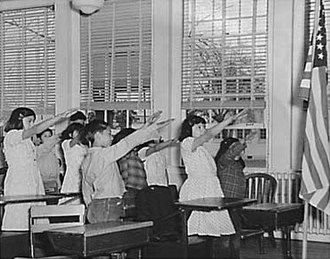 I wonder if American school-children still recite the Pledge of Allegiance to the Flag every morning. That would be considered insidious mind bending of innocent children in any advanced country except the United States. From 1892 until December 22, 1942, the Pledge was accompanied by the “Bellamy salute,” with the hand outstretched toward the flag, palm down. It was not until the middle of World War II, that Congress noticed the uncomfortable similarity to the Nazi salute and derrogated the Bellamy salute in favor of the familiar hand-over-heart gesture.
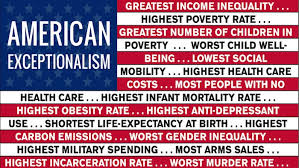


 Plato, Aristotle, Socrates, Euripides and Aristophanes assembled around the Parthenon. And I would watch them around the Parthenon as they discussed the great and eternal issues of reality. But I wouldn’t stop there.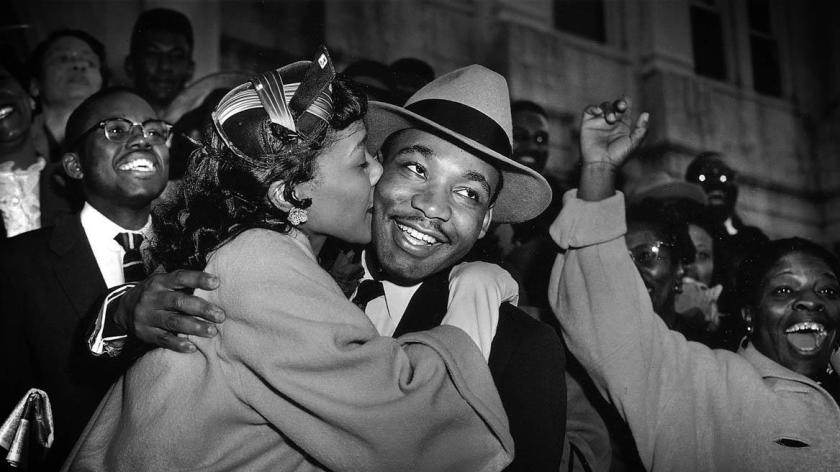

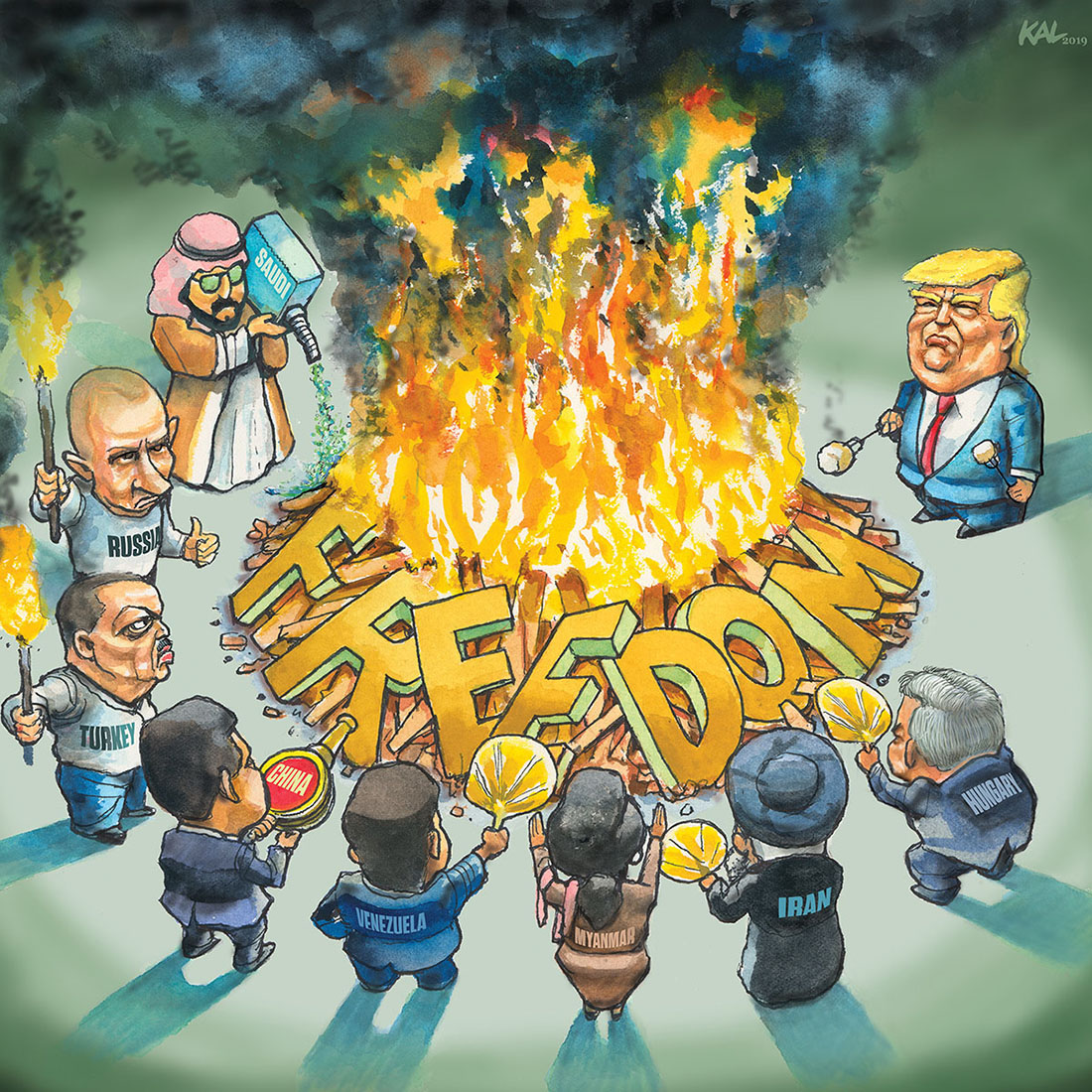

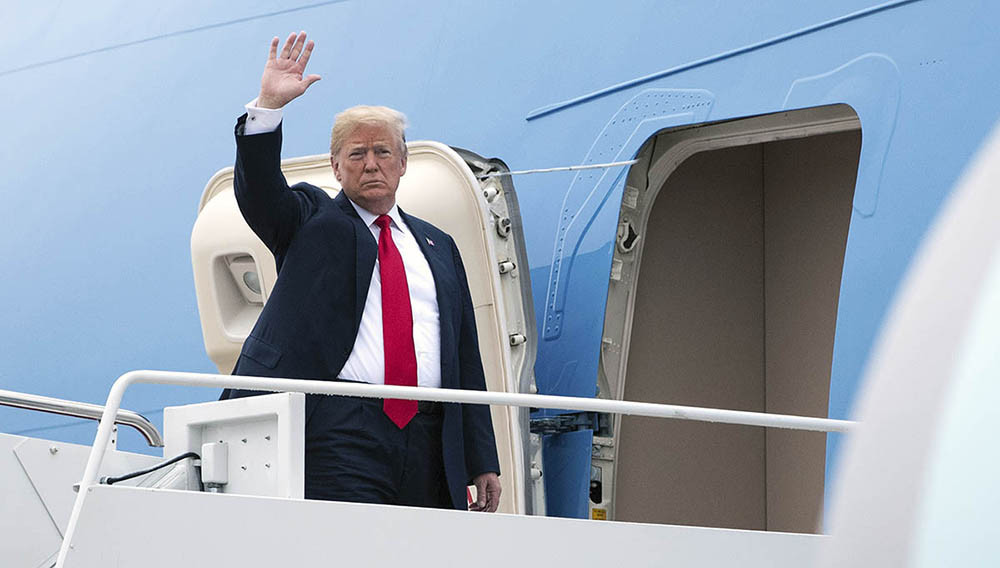


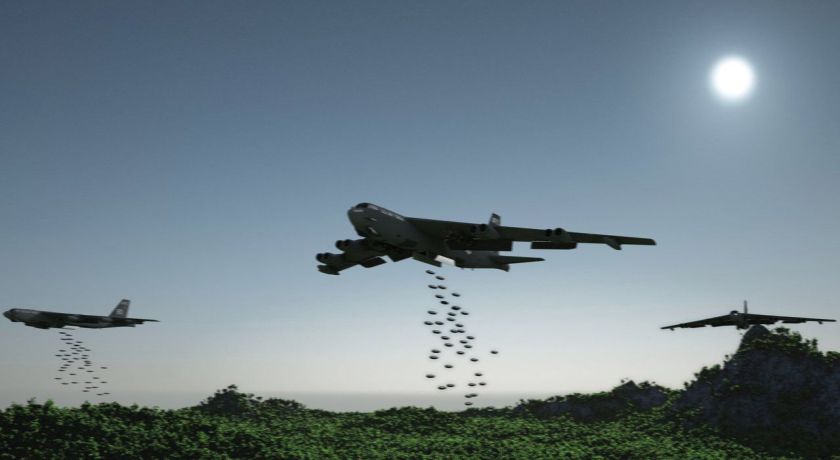


 the Russell Tribunal, also known as the International War Crimes Tribunal, a private body organised in 1966 by Bertrand Russell, British philosopher and Nobel Prize winner, and hosted by French philosopher and writer Jean-Paul Sartre.


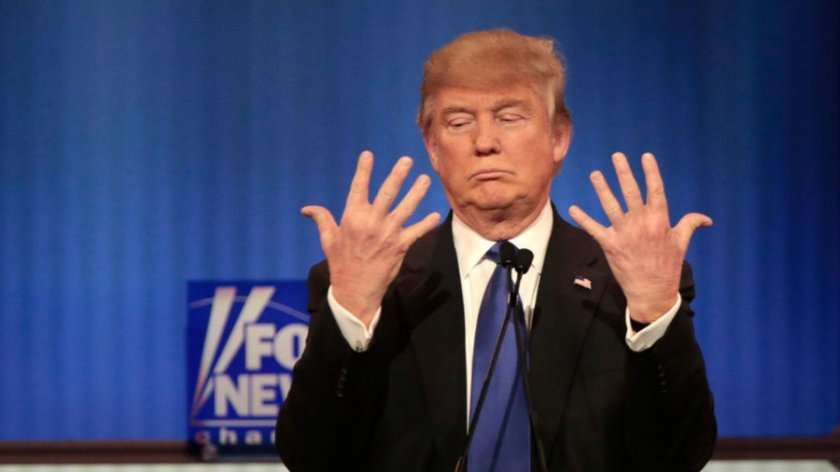
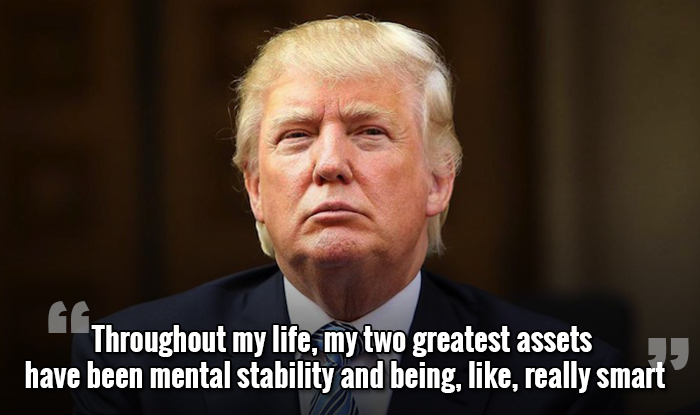
 Trump and All the Rest