Just Say Goodbye — 3/3

Lisbon2
by Mike Booth

Making a Living Abroad

cover-turncoat-final1_187Let’s consider your possibilities for making a living. Obviously, if you’re a writer or a visual artist, you’re in business.  You can do your work (almost) anywhere.  Or, if you have money to invest you might get into rental property or a business. This is trickier and, having failed in a couple of businesses myself, I wouldn’t recommend it. The European bureaucratic obstacles can be formidable, and doing business here requires a lengthy, expensive learning process. Can your work be done over Internet?  A lot of jobs can these days.  If that’s your case, then you’re home free.

We recently met a couple from Oxford, U.K. They are both IT consultants who worked in London. They said they used to spend five hours a day on the train getting to work and back.  I couldn’t believe it.  “It must be one of those great trains with desks for working, Internet connections, a great bar and all that, no?” Continue reading “Just Say Goodbye — 3/3”

Just Say Goodbye — 2/3

Brazil2

by Mike Booth

How to Begin

You need to start out with a mission statement. That’s your North Star; it has to do with the essence of your project and your objectives. That is to say, what are your priorities and where do you want to go, not only geographically, but philosophically? Think hard about it and get it right. Again, you’re not in a hurry. This is the genetic code of your expatriation project, and if you get it wrong at the outset when the cells of the embryo are just beginning to divide, you may run into trouble down the line.

If you’ll forgive me stretching the metaphor a bit, you’ll also need some market research. You’ll need to investigate what is possible, and where.  You’ll need to look into the economic situations and the labor laws in your possible destinations. Don’t be put off by seemingly stifling regulations, though.  Rules are made to be broken. You’re a creative person; if you weren’t you wouldn’t be reading this.  Don’t be afraid to trust your luck.  So many good things happen by serendipity if you’ll let them. Continue reading “Just Say Goodbye — 2/3”

Just Say Goodbye — 1/3

senegal2

Are You Fed Up?

So, you’re finally fed up with the seemingly endless string of cynical,  self-serving, and ruthless magnates, politicians, and generals, and the infirm society they have created for you and your fellow Americans.  You’re frustrated, ashamed and depressed. You really want out.  You’re convinced, ready to make your move.

Would you like to hear a few suggestions from someone who’s been through it, and who has met a lot of people over the years who have achieved the goal that you aspire to? Maybe I can help you out. Expatriating one’s self is like any other worthwhile project; it requires some planning. You don’t just pack your bags. First you think the whole thing through, consider your alternatives, make preparations, and cultivate contacts, both in your home and destination countries—you’re going to need all the friends and business contacts you can get.

Heady Stuff

This is one of the most exciting and rewarding times in the process of leaving. You’re actually beginning to act, to make choices, to savor the taste of change. This is the stage of active dreaming, and it’s heady stuff. Everything is possible. You get to choose your destination, make work plans, marshall your resources and do endless research on the Web. During this stage you can permit yourself the luxury of taking it easy and making careful plans.  Now that your mind is made up, there’s no urgency. More-careful preparation will save you surprises down the road. And you’re lucky, because leaving your country is not a cataclysmic, all-or-nothing act.  You get to test the water before diving in.

Be Discreet

First of all, be discreet. Do your best not to publicize your move as a protest or flight from an insufferable situation.  That will only complicate matters.  The fewer explanations you have to give, the better. And don’t worry about the legal aspects; they will sort themselves out in time.  This is, after all, a long-term project.  I arrived in Spain to stay at the end of 1968, but I didn’t renounce my American citizenship and take Spanish nationality till the early 1980’s. It was a 15-year process.  If they had asked me in the beginning if I wanted to become Spanish, I would have said no. I wasn’t ready yet. But, little by little, the country and I began to understand and appreciate one another, and over time—a matter of years—a bond was created which I wouldn’t trade for anything. So don’t be impetuous.  Don’t try to renounce your citizenship.  Under current American policy they won’t let you do that, anyway.  Don’t burn your passport. Don’t burn your bridges. You’re an idealist, but you’re not stupid.

Shall I give it to you straight in two words?  Just leave. Come up with a project which will take you abroad. Do your homework. Make a plan. Then do your best to carry it out. It doesn’t even have to be long-term or definitive. Make your first goal something feasible: “I’d like to spend a year teaching English in Italy.”  Why not? Go for it! As my old boss, Charlie Craig, used to say, “What’s the worst that can happen? You’ll have to go back home and get a job.” When I came to Spain I had no idea that I would spend the rest of my life here.  My initial goal was to stay out of the U.S. for five years, an objective which seemed to me wildly extravagant at the time. That was 50 years ago. One thing led to another and the next thing I knew I had a wife and family, a house and garden, dozens of Spanish friends, then a whole clan in Spain, and enough animals to fill the Ark.

The “Business Plan”

A candidate for expatriation needs something very like a business plan, and if you’ve ever written one, you’ll recognize the similarities immediately.  Though you’re not primarily interested in profit, you’ve got a project and you’ve got a product.  Your project is expatriation and your product is you. You’ve got some resources and a timetable. You may be surprised to hear that your most important resource probably isn’t economic. It’s probably moral; call it conviction, desire, or aspiration. Mere money won’t get you where you want to go. You need vision, heart and a sound value system.

Though it’s a spiritual endeavor you’re embarking on, your expatriation project lends itself perfectly to a businesslike SWOT analysis. You’ve got Strengths, Weaknesses, Opportunities and

cover-turncoat-final1_187Threats, and they can be written down and analyzed on a four-square matrix. This simple exercise is not only fun, but it will permit you to get a clearer idea of what you’re about to do, what your chances are of success, and maybe even how to head off disaster. How to go about it? Look it up in Google.

Next, in Part II, How to Get Started
Read the full story in my ebook, The Turncoat Chronicles.
Thanks for commenting and sharing.

The U.S. American White Trash Values Are Mutating and Migrating

America, Your Deodorant Is Letting You Down

“Poor White Trash,” was originally a despective term for impoverished,  landless sharecroppers who differed from black slaves only in their skin color. They were white, and that whiteness spared them from being considered–and considering themselves–the lowest scum on the earth.

They were unwashed, undernourished and unlettered. But, by God, they were white. That gave them an ascendency over black people: they could kill them with impunity. The name for that time-honored southern tradition is lynching, and its legacy lives on in various forms, in police forces, in the penal system, in education and employment… Continue reading “The U.S. American White Trash Values Are Mutating and Migrating”

USA Driven by a Familiar Fear: The Russians Are Coming!–2/2

It’s a 100-Year-and-Counting Fear Campaign

Russians_coming2

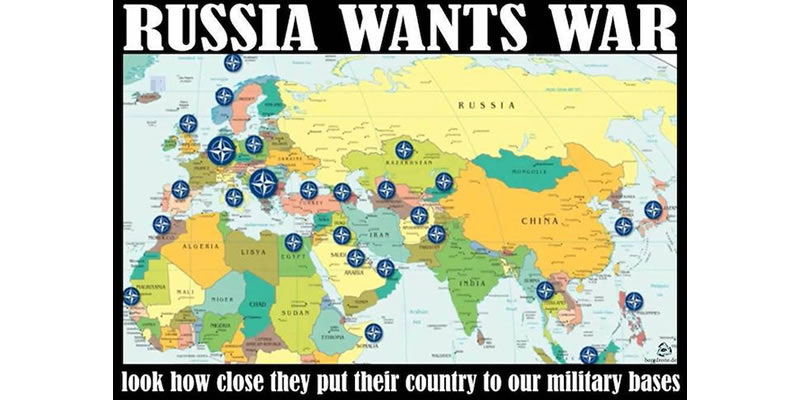
It was during the troubled times of the early 1920s that the sinister tendrils of the fear of Red Peril were planted. They were to put down deep roots over the following hundred years, which brings us up to our own time. This century-long fear campaign has been tremendously successful and the results are rich and varied and spread over many fronts, starting with the largest military budget in the world, 824.6 billion dollars for fiscal year 2018, and allegedly between 800 and 1,000 military installations abroad.

David Vine writes in a 2015 article in The Nation:

“To the extent that Americans think about these bases at all, we generally assume they’re essential to national security and global peace. Our leaders have claimed as much since most of them were established during World War II and the early days of the Cold War. As a result, we consider the situation normal and accept that US military installations exist in staggering numbers in other countries, on other peoples’ land. On the other hand, the idea that there would be foreign bases on US soil is unthinkable.

“While there are no freestanding foreign bases permanently located in the United States, there are now around 800 US bases in foreign countries. Seventy years after World War II and 62 years after the Korean War, there are still 174 US “base sites” in Germany, 113 in Japan, and 83 in South Korea, according to the Pentagon. Hundreds more dot the planet in around 80 countries, including Aruba and Australia, Bahrain and Bulgaria, Colombia, Kenya, and Qatar, among many other places. Although few Americans realize it, the United States likely has more bases in foreign lands than any other people, nation, or empire in history.”

For more information on this subject see Global Research’s extensive dossier on American Military Bases and/or Military Installations abroad.

The Bases Are Indicators

All of that spending and all of those American bases abroad are the underlying indicators of the level of fear that reigns in the United States power elite. What other possible motivation (aside from the profit motive) can there be for mounting such a grotesque—and expensive–network of death and destruction around the world?

The other face of the military spending/bases coin is the backing it gives the Americans for their commitment to permanent war. To quote a great American, “…they got a lot of forks ‘n knives. And they got to cut something.” (Bob Dylan, Talkin’ New York 1962).

 Another result of the great American fear campaign is the number of American citizens programmed to hate and fear not only the Russians but any sort of collective social or political solutions anywhere in the world. This includes anything that smacks of socialism or even “liberalism,”e.g. Canadian and European universal health care. Canada poses a particularly dangerous threat, sitting as it does right up against the United States’s northern border. American refugees are already starting to filter across that porous border. Is another great wall in the offing? Or perhaps a pre-emptive strike?

Do You Remember “Manifest Destiny?”

Add to these nefarious results a vicious jingoism and a predisposition to intervene militarily in any country in the world in order to co-opt its natural resources, notably but not exclusively oil. (Afghanistan allegedly sits on top of a trillion dollars’ worth of strategic mineral deposits. See U.S. Identifies Vast Mineral Riches in Afghanistan in the New York Times, June 13, 2010. This was followed last summer in the same newspaper by Trump Finds Reason for the U.S. to Remain in Afghanistan: Minerals.)

All of this fear on the heights, unlike the wealth of the rich, trickles down to every nook and cranny of underling America, forming the base of the ideological pyramid. For some unknown reason this toxic Kool Aid seems to get stronger as it penetrates into the unlettered heads of the central and southern United States, fueling waves of nationalistic fanaticism. I won’t bother you with examples. You know what I’m talking about.

What’s to Be Done?

So, with all these fears generating 57 varieties of imminent danger in the United States and all over the world, what’s to be done? There are a lot of solutions flying around Facebook. One of my favorites is the solution propounded by a wacky Evangelical group, a branch of dispensationalism, a belief system embraced by Christian fundamentalists as a defense of the literal Bible against liberalism.

They are a group with some 15,000,000 members whose well-funded Rapturist plan is to provoke a war between Israel and the Muslims in the Middle East. The inevitable victory of the God’s chosen people will then precipitate the Apocalypse which will propel all of us infidels (including the Jews who don’t convert to Christianity; take note Bibi) directly into hell. At the same time certain highly-qualified Christians will be ascended  into Heaven where they will sit at the right hand of God from where they will watch the Apocalypse as if it were the Super Bowl.

Good night and good luck, America.

Read more rant in my ebook, The Turncoat Chronicles.

Thanks for sharing and commenting.

USA Driven by a Familiar Fear: The Russians Are Coming!–1/2

100  Years of Using Fear of Russians to Keep American Citizens in Line

.Russians_coming3

My opinion—and I think I can sustain it with evidence–is that fear is the principal factor that has given rise to the United States’s world view since the early 20th century, and that fear still underlies much of what official America thinks and does both at home and—especially–abroad.

First a word about linguistcs. It’s neither fair nor correct to use the term “Americans” carelessly and all inclusively, as if the United States were made up of a homogenized, monolithic population. No, there are many flavors of Americans, each with its own political philosophy, from semi-literate, gun-toting  white supremacists and Nazis to dedicated radical leftists and, in the middle, a great grey mass of well-meaning, faith-driven folks who just believe what they’re told to believe. And that’s the problem—what they’re told to believe.

It’s a Pyramid

At the top of this tutti-frutti pyramid are the Americans in Charge (AiC): big businessmen (including a surprising number of psychotic billionaires with extravagant political agendas), a truculent, predatory military-industrial complex bent on world domination (euphemistically, in their own words, “full spectrum dominance”) and a political class the likes of which we have never seen before in terms of cynicism, opportunism and utter lack of human values. At the top of the pyramid reigns a louche, narcissistic and infantiloid maniac, the paradigm of ignorance and arrogance in a world endowed today with a surfeit of maniacs.

So, what exactly do the Americans fear? The answer to this question comes in pyramid form, too. Let’s start from the top down. The Americans in Charge (AiC, see above) since the early 20th century all fear the power of a better idea. (Americans used to be fond of saying, “Build a better mousetrap and the world will beat a path to your door.” That was when they built better mousetraps. Now that Slovakia builds better mousetraps that old saying has fallen somewhat into disuse.)

The Better Idea Looked Dangerous

That better idea reared its head in 1917, after centuries of tyrannical Tsarist rule in Russia, with the socialist October Revolution led by Vladimir Lenin. There followed a civil war between Lenin’s Bolsheviks and a coalition of monarchists, capitalists and Menchevik socialists. Eight foreign countries, including Britain, France and half a dozen other countries belonging to the World War I Allied armies, also intervened against Lenin’s forces, but to no avail. The war was resolved in 1923 in favor of the Bolsheviks after six years and a toll of between seven and twelve million casualties, mostly civilians.

At that crucial point in the early 20th century the world was weary of rule by European royal autocrats and American robber barons. It was ripe for more egalitarian governments. In those days, before Soviet communism had revealed its dark side, many world citizens aspired to imitate the solutions of the recently-created Soviet Union for a fairer distribution of the wealth of nations.

Institutional Fear Triggers Overwhelming Responses

In America there was a short history of labor activism before the 1920s. The ultimate response to these inconveniences to business as usual was the Haymarket Square Massacre at a rally of leftist demonstrators in Chicago who were demanding an eight-hour day. Someone threw a bomb that killed seven police officers and at least four civilians and, though it was never made clear who was responsible for the bomb, of the eight defendants one committed suicide and four were hanged. Six years later in 1893 Illinois’s new governor, John Peter Altgeld, pardoned the remaining defendants and criticized the trial.

It was events like this and the deadly stalking of the International Workers of the World (IWW, the Wobblies) that set the scene for the enhanced persecution of the left, then in the context of the post-World-War-I nationalist hysteria and the Russian Revolution. These events were referred to subsequently as “the first Red Scare” (1917-1920). The IWW, founded as an industrial union in 1905 in Chicago, grew to 150,000 members by 1917. Its founders included some of the great names in the history of progressive America: William D. (“Big Bill”) HaywoodJames ConnollyDaniel De LeonEugene V. DebsThomas HagertyLucy ParsonsMary Harris “Mother” JonesFrank BohnWilliam TrautmannVincent Saint JohnRalph Chaplin, and many others. (Thank you, Wikipedia.)

More Gratuitous Repression: The Palmer Raids

American big business, which had enjoyed a free hand (and wielded it) against workers and unions before 1917, was quick to perceive the threat of losing control and responded in panic mode. The Attorney General, A. Mitchell Palmer (with the inestimable help of his promising protégé, 24-year-old J. Edgar Hoover), carried out in November of 1919 and January of 1920 the so-called Palmer Raids to capture, arrest and deport suspected radical leftists and anarchists. Palmer’s attempt to suppress left-wing organizations was characterized by inflammatory rhetoric, illegal searches and seizures, unwarranted arrests and detentions, and the deportation of some 500 “alleged” radicals and anarchists.  There would have been many more deportations if the U.S. Secretary of Labor, William B. Wilson, had not intervened on behalf of workers, who had neither been tried nor convicted of anything.

Coming soon Chapter 2/2

Read more rants in my ebook, The Turncoat Chronicles.

Thanks for sharing and commenting.

The United States of America Is the Only Country in the World That Sentences Children to Die in Prison


Suffer little children, and forbid them not, to come unto me: for of such is the kingdom of heaven.

Goddamn, boys and girls live precarious lives in the U.S.A today. If they don’t fall victims to regularly scheduled school shootings or pederast clergymen, they are processed into commercially valuable commododities by corrupt juvenile judges and sold to private prisons. The shooting deaths at school might be attributed to crazies with constitutionally-sanctioned access to guns, and perverted priests are old hat, but the sale of children to private prisons is uniquely sinister. This cynical practice is perpetrated by subjects–we’re talking about judges–who are bound by public trust to guarantee the safety and wellbeing of their country’s young people.

The betrayal of that obligation in order to ruin young lives is, I submit, a crime as serious as homicide. Violation of public trust, like election tampering, is an issue that touches the very DNA of a democratic society. A country without honest and trustworthy judicial authorities and free and fair elections has no right to call itself a democracy.

Kids for Cash

I refer to the 2008 Kids for Cash case in which two Pennsylvania juvenile court judges were convicted of accepting kickbacks from a “prominent” real estate developer for unfairly sentencing children to imprisonment in his two for-profit juvenile prisons. The  judges, Mark Ciavarella and Michael Conahan, not only provided the new prisons with some 2,400 children for profit, but were instrumental in using their influence to have the existing juvenile facility discredited and the new ones constructed.

The “crimes” for which children as young as 13, first offenders, were accused of by the corrupt judges were as trivial as making fun of a school principal on Myspace.com, entering a vacant building or shoplifting DVDs from Wal-Mart. And thanks to a judicial twist called “indefinite probation” the young inmates were subject to periodic behavior reviews which could extend their sentences up to seven years. Probation officers actually had their own offices in the district’s schools to monitor students.

In the end, after a class-action suit filed by the Philadelfia-based Juvenile Law Center, it was established that the two judges received some $2.6 million in “finders’ fees” for providing children for the private prisons. When the trial was over all the children had their convictions overturned and expunged from their records, which is not to say they got off easy. After their years of harrowing incarceration 66% of them never went back to school. As for the crooked judges, they are currently in prison themselves. Ciavarella was additionally indicted for racketeering, a crime in which prosecutors said the former judge used children “as pawns to enrich himself.” Ciavarella was imprisoned for 28 years. Conahan got 17 and a half.

Corrupt Judge as Civic Hero

Ironically, before the scandal broke, “President Judge Ciavarella” was lionized in the community both by school authorities and parents whose children were not imprisoned  for his “zero tolerance” policy and dispensation of virtually automatic prison sentences for petty crimes committed by children. (Everybody wants zero tolerance for other people’s children.) Ciavarella was a popular speaker every year for two decades at school assemblies all over the district, where he promised unabashedly that the students would be subject to rough justice.

Even without the payment-for-children aspect of the Kids for Cash case, the popularity of “zero-tolerance” is still responsible for exaggeratedly severe prison sentences for young people all over the country. Zero tolerance is the name for a policy that sprang from the rich compost of authoritarianism prevalent in post-911 America. It holds no regard for human rights nor extenuating circumstances such as poverty or childhood abuse. In most cases it prohibits judges from exercising discretion. The sentences are blindly mandated by law.

The Damage Done

The damage done to children, families, schools and the society at large is incalculable. The permanent presence of parole officers, with offices inside schools, is an ominous
precedent in the schools of a democratic society, just one more Orwellian oppressive measure that Americans are learning to accept as normal. What’s next, political
commisars to prevent deviant thinking in schools? Mercenary army recruiters? Gun shows?

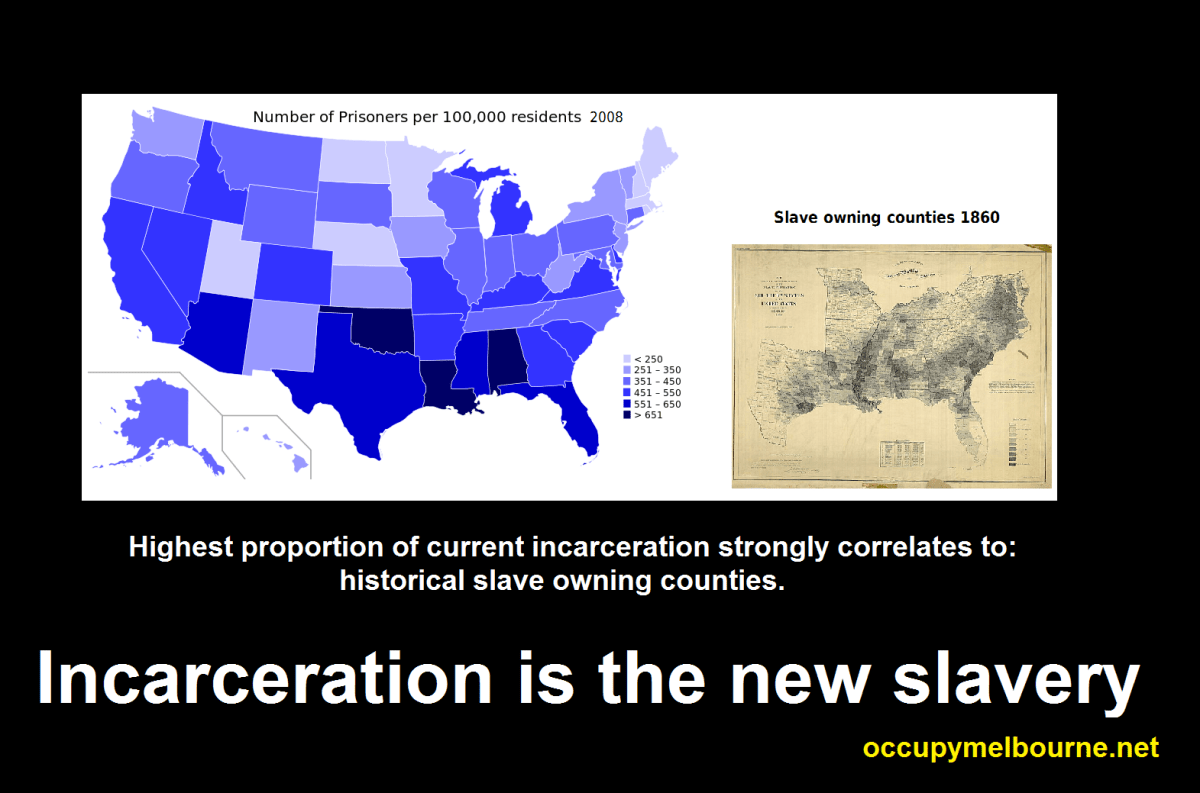
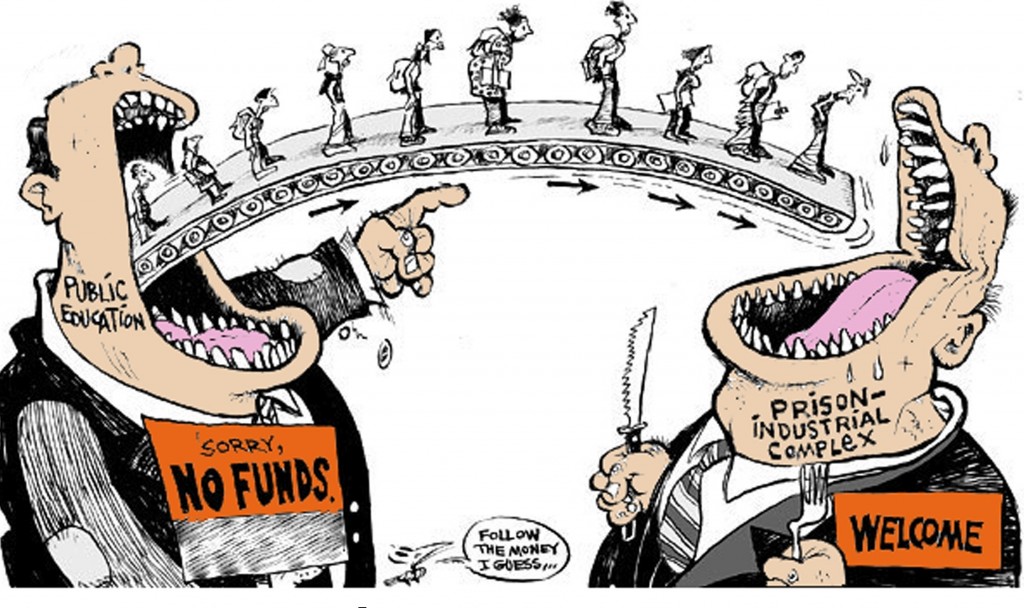
For more than a century the United States was the world leader in lynchings. It’s not a coincidence that the majority of these kids who receive life no-parole sentences are African Americans. The well-oiled school-to-prison pipeline affects young black men with an overall incarceration risk that is six to eight times higher than young whites.

Kids for Cash is Just the Tip of the America’s Injustice Iceberg

The Kids for Cash case is just one example of  the ill treatment of young people under United States law. The U.S. is, in fact, the only country in the world whose legislation forsees the possibility of defendants under the age of 18 being incarcerated on a life-no-parole basis. They will stay in prison until they die. Today there approximately 2,500 of them in this situation in American prisons. How is this abuse of power possible in “the land of the free and the home of the brave,” unless that moniker is just a publicity slogan not subject to the laws of truth in advertising.

We shouldn’t be surprised though. Of the 193 United Nations member countries there are only two that have not ratified the 1989 Convention on the Rights of the Child: Somalia and the United States of America.

More information:

The Kids for Cash case gave rise to some excellent documentaries. The first of these cited here is a fascinating 50-minute interview with the documentary film maker, Robert May: https://youtu.be/mVzSe2TQ3d0


And this one is his Kids for Cash documentary: https://youtu.be/vxpNynnYwC0

Kids Serve LIFE in Prison, the story of Kenneth Young. This one will shake you: https://youtu.be/4_RSz_Rq3cg
.

Read more ranting in my ebook, The Turncoat Chronicles.

Thanks for sharing and commenting.

We’re All Victims of the Lies They Told us as Children

Lying_to_Children8

Lying to Children Is to Do Them–and the World–a Terrible Disservice

Lying to children has been a universal phenomenon since time immemorial. Parents, consciously or unconsciously, raise their offspring dishonestly, perpetuating the same lies they were told by their own parents. Children are innocent blank slates. Anything imprinted on them during infancy is virtually indelible. If you teach your children that a fat bearded man in a red suit and a funny hat flies around the globe in a reindeer-drawn sleigh and  slips down chimneys to deliver gifts to all the children in the world, you’re planting the seed of a venemous creeping vine. Any child who will believe that preposterous story because a trusted loved one told it, will grow up to believe that a Jewish carpenter’s son who died 2,000 years ago will raise that child into heaven.

Lies have been and remain fundamental pieces in the strategy of all repressive regimes, whether political or religious, at all times. Power hungry rulers around the world need to form—and deform—their populaces as virtual masses of livestock that serve mainly to be herded and milked–and bled–and the best place to start is with children.

Where Are You From? That Explains It

We are who we are because of where we come from. You can’t blame an Indian for being Hindu. His mother’s milk was Hindu along with all the rest of the world in which he grew up. Nor can you blame an American from the bible belt for being a Christian. Or a New Yorker for loving asphalt and having trouble understanding Texans. Or Texans for being Texans.

What I would like to blame young Americans for here is taking on bovinely all that self-aggrandizing nationalistic and religious claptrap that their country’s con men thrive on. But, in all fairness, I’m not sure I can do that either. American young people are just as conditioned from birth as the Hindus, though they may not realize it. And those who get rich are convinced they’re another of those fraudulent American inventions, the “self-made (wo)man.”

To children—and their parents who were raised on the same kibble—the early lies seem innocuous, even charming: Santa Claus, the baby Jesus, the tooth fairy… But this soon becomes seriously sinister. It opens the floodgates to all the rest: racism, patriotism, entitlement, militarism… Since virtually everybody in that sponge child’s universe is on the same wavelength, he’s trapped in an ideological dead end. In the case of the United States that explains the fearful homogenization of thought in which there’s no room for anything but hard-core Americanism and old-time religion. There’s no room for solidarity with people who are different, no empathy, no mercy for children with the ill luck to be born outside the boundaries of the 50 states, and very little for those inside. “We’re all white, Christian, free-market believers in American-style democracy,  and those who ain’t is in deep trouble.”

Does this sound familiar?

  • You’re the best.
  • Your country is the most beautiful from sea to shining sea.
  • Your religion is also the best. All others are heresy, possibly diabolical.
  • You can get rich. Just work hard.
  • Your government is blessed by God. It is wise and beneficent.
  • Your way of life is heavenly ordained. Be true to your school.
  • We are unique, special, people of God, entitled to take other people’s countries, natural resources—oil, gold, arable land, fishing rights… If they resist we are entitled to kill them.

Even though all the world’s great religions have been twisted to fit the sick agendas of priests, generals, emperors and dictators, they still expect us to revere them. Have you taken a look at the 10 commandments lately? How many of them are observed religiously by any modern government today? Don’t make me laugh trying to figure that one out. Does the Koran sanction suicide bombings and the wholesale slaughter of innocents? Or the extreme repression of women, for that matter? Does the Bible sanction the precision bombing of civilians, or the capricious invasion of soverign nations? No they don’t.  But never mind, all religions have their inconvenient technicalities, but they can be ignored in special cases.

How Do You Create a Killer?

How do you get a healthy, well-educated young person to strap an explosive vest on his body and detonate it in the midst of a crowd of innocent bus passengers? It’s not complicated. You appeal to his sense of patriotism, righteousness and the promise of eternal life. That’s the best bait, eternal life. Nobody who promises it knows how to deliver it but there are lots of ingenuous marks who don’t seem to mind.

By the same token, how do you get a bright young computer-games whizbang to sit in an underground bunker in the desert and kill remotely at distances of thousands of miles not only his country’s presumed enemies, who are unknown to him, but everyone else on the bus or at the wedding. The bride and groom, the best man and the maid of honor, the altar boys, parents and grandparents…

That’s not too complicated, either.  You just double his pay and tell him he’s a patriot. That—patriotism—is the great killer, not only of “the enemy’s” young people but of your own. What is more heroic, nay glamorous, than dying for your country? Would someone please explain to me exactly what that means: “dying for one’s country.” Who benefits from the death of an American soldier abroad these days? His parents, his friends, his wife and children? Yes, I’m being ridiculous. Who benefits are arms manufacturers and dealers, bankers, politicians, media magnates, speculators, right-wing radio talk-show geniuses… all patriots, to be sure. I find this game cheap and nasty, absolutely abhorrent. Why can’t American mothers and fathers, sisters and brothers understand that? It’s beyond me. As for the old “Support our troops” trope, it’s patently sick and sordid, another massive lie that still prevails. The best way to support the troops is to bring them home.

The Road to Hell Is Paved with False Promises

As far as I can see 100% of the wars the US engages in are motivated by crass short-term self interest, to export arms, not democracy, to humiliate the weak, to twist their minds and grab their resources. That’s government policy, not coincidence. We must never forget that in all first-world countries it’s the citizens (us!) who elect the decision makers and pay their bills. If this doesn’t constitute a sacred trust on their part—and ours–I don’t know what does. Yet, as you know, seldom is this trust honored by politicians who, once elected, dedicate themselves heart and soul to feathering their own nests and those of their corporate “sponsors.” Do you doubt it? OK then, name two or three rigorously scrupulous politicians of your own. Having trouble? You’re not alone.

There May Be an Escape Route

There is one possible escape route through which perhaps 1% of children could obviate the inevitability of inherited brain death. It is, of course, education. Little people who are taught to think for themselves from an early age, to question everything, to leave no basic belief unverified in the light of science and simple common sense, just might have a chance of escaping the inevitable. But those fortunate children better hurry, because the few remaining teachers who are prepared to teach those values are fast disappearing. And there aren’t many more like them in the pipeline, not when the very Secretary of Education of the United States is a self-proclaimed proponent of privatized religious education.

Is it already too late? Probably.

Read more rants in my ebook, The Turncoat Chronicles.

Thanks for commenting and sharing.


U.S. Private Prisons Have Failed — 3/3

Private_Prisons9

Minorities are Cheaper

A 2014 study by a doctoral candidate at UC Berkeley shows that minorities make up a greater percentage of inmates in private prisons than in their public counterparts, largely because minorities are cheaper to incarcerate. (It doesn’t say why. Are they more docile?) According to the study, for-profit prison operators accumulate these low-cost inmates “through explicit and implicit exemptions written into contracts between these private prison management companies and state departments of correction.”

An example of private prisons’ inadequate staff training leading to jail violence was reported by two Bloomberg News journalists, Margaret Newkirk and William Selway in Mississippi at the now-closed Walnut Grove Correctional Facility (WGCF). According to the journalists, the ratio of staff to prisoners in this prison was at times as low as 1 to 120. In a bloody riot in this prison, six inmates were rushed to the hospital, including one with permanent brain damage. During the riot, the staff of the prison did not respond but waited until the melee ended, because prisoners outnumbered staff at the time by a ratio of 60-1.

 Why Does the United States Have Millions of Prisoners?

Why do so many Americans deserve prison? Are they genetically determined for crime and mayhem? Is it something in the water? Are they just the worst people on earth? I’m reluctant to believe that. Something is causing them to be the way they are and preventing them from being honest productive citizens instead of misfits and social pariahs.

Could it have to do with being born and raised in a dystopian (as opposed to utopian) society? The United States is, after all, number one in the world in school shootings (and all firearms deaths, for that matter). It worships get-rich-quick entrepreneurs, speculators and deal makers, people who would rather grab than create.  (And what faster way to get rich quick than dope peddling?) Some of its citizens actually feel threatened by collective solutions whether it be environmental protection or universal health care–or even public schools–solutions that have immensely elevated people’s wellbeing all over the rest of the known world.

The United States is the world leader in home repossessions, in homelessness and people who live–and try to raise their families–in their cars. It’s a country run by an unenlightened conservative majority that prefers castigation to education, self-interest to solidarity. It’s every man for himself. It’s no wonder it gets lonely out there. People get desperate and inevitably get into trouble. And, thanks to mandatory sentences and other inhuman judicial and business practices many of them find themselves incarcerated for a long time, if not forever. Especially if they’re black.

The “natural” habitat of young American black men–the majority of the inmates in all U.S. penal institutions–is mean streets, inequality, penury, unfairness, violence and hopelessness. Could it be any other way? If the current President of the United States is a sociopath, how are the impoverished, uncultured black kids in the neighborhoods supposed to be models of sanity and civility?

It’a not clear how many Americans are aware of the extent to which President Obama was disrespected and boycotted by the Washington good ol’ boys for the mere fact of being black, but from this side of the Atlantic the disdain looked blatantly evident. Considering the treatment accorded the President of the United States, one can only imagine that  dispensed to young black drug offenders in the prison system, whether public or private.

Jill Filopivic Writes in The Guardian

I’d like to cite here a couple of paragraphs from Jill Filopivic writing for The Guardian, examples of how the American private-prison situation is seen by many people in the rest of the world.

“The privatization of traditional government functions – and big government payments to private contractors – isn’t limited to international intelligence operations like the National Security Agency. It’s happening with little oversight in dozens of areas once the province of government, from schools to airports to the military. The shifting of government responsibilities to private actors isn’t without consequence, as privatization often comes with a lack of oversight and a series of abuses. One particularly stunning example is the American prison system, the realities of which should be a national disgrace.

Some of those realities are highlighted in a recent lawsuit filed by the American Civil Liberties Union (ACLU) on behalf of prisoners at the East Mississippi Correctional Facility (EMCF). The ACLU contends the facility, which is operated by private contractors, is rife with horrific abuses.

The complaint lists a litany of such horrors: rampant rapes and placing prisoners in solitary confinement for weeks, months or even years at a time, where the only way to get a guard’s attention in an emergency is to set a fire. Rat infestations are so bad that vermin crawl over prisoners; sometimes, the rats are captured, put on leashes and sold as pets to the most severely mentally ill inmates.

There are many suicide attempts, some successful. The untreated mentally ill throw feces, scream, start fires, electrocute themselves and self-mutilate. The prison authorities deny or delay treatment for infections and even cancer. Stabbings, beatings and other acts of violence are common. Juveniles are housed with adults, including one 16-year-old who was sexually assaulted by his adult cell mate. Malnourishment and chronic hunger abound. Officers deal with prisoners by using physical violence…”

So don’t think that nobody’s looking.

Is There a Solution?

If there is a way out, it’s not in plain view. Because in order to solve the prison problem you have to start by solving everything else, as all of the United States’s critical issues are interrelated: health, education, militarization, white supremacy, social programs, corruption in business and government (including legal corruption like gerrymandering and hard-cash lobbying, that legislators have legalized in order to write their own tickets), unregulated killer capitalism, guns uncontrolled, inequality on all fronts… That is to say, virtually all of the sick values that underlie a terminally ill society.

Just imagine yourself sitting on the tip of a massive iceberg with a paddle, paddling like crazy trying to turn it around 180 degrees. Are you optimistic? Neither am I.

Back to Part 1

Read more rants in my ebook, The Turncoat Chronicles.

Thanks for sharing and commenting.

U.S. Private Prisons Have Failed — 2/3


Kids for Cash

U.S. Drug Issues Were Perverted for Many Decades by One Man

Please note: “Richard Nixon simply presented his stance in terms that appealed specifically to his conservative base.” Therein lies an eternal problem with right-wing politics. In order to appeal specifically to a conservative collective you have to simplify your message so that it can be understood by simple citizens, simple legislators and simple Presidents. This inevitably leads to simple solutions to complex problems. And it doesn’t always work.

If we follow the historical record back to the 1930s we find a man called Harry J. Anslinger, the first commissioner of the U.S. Treasury Department’s Federal Bureau of Narcotics, given carte blanche by fanatical F.B.I. director, J. Edgar Hoover, to criminalize drugs that, until then, had been considered medical and social issues. Anslinger remained in office for 32 years and perverted drug issues in the United States until the very end. It was Anslinger who turned cannabis into a crime–and big business–and helped to export the Americans’ puritan conception of drug problems and retrograde solutions around the world. This was the moment to regulate drugs, to help addicts (though marijuana is not clinically addictive) and to clean up American society, not to criminalize drug users and give rise to the illicit drug trade behemoth and the largest prison population in the world,

Coincidentally, It’s Also about Profit

The most recent statistics from the U.S. Department of Justice cite 133,000 state and federal prisoners in private facilities, 8.4% of the total U.S. prison population. Over the past 20 years the Correction Corporation of America, the largest private-prison company in the country has seen its profits rise by more than 500% with the overall prison industry’s revenue topping five billion dollars in revenue in 2011.

Such handsome sums attracted the attention of big investors like investment banks and vulture funds. The appearence of big money also gave rise to large-scale corruption and morally repugnant practices. The most egregious of these was the Pennsylvania “Kids for Cash” scandal, in which two judges accepted million-dollar cash commissions from a private reformatory for sending juveniles to their facility, often on trivial charges. Many of these children, some as young as 13, were  subjected to successively extended sentences  under “indefinite probation” laws, winding up spending six or seven years in prison for schoolyard shenanigans. The heinousness of this practice merits more extensive treatment in another post which I will get to as soon as I can.

Market Forces Create Sleazy Prison Industry Interest Groups

Less theatrical but also outrageous is the lobbying carried out by the prison business. The influence of the private prison industry on the government has been described as the “prison–industrial complex.” The term reflects the rapid expansion of the US inmate population due to the political influence of private prison companies and prison supply businesses. The most common agents of the prison-industrial complex are corporations that contract cheap prison labor, such as construction companies, surveillance technology vendors, companies that operate prison food services and medical facilities, private probation companies, lawyers, and the lobby groups that represent them.

Before these programs, prison labor for the private sector had been outlawed for decades in order to avoid competition with conventional businesses. The introduction of prison labor in the private sector contributed to the cultivation of  the prison-industrial complex. Between the years 1980 and 1994, prison industry profits jumped from $392 million to $1.31 billion.

Private prison companies have been members of the American Legislative Exchange Council (ALEC), a public policy organization that develops model legislation that advances free-market principles such as privatization. Under their Criminal Justice Task Force, ALEC has developed model (just fill in the blanks) bills which State legislators can then use when proposing “tough on crime” initiatives. By funding and participating in ALEC’s Criminal Justice Task Forces, critics argue, private prison companies influence legislation for tougher, longer sentences. Writing in Governing magazine in 2003, Alan Greenblatt states:

“ALEC has been a major force behind both privatizing state prison space and keeping prisons filled. It puts forward bills providing for mandatory minimum sentences and three-strikes sentencing requirements. About 40 states passed versions of ALEC’s Truth in Sentencing model bill, which requires prisoners convicted of violent crimes to serve most of their sentences without chance of parole.”

In 2016 the U.S. Department of Justice pronounced privately-operated federal detention facilities less safe, less secure and more punitive than other federal prisons and announced the department’s intention to stop using them. Then Donald Trump won the 2016 presidential election and on February 25, 2017 the Justice Department, under the new Attorney General, Jeff Sessions, overturned the ban on using private prisons. It was another of the Trump administration’s grotesque steps backwards.

Private Prisons Are Not a Bargain

A 2001 study concluded that a pattern of sending less-expensive-to-keep inmates to privately run facilities artificially inflated their cost savings. A 2005 study found that Arizona’s public facilities were seven times more likely than private prisons to house violent offenders and three times more likely to house those convicted of more serious offenses. A 2011 report by the American Civil Liberties Union point out that private prisons are more costly, more violent and less accountable than public prisons, and are actually a major contributor to increased mass incarceration.

This is most apparent in Louisiana, which is finally number one in something. It has the highest incarceration rate in the world. And it houses the majority of its inmates in for-profit facilities. Marie Gottschalk, professor of political science at the University of Pennsylvania, argues that the prison industry “engages in a lot of cherry-picking and cost-shifting to maintain the illusion that the private sector does it better for less.” She notes that studies generally show that private facilities are more dangerous for both correctional officers and inmates than their public counterparts as a result of cost-cutting measures, such as spending less on training for correctional officers (and paying them lower wages) and providing only the most basic medical care for inmates.

Go to: U.S. Private Prisons Have Failed, Part 3

Read more rant in my ebook, The Turncoat Chronicles.

Thanks for sharing and commenting.